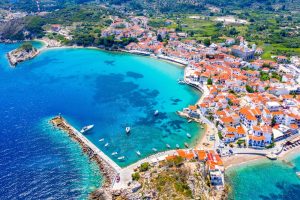
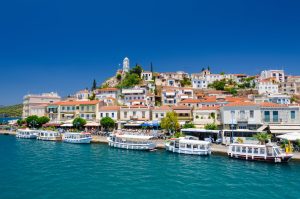
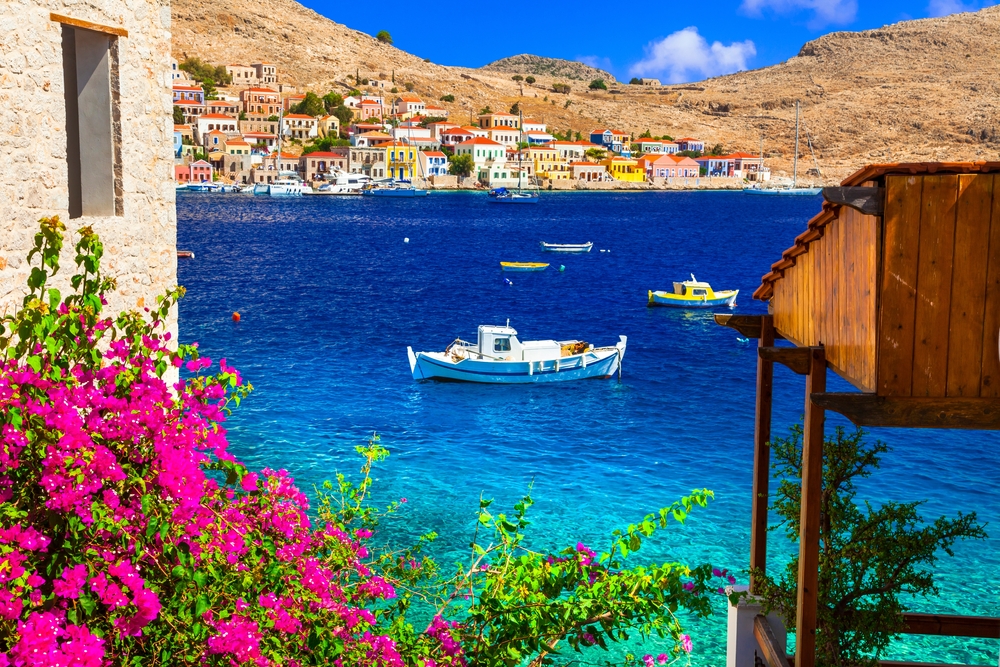
Halki, a small island in Greece’s Dodecanese, is known for its elegance, authenticity, and unspoiled beauty. Its only settlement, Nimborio, is a postcard-perfect harbor town lined with neoclassical mansions, tiled courtyards, and restored windmills overlooking the Aegean Sea.
A short journey inland leads to the island’s medieval heart — the old “Chorio” village, once abandoned when pirate raids ceased in the late 19th century. Here, visitors can explore the Church of Panagia Choriani and the Castle of the Knights of St. John, built in the late 15th century atop ancient ruins, offering sweeping views as far as Rhodes.
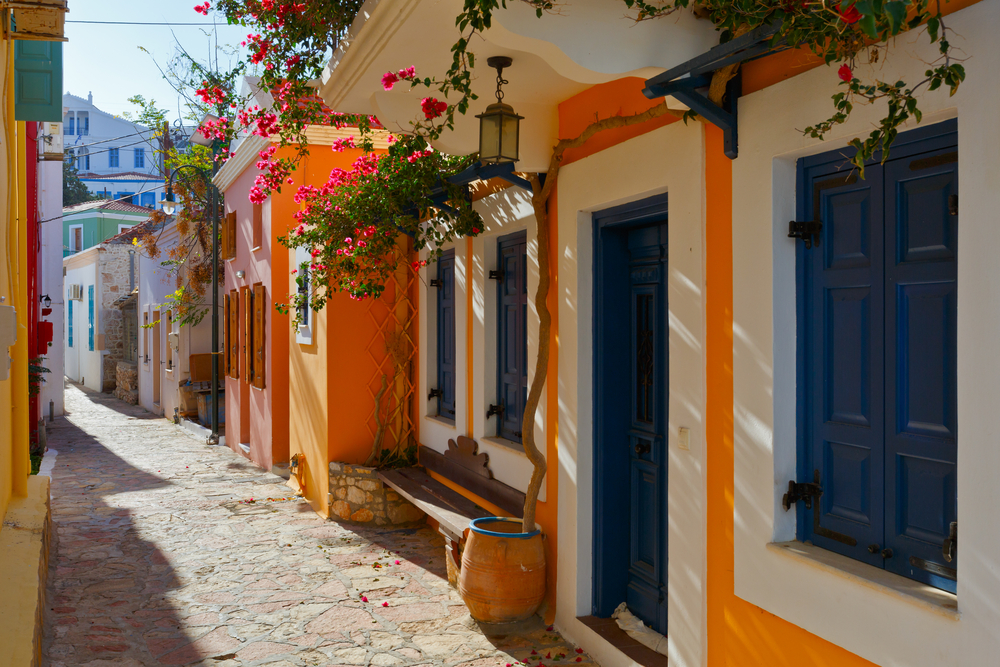
Halki’s architecture reflects its prosperous sponge-diving era, which flourished from the mid-19th century until the Italian occupation in 1912. Landmark buildings include the neoclassical Town Hall, the clock tower, and the Church of St. Nicholas with its small ecclesiastical museum. The island’s Traditional House museum displays artifacts such as gramophones and vintage sewing machines.
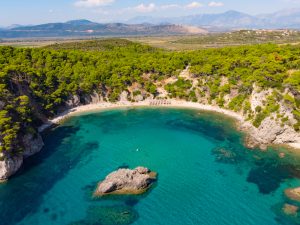
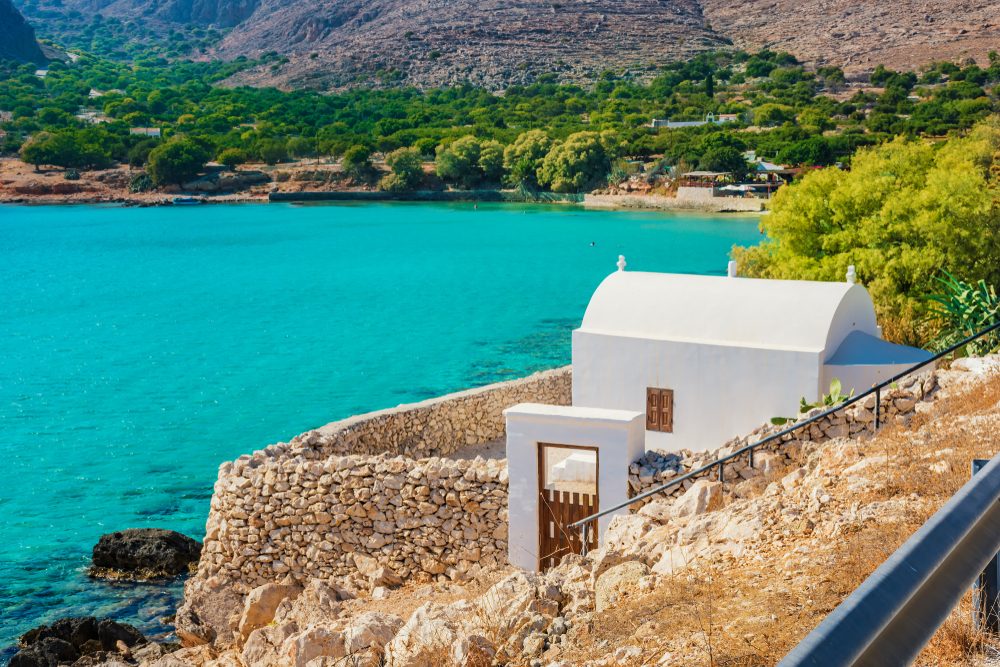
Its beaches range from sandy, family-friendly Pountamos to secluded coves like Areta, Agios Georgios, and Ftenagia. Visitors can also swim at the pebbled Giali or along the Trachia peninsula.
Local gastronomy is another highlight. Must-try dishes include Halki shrimp, fish soup (kakavia), stuffed vine leaves, fresh seafood, handmade pasta, thyme honey, and soft goat-and-sheep cheese, often paired with the local spirit, souma.
Cultural life thrives here, with the Feast of Panagia Choriani on August 15, the celebration of Agios Ioannis Alargas on August 28–29, and the annual Halki Music Festival in early September, which brings together diverse musical styles.
For the adventurous, the Chalki Dive Center offers diving courses for adults and children from eight years old, as well as cruises to the nearby island of Alimia, home to shipwrecks and crystal-clear waters.
Halki remains one of the Aegean’s best-kept secrets — a place where history, culture, and natural beauty meet in perfect harmony.