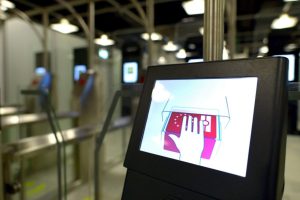
Long lines of vehicles, mounting frustration and significant delays have become a daily reality at Greece’s land borders over the past month, particularly in the regions of Kilkis and Evros, where the European Union’s new digital border control system is being rolled out. The system introduces biometric registration for non-EU travelers entering or leaving European countries.
According to Greek public broadcaster ERT, the Evzones border crossing — a key entry point for travelers from countries such as North Macedonia, Kosovo and Serbia — has seen queues stretching for two to three kilometers, and at times even longer. Tourism industry representatives are voicing growing concern that the situation could worsen considerably as the summer travel season approaches.
Police officials, meanwhile, stress the urgent need for additional staff, arguing that existing infrastructure is ill-equipped to handle large tourist flows. Similar disruptions have also been reported at airports in Greece and abroad, where technical issues and prolonged security checks have caused significant delays.
The new system applies to travelers from countries outside the European Union entering the Schengen area for short stays. Under the updated framework, every entry, exit or refusal of entry is digitally recorded, while first-time travelers are required to provide biometric data, including facial images and fingerprints. The aim is to improve monitoring of cross-border movements and identify individuals who overstay the permitted period of stay.
In practice, however, the implementation has proven challenging. Earlier in April, following intervention by Greek Foreign Minister George Gerapetritis, British travelers entering Greece were exempted from additional biometric screening procedures linked to the EU’s Entry/Exit System (EES).