In Greece’s far north, the Evros Delta and the great lakes of Thrace have once again reminded Europe why they are among its most vital wetlands. At the mouth of the Evros River—after a 528-kilometre journey from Bulgaria’s Rila Mountains—a breathtaking scene unfolded last December: 120 little bustards (Tetrax tetrax) were recorded grazing across the vast mosaic of reed beds, wet meadows, and lagoons.
It was the largest sighting ever made in Greece, a staggering reversal for a species whose wintering population in the country rarely exceeds a few dozen. Earlier that month, 25 individuals had also appeared in the Kitrous Saltpans of Axios Delta National Park, igniting excitement among birdwatchers nationwide.
Credits: Μάρκος Χουζούρης/ Ευροκίνηση
Once a sporadic breeder in Greece, the little bustard has not nested here since 1917. Seeing a flock of 120 birds resting in the Evros Delta is like glimpsing a lost chapter of the nation’s natural history—an echo from an era when steppe birds still roamed freely across the plains.
Lakes of Refuge
Further west, Lakes Vistonida and Ismarida continue to serve as safe winter havens for one of Europe’s rarest waterfowl: the white-headed duck. Each autumn, flocks arrive from the north to spend the cold months in these Thracian waters. Last year, their numbers exceeded 1,100 individuals—a significant figure considering the species’ global population is estimated at just 5,000–10,000.
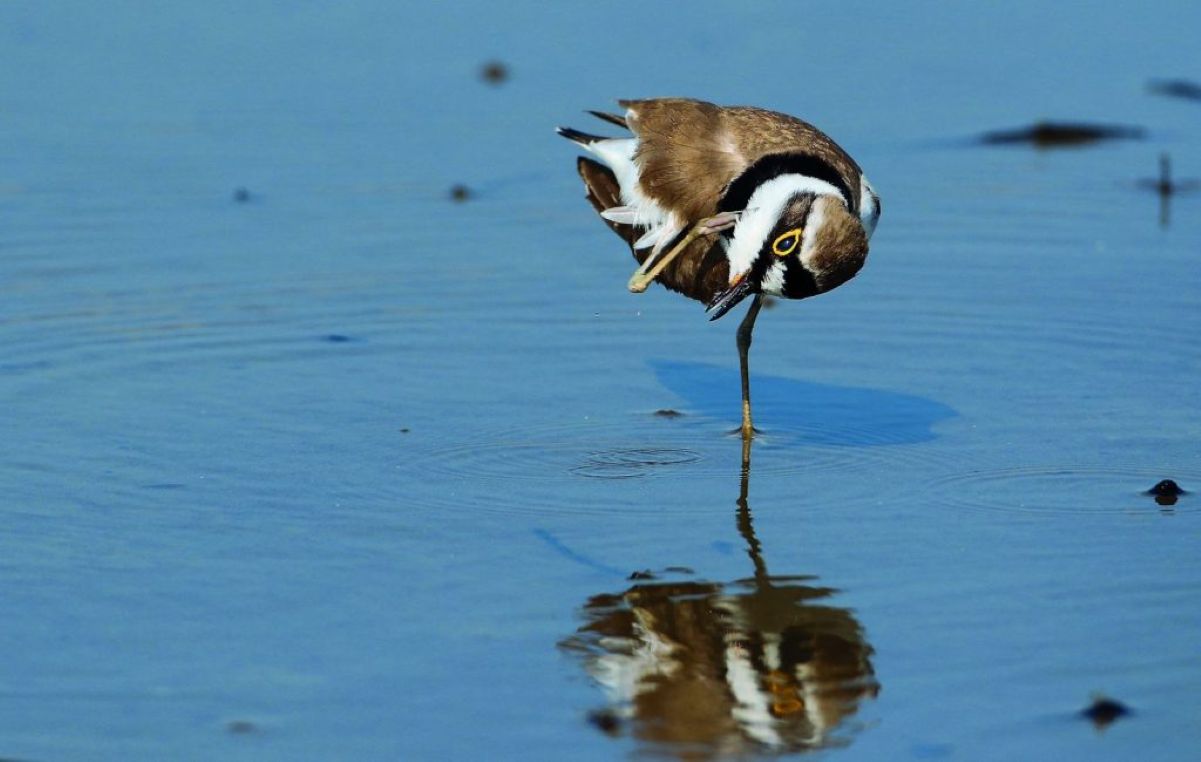
Credits: Μάρκος Χουζούρης/ Ευροκίνηση
Threatened by habitat loss, illegal hunting, and accidental trapping in nets, the white-headed duck finds in Vistonida a perfect balance of calm, food, and mild microclimate. The lake has long been recognized as a wetland of global significance, with recurring winter counts exceeding 1,000 birds—up to 10% of the species’ total population.
Europe’s Crossroads of Migration
The Evros Delta remains a magnet for countless migrants: swans, geese, and birds of prey. Each winter, thousands of white-fronted geese mingle with hundreds of red-breasted geese, while nearly the entire European population of the endangered lesser white-fronted goose rests here before heading north to Arctic breeding grounds.
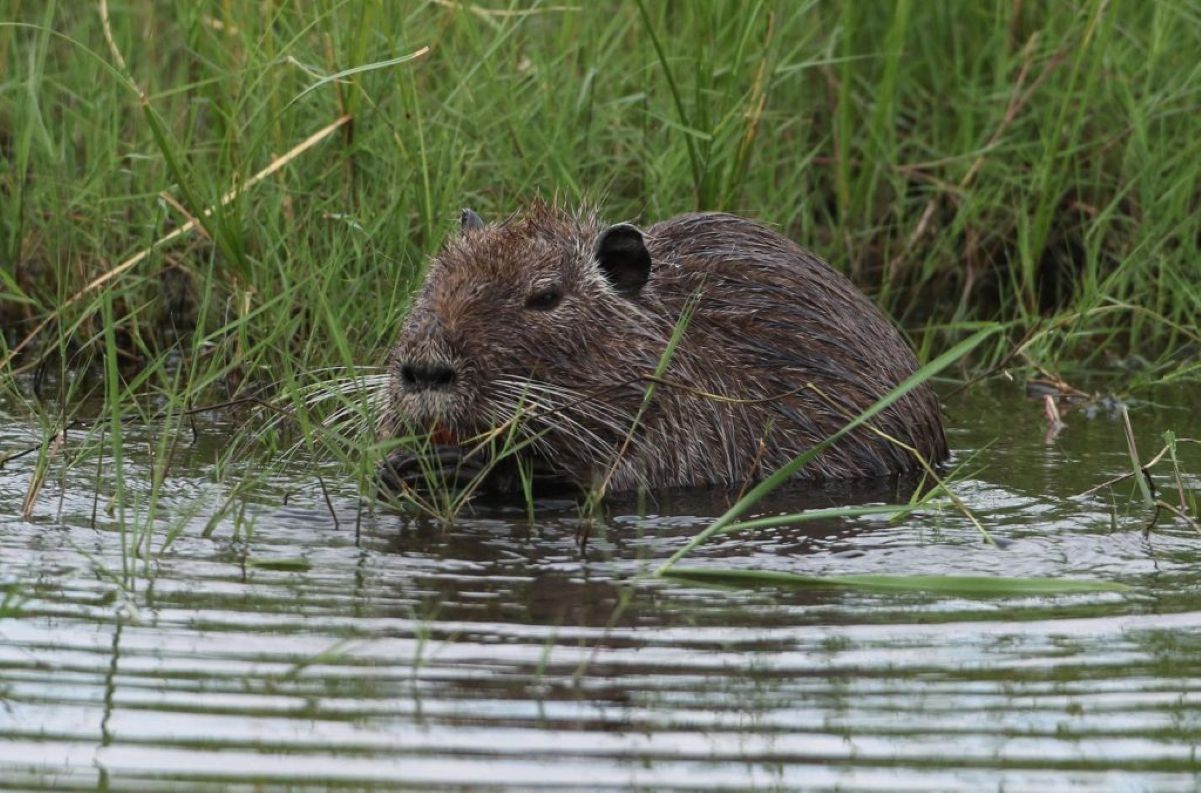
Credits: Μάρκος Χουζούρης/ Ευροκίνηση
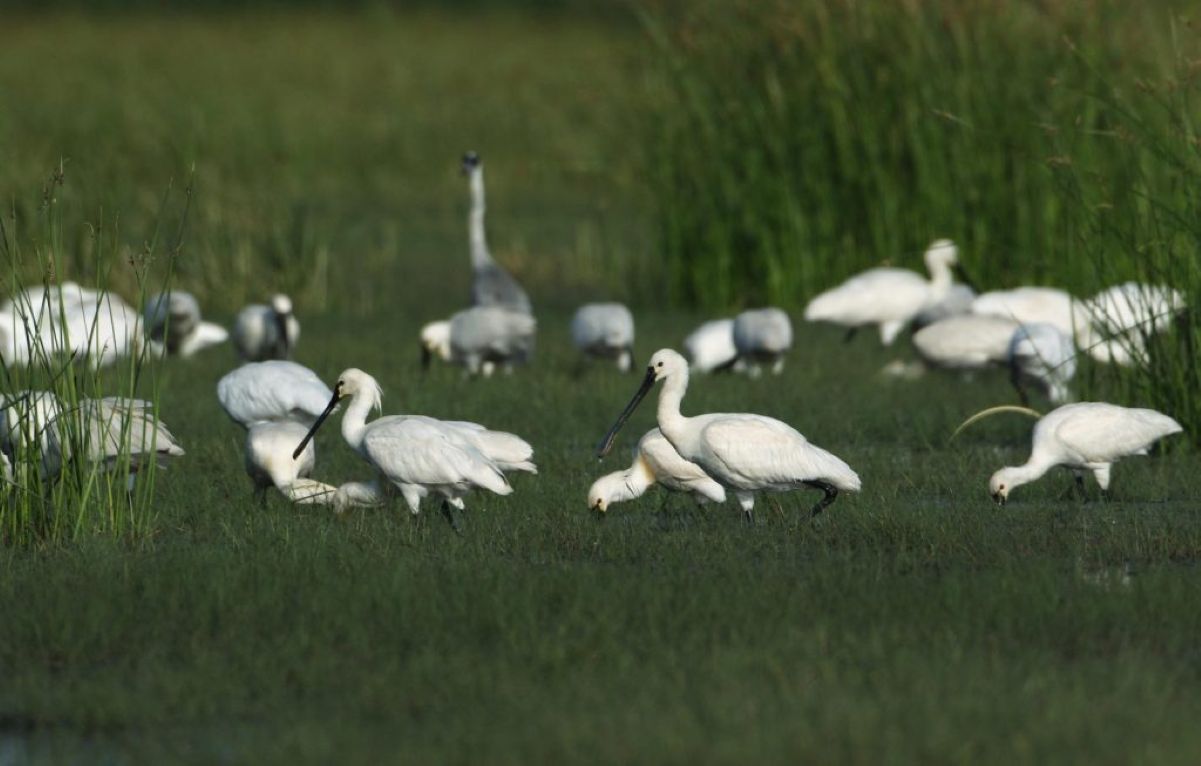
Swans—mute, whooper, and tundra—grace the wetlands alongside imperial and sea eagles, pelicans, and spoonbills. In all, 316 bird species have been recorded, 77 of which breed in the area.
This ecological richness stems from the delta’s intricate geography: seven distinct habitat types weave together a living tapestry, nourished by the mingling of fresh, brackish, and salt waters.
Here, at the meeting point of Europe and Asia, the Evros Delta stands as a living reminder that wild beauty still thrives—where river, sea, and sky become one.