Among his many achievements during his seven terms as Prime Minister, he was instrumental in securing Greek victory in the Balkan Wars (1912-1913), in reforming and modernizing the Constitution (1911), and facilitating the country’s economic modernization. He was also a highly respected statesman on the international scene and maintained close relations with Britain and France, whom he saw as Greece’s natural allies.
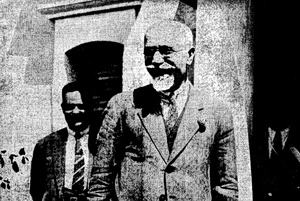
His passing sent shockwaves across the Greek political and social fabric. Friends and enemies alike mourned him. His name had been so foundational to Greek political life that parties were identified based on their stance towards him, either Venizelists or Anti-Venizelists. Whether he inspired love or hatred, his influence, both domestic and abroad was undeniable.
A Mournful Series of Events
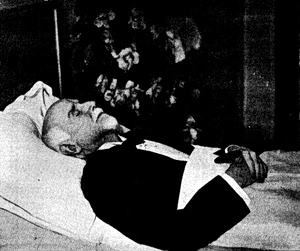
On March 18th, 1936, Venizelos lay on his bed in his Parisian apartment, in a half-conscious state, surrounded by his wife and sons, whom he barely recognised. By the late evening he fell into a comatose state, and died at 20:30. The news of Venizelos’s death shocked Greece and the entire country was plunged into mourning.
On the 27th of March, his body arrived at the port of Chania, Crete. Present was also the Crown Prince and government representatives. Five passenger ships carrying mourners accompanied the procession.
The atmosphere was pensive with politicians from all parties present and paying their respects to the recently departed political giant.
The city of Chania had been on vigil the previous night, with crowds gathering on the beach to await the arrival of the warships. At dawn, the church bells rang out mournfully across the dark city with masses of people awaiting to bid their final farewells.
At 10:00am precisely, a cannon salute was fired by the Chania city guard and the band played the national anthem, as the coffin was solemnly moved off the ship and into the hands of a group of seasoned veterans, clothed in traditional Cretan costumes.
His burial took place on the Akrotiri peninsula, next to the historic church of the Prophet Elias. Next to the grave of Eleftherios Venizelos, his obituary was later written, which he himself had delivered to the Greek parliament in April 1932:
“The deceased was a true man with courage and self-confidence both for himself and for the people he was called to govern.
He may have made many mistakes, but he never lost his courage, he was never a fatalist because he never expected fate to see his country advance, but he put all the fire he had within him, all his mental and physical strength, at its service.”