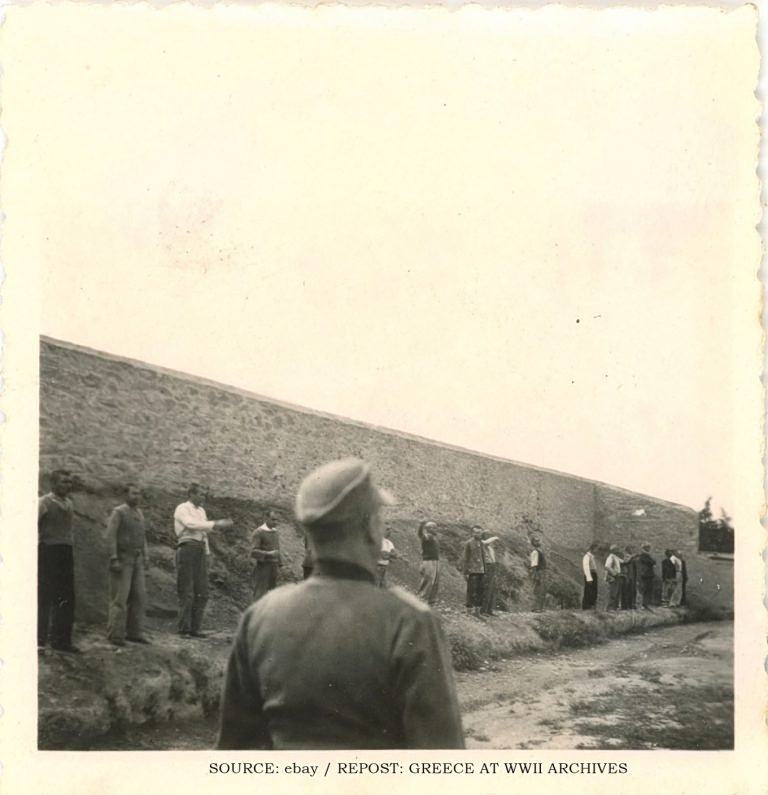
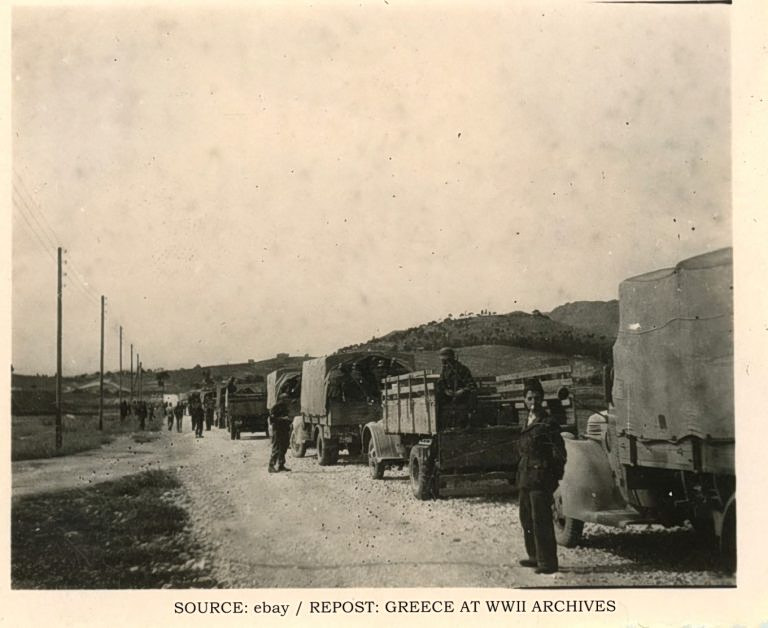
Photos believed to depict the execution of 200 Greek resistance fighters at the Shooting Range of Kaisariani, a municipality in eastern Athens, on Labor Day, May 1, 1944, have emerged for the first time 82 years after the event. While their authenticity has not yet been verified, the images are considered an important visual record of one of the darkest chapters of the German Occupation in Greece.
The photographs were reportedly found in an album belonging to a German officer stationed in Malakasa, East Attica, during the Occupation. The album surfaced for sale in an online auction on eBay by a Belgian seller and was publicized via the “Greece at WWII Archives” Facebook page, triggering discussions about the authenticity of the images and the ethics of trading materials linked to war crimes. The auction has since ended, and the items have been removed from the platform.
Government spokesperson Pavlos Marinakis announced Monday that the Culture Ministry is already in the process of obtaining the photographs.
Execution order
The mass execution was ordered in retaliation for the killing of a German general and three of his officers, as well as the wounding of soldiers in Molaoi, Laconia, on April 27, 1944. Most of those executed were political prisoners, many transferred from the Haidari concentration camp in Athens, including communists already held since the Metaxas dictatorship, whom Greek authorities handed over to the German occupiers. The execution order had been published in the press on April 30, 1944. It read:
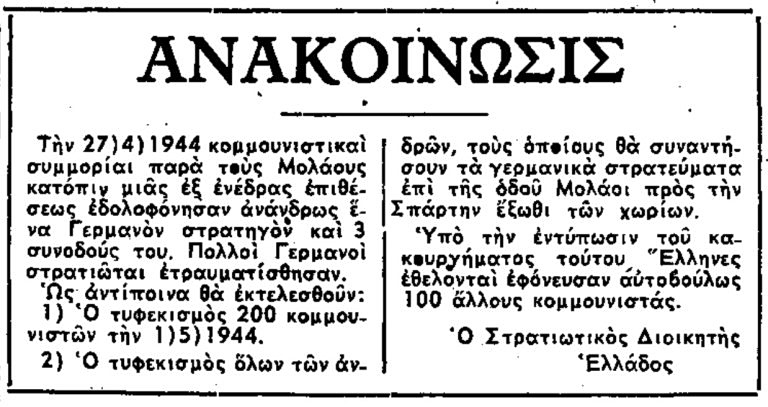
“On April 27, 1944, communist bands near Molai, following an ambush attack, cowardly murdered a German General and three of his escorts. Many German soldiers were injured. In retaliation, it was ordered:
- The shooting of 200 communists on May 1, 1944.
- The shooting of all men whom the German troops would encounter on the road from Molai to Sparta outside the villages.
Under the impression of this crime, Greek volunteers voluntarily killed 100 other communists.
The Military Commander of Greece.”
Two of the condemned identified
Initial reports indicate that two of the executed individuals may have been identified in the newly surfaced photos. One image shows a man in a white shirt, believed by social media users to be Vassilis Papadimas. Born in 1909 in Pylos, Papadimas worked at a spirits factory in Messinia, fought on the Albanian front, and was arrested in August 1941 by Italian carabinieri and Greek police. He was eventually transferred to Haidari and later executed at Kaissariani.
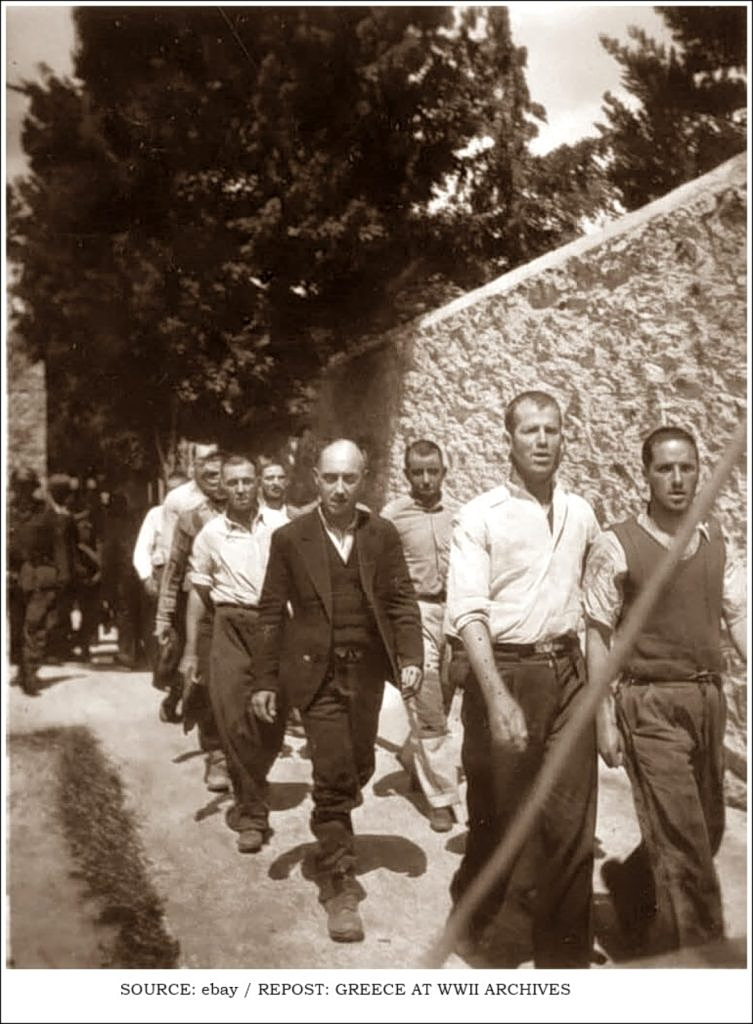
His mother suffered a stroke and died forty days after his execution, and his brother, Dimitris Papadimas, a resistance fighter and publisher, narrowly escaped execution and was later exiled to Makronisos, an island in the Aegean notorious for housing a political prison between the 1920s and 1970s.
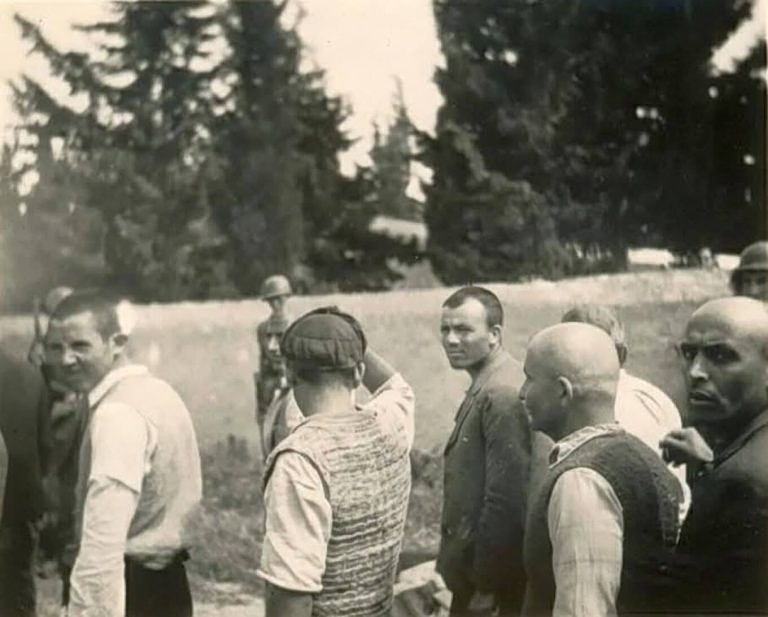
Another photograph appears to show a young man, Elias Rizos, slightly smiling. Rizos worked in a small pasta and bakery workshop in Lamia and was arrested by Greek collaborators after the Italian occupation, later transferred to Haidari, and executed at Kaissariani. His siblings, Apostolis and Vasiliki, were also involved in resistance activities and associated with the Communist Party of Greece (KKE).
Aftermath
Pavlos Palaiologos provides a tragic aspect of the execution in To Vima on October 14, 1947: “So much we do not know… So much we have forgotten. Two hundred were shot on Labor Day of 1944. The occupier did not even take care to record their details.
“The police station of Kaisariani called the Archbishopric to send someone to collect their clothes. They were gathered in a warehouse on Apollonos Street [in downtown Athens]
“The news spread like lightning through the city. A crowd, anxious for their own loved ones, stormed the warehouse. They searched the clothes, rifled through the pockets. And occasionally a cry of heartbreak: a mother finding her son’s jacket. A woman recognizing her husband’s shirt.”
The ideology of the executed sometimes prevented a portion of the Greek political scene from approaching this event in the way it should have.
In the summer of 1965, Greece experienced a political crisis known as the Iouliana (or “July events”), when a constitutional deadlock and tensions between King Constantine II and Prime Minister Georgios Papandreou’s government led to the resignation of Papandreou and a period of political instability. A series of short-lived governments followed. In 1966, the then conservative government led by Stefanos Stefanopoulos did not grant permission for a ceremony dedicated to the memory of the 200 executed.