 Μake us preferred on Google
 At what level are Greek–American relations today? If one relies on what the political leadership in Athens periodically communicates, the answer is: “excellent, better than ever.” For example, the tangible interest shown by some of the most powerful American oil companies in exploiting offshore blocks in the Ionian Sea and west and south of Crete reinforces this view. Intergovernmental cooperation in the energy sector can indeed strengthen Greece’s geopolitical position in the Eastern Mediterranean.
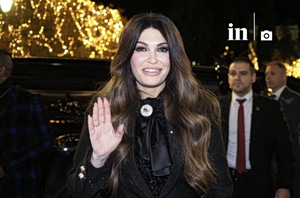
The arrival of Ambassador Kimberly Guilfoyle in Greece also added new momentum to the bilateral balance, especially as it was accompanied by the presence of two senior ministers from the Trump administration in Athens, as well as the signing of agreements to activate the Vertical Corridor, so as to multiply the quantities of American gas destined for Central and Eastern Europe. At the same time, the 3+1 scheme (Greece–Cyprus–Israel under US auspices) was reactivated at the level of energy ministers.
Greek Unease in the Face of the “Trump Hurricane”
However, when viewed within the narrower political and diplomatic framework, Greek–American relations appear rather stagnant, if not “frozen.” For Washington, Athens remains one of the two strong pillars of NATO’s southeastern flank—but the American president shows little interest either in the future of the Western alliance or, even more so, in this particular dimension of Greece’s relationship with the United States.
By general admission, Athens is facing the “Trump hurricane” and its impact on the geopolitical landscape with unease. The stance of the prime minister’s office and a number of willing ministers toward the American intervention in Venezuela—a dangerous balancing act between adherence to the basic principles of international legality and fear of provoking the anger of the White House—best reflects the government’s prevailing mindset: it is good to be on good terms with the Americans, but it is equally good to stay off their radar.
Communication Channels
Despite its pivotal geographical position in a turbulent region, and contrary to the traditional practice of the post-war period, a direct channel of communication between the Maximos Mansion and the White House has yet to be established—even as these days mark one year since Donald Trump’s inauguration. Donald Trump has communicated with Kyriakos Mitsotakis only once, ceremonially, immediately after his election. By contrast, the US president’s contacts with Tayyip Erdoğan are now hardly considered newsworthy.
The relationship between Foreign Ministers Giorgos Gerapetritis and Marco Rubio is nonetheless assessed positively, with the two men having met twice and maintaining a relatively functional line of communication. A senior diplomatic source tells To Vima that “communication channels do exist, at all levels.” The real challenge, the same source continues, is “for these channels to be maintained and to produce tangible results through strengthened bilateral cooperation.”
The Strategic Dialogue
The reality is that in recent months Greek–American cooperation has been at a standstill. The holding of the strategic dialogue—initially scheduled for mid-2025 at the level of foreign ministers—remains up in the air. According to information from To Vima, there are currently no contacts between the two sides either regarding possible dates or the agenda.
“First we need to agree on a date, and only then can discussions on the agenda begin,” says a source with direct knowledge of the process, adding that while the arrival of Ms. Guilfoyle initially signaled progress on the strategic dialogue, the issue ultimately lost momentum. Even so, there is optimism—and anticipation—in Athens that Mr. Rubio may cross the threshold of the Ministry of Foreign Affairs within the first quarter of 2026, although this scenario does not appear particularly likely.
The relatively moderate head of US diplomacy has taken on a range of other commitments, and at this juncture Greek–American relations are not a priority for the presidential circle. Meanwhile, in 2026 Athens and Washington are due to renew the five-year Mutual Defense Cooperation Agreement (MDCA), which is not directly linked to the strategic dialogue. Contacts between lower-ranking Greek and American officials nevertheless continue, as do higher-level exchanges between Deputy Foreign Minister Alexandra Papadopoulou and members of the US Congress.
Reservations About a One-on-One Meeting
Another key question is whether Athens truly seeks a visit by Kyriakos Mitsotakis to the White House. According to reliable information from To Vima, the advice now being given to the prime minister—who recently stated that he would meet Donald Trump “at some point”—is to avoid, at least for the time being, a close-up meeting with the American president.
This is not due to concerns about what might be said publicly, given Trump’s unpredictable character, but mainly because, at present, there is no agenda that would interest him. Therefore, according to this reasoning, beyond the photo opportunity itself, Athens has little to gain from such a meeting.
Athens’ Concerns
By contrast, there is a clear sense of concern in Athens regarding a potential American intervention aimed at settling either Greek–Turkish differences or, more broadly, the long-standing multilateral issues affecting neighboring states in the Eastern Mediterranean. Despite the acknowledged complexity of such an initiative—and the lack of immediate tangible benefits for the Americans—two schools of thought exist within the government.
According to the first, expressed by a New Democracy official with experience in foreign policy, “the anxiety is understandable. President Trump may view the region as yet another opportunity to present himself as a ‘peacemaker.’ What worries us, however, is that we do not know what such an initiative might entail.” He stresses that Athens must not fall into the trap of presenting itself as a “client state,” meaning deviating from fundamental principles in order to appease the emotional impulses of the American president.
According to the second line of thinking, “there is no reason for fear. The United States wants Turkey firmly in its camp, and that is why it is seeking ways to bridge Ankara’s differences with both Athens and Tel Aviv,” notes another party official with a long career in international relations, adding, however, that “this does not mean there are easy or immediate solutions.” He nevertheless agrees that such an initiative “would be almost impossible to accept—not only for the government but for the political system as a whole.”
Amid this unusual situation, the government is also approaching third powers with which it maintains strategic cooperation, using them as messengers to Washington. Kyriakos Mitsotakis did so publicly by calling on his Israeli counterpart, Benjamin Netanyahu, to inform Donald Trump of the merits of the 3+1 framework in the Eastern Mediterranean. Meanwhile, Environment Minister Stavros Papastavrou—who maintains open lines of communication with members of the US administration—laid the groundwork for energy cooperation with Saudi Arabia, a power with close ties to the American president.