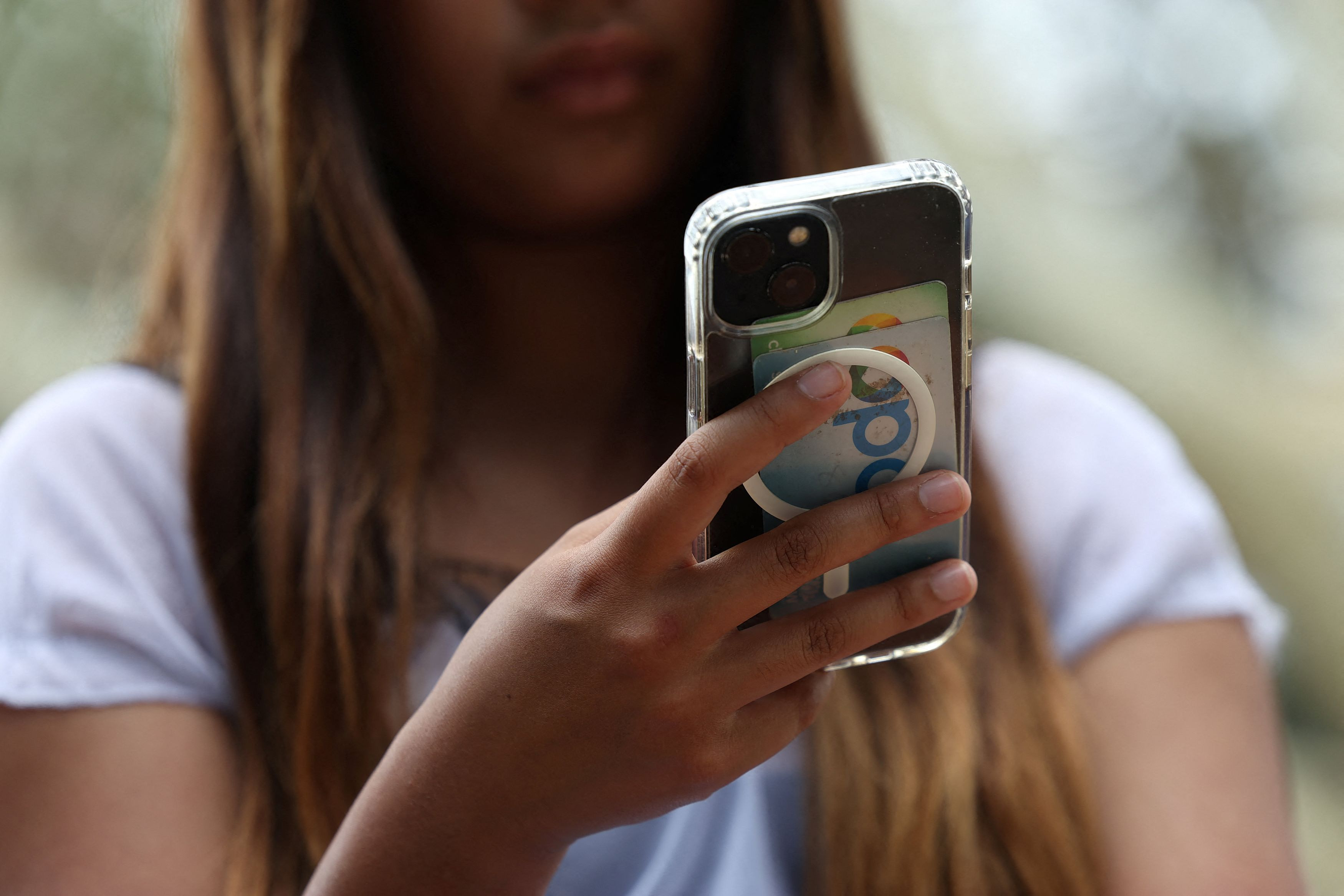
Australia on Wednesday became the first country to enforce a nationwide ban on social media for children under 16, ordering ten major platforms to block access or face fines of up to A$49.5 million. The move triggered a rush of farewell posts from young users and ignited a global debate about online safety, privacy and free speech.
The law, which took effect at midnight, applies to platforms including TikTok, YouTube, Instagram and Facebook. Prime Minister Anthony Albanese hailed the change as “a proud day” for families, calling it one of the country’s most significant cultural shifts. He urged children to use the summer break to pick up new hobbies, saying the ban would “reverberate around the world.”
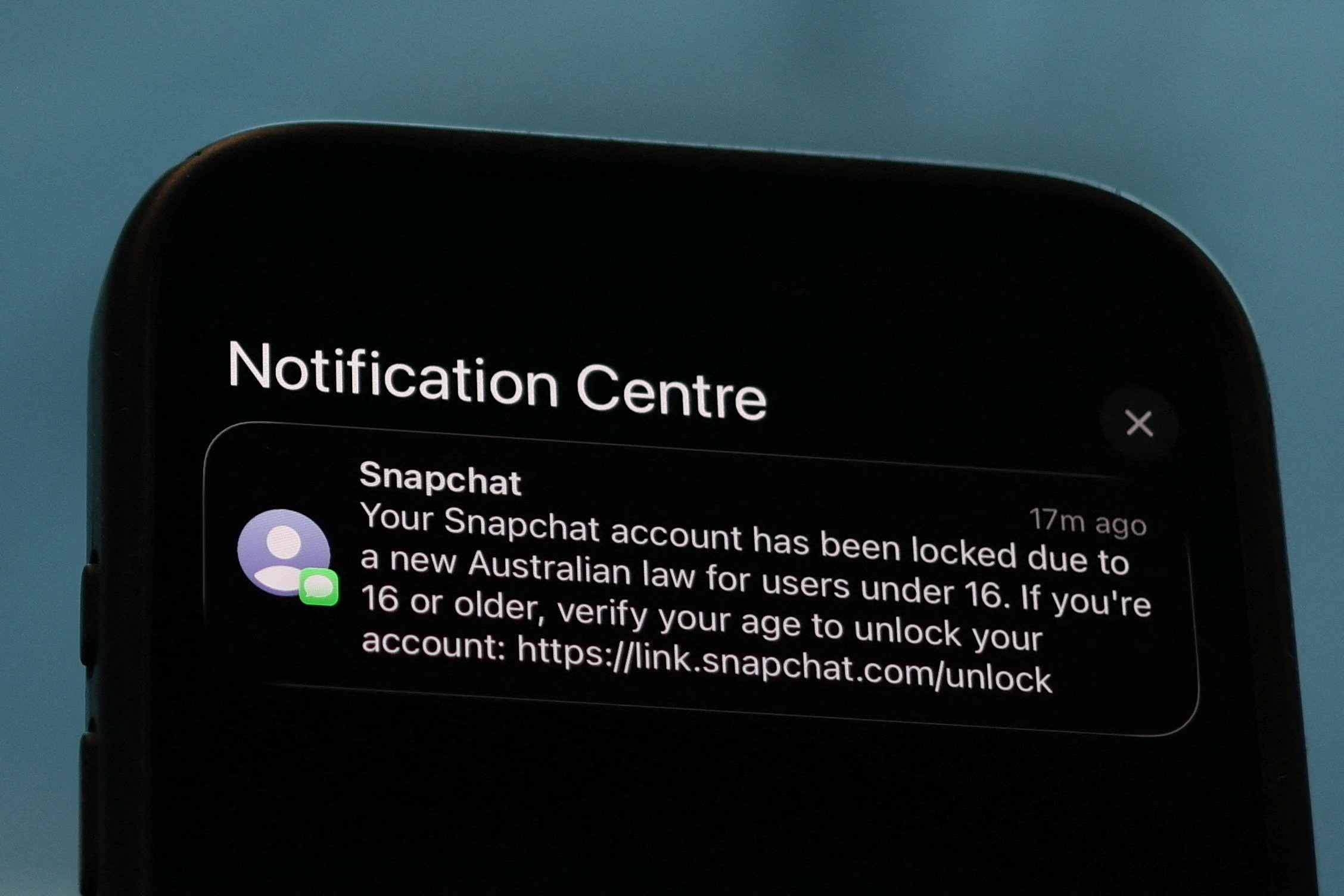
A notification from Snapchat requesting age verification is displayed on a mobile phone as a law banning social media for users under 16 in Australia takes effect, in this picture illustration taken on December 9, 2025. REUTERS/Hollie Adams/Illustration
The rollout follows a year of intense public debate about whether governments can realistically restrict platforms that are deeply woven into daily life. Australia’s centre-left government argued the ban was necessary to address research linking heavy social media use among young teens to misinformation, bullying and harmful body-image content. Several countries, from Denmark to New Zealand to Malaysia, have signalled interest in studying the model.
Julie Inman Grant, Australia’s eSafety Commissioner and the official overseeing the ban, said American parents frequently express frustration that similar protections do not exist in the United States. She described the legislation as an international test case for putting “tween and teen safety before technology profits.”
Tech companies, however, warned the law challenges age-verification norms and risks undermining digital rights. Elon Musk’s X was the last of the major platforms to comply, saying it was acting only because it was legally required. Platforms plan to use a mix of behavioural age-inference tools, selfie-based age estimation and document checks to enforce the ban.
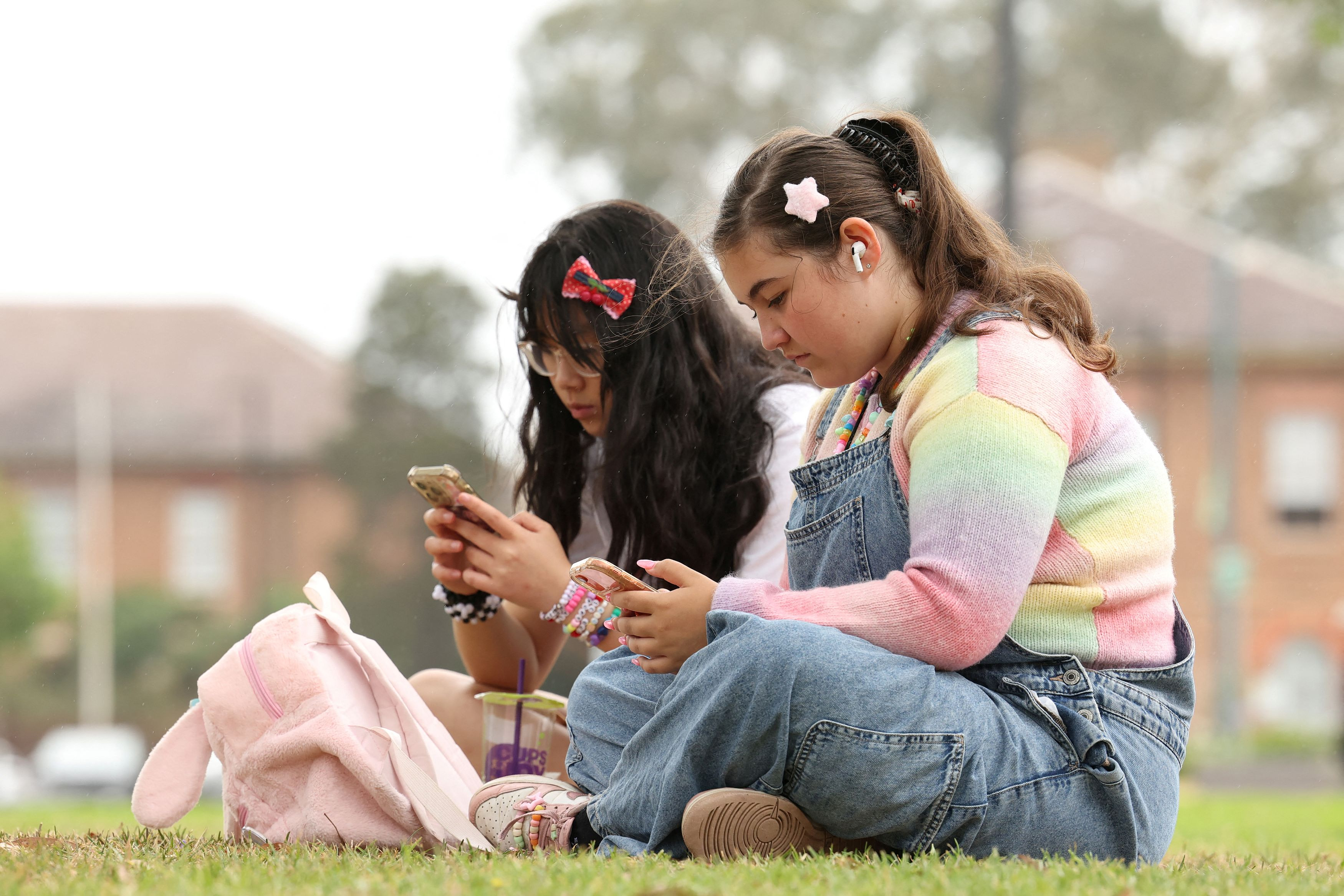
Annie Wang, 14, and Ayris Tolson, 15, use their mobile phones, ahead of Australia’s social media ban for users under 16, which is scheduled to take effect on December 10, in Sydney, Australia, November 22, 2025. REUTERS/Hollie Adams
For the industry, the law arrives as user growth plateaus and time spent online declines. Platforms say they earn little from under-16 audiences but warn that the ban disrupts a pipeline of future users.
Ahead of the deadline, the estimated one million young Australians affected posted emotional goodbyes. Some expressed grief or fear of isolation; others saw humour in the countdown, sharing videos set to Adele’s “Skyfall.” Many urged followers to move to smaller apps not yet covered by the law. On Reddit, teens described losing not only social spaces but also playlists, support networks and creative outlets.
Some expressed anger at Albanese, who lost thousands of followers across his social accounts after the announcement. Others backed the move, acknowledging excessive screen time. “Ngl, social media ban is probably for the best of us,” one TikTok user wrote.
As hundreds of thousands of accounts begin to disappear, Australia’s ban is now a live global experiment—and one closely watched by governments weighing how far to push tech regulation without shutting down online expression and community.