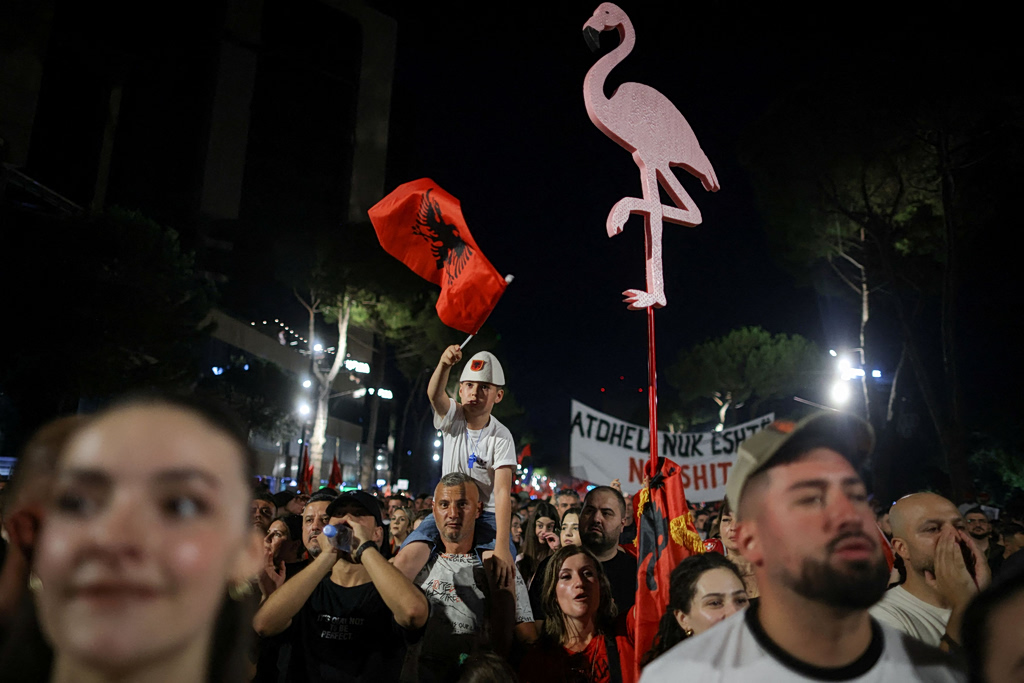
The smell of tear gas on Desmoret e Kombit Avenue, in the center of Tirana, has not yet had time to dissipate. A few hours earlier, the heart of the Albanian capital resembled a battlefield. Thousands of citizens, holding pink inflatable flamingos – the emblematic symbol of this peculiar uprising – found themselves facing a heavily armed police cordon around the prime minister’s office. However, to understand the true dynamics of this surging wave that is now flooding Tirana, one must travel hundreds of kilometers away, to the wounded and systematically plundered southern Albania.
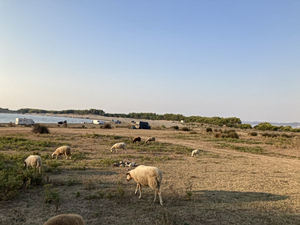
The scene at the Vjosa–Narta lagoon, in the wider Vlora region, captures the contrasts of modern Albania. On one side, the otherworldly calm of a unique wetland ecosystem, and on the other, the cold metal of barbed wire fences erected by private security companies. Bulldozers are already at work, flattening protected zones to clear the way for a real estate investment by Affinity Partners, owned by Jared Kushner, son-in-law of US President Donald Trump. For anyone familiar with the human geography of the region, today’s cry of despair from the locals is no surprise. It is the culmination of a long-standing, silent trauma. For decades, residents of the South have watched their most beloved childhood beaches disappear one after another, turning into fortified military zones – not only for the needs of the Albanian army, but also within the framework of NATO’s geostrategic requirements. Today, that loss is translated into fast-track tourist resorts for the global economic elite.
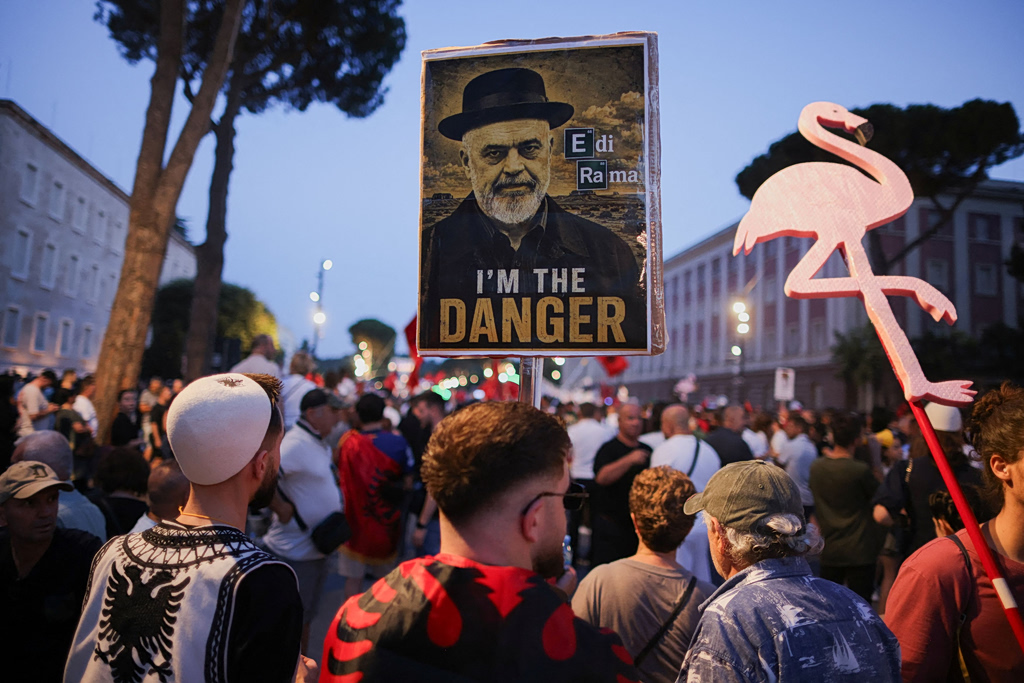
A sign is displayed as protesters demonstrate against the government, following weeks of protest against a planned luxury resort backed by a company linked to Jared Kushner, the son-in-law of U.S. President Donald Trump, on an environmentally sensitive part of the Adriatic coast, in Tirana, Albania, June 21, 2026. REUTERS/Valdrin Xhemaj
“What prosperity?”
In the shadow of shuttered shops in Vlora, Dritan (32, small café owner and activist) expresses, in the most structured way, the disappointment of the productive class of the South, which sees its future being mortgaged: “They tell you ‘investors will come, that means economic prosperity—how can you not want that for your country?’ But when in history has that actually happened? The same investments, the same mega-tourism went through Bali, Puerto Rico, Hawaii, Greece, Thailand, which I visited last year. Which of these regions actually stood on their feet economically? Which peoples saw their quality of life improve? Absolutely none! In Thailand we saw most of their most famous beaches destroyed. Go and Google what their once pristine beaches look like now. Also look at their wages and tell me if you see prosperity. It’s not that we are stuck in the past—we live from tourism. But everything must be done step by step, legally and transparently.”
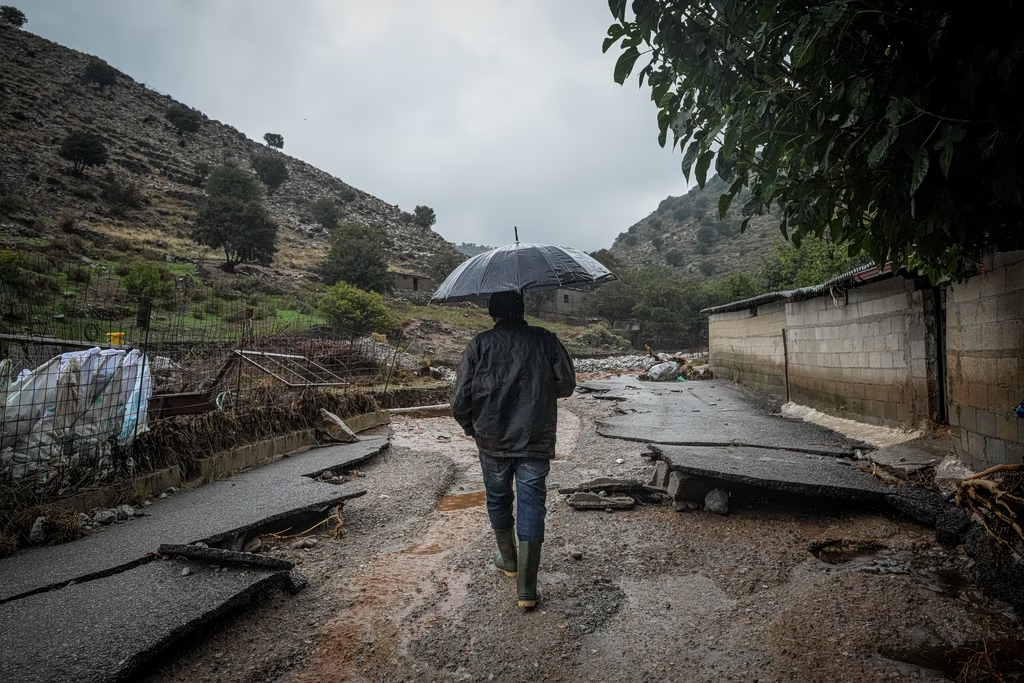
On the same sidewalk, another protester participating daily in the mobilizations describes an unprecedented social reality: “For about three weeks now we have been meeting regularly at six every afternoon. The Albanian people have never shown such persistence and mass participation since the fall of communism. We are not generally a people that takes to the streets; in this respect Greece or France are more advanced. The marches last until late, and we usually return home after midnight. On the street you see everything: pensioners, families with children, people with pets, of every age, religion, and political belief. I have never felt so alive and so connected to my place. Of course, I am saddened that in recent days I see fewer people in the region. In Tirana, fortunately, the gatherings remain massive, despite the fact that local media are doing everything they can to suppress and downplay the true scale of the uprising.”
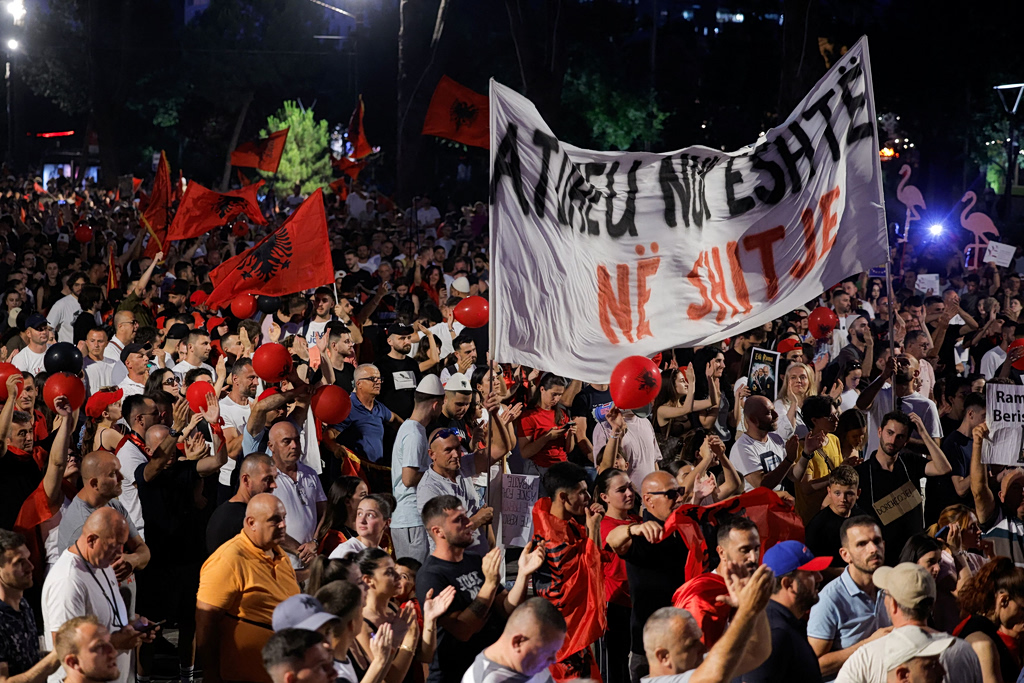
Protesters shout slogans and hold placards as they demonstrate against the government, following weeks of protest against a planned luxury resort backed by a company linked to Jared Kushner, the son-in-law of U.S. President Donald Trump, on an environmentally sensitive part of the Adriatic coast, in Tirana, Albania, June 21, 2026. REUTERS/Valdrin Xhemaj
The background
The story begins when Jared Kushner and his wife Ivanka Trump visited the Albanian Riviera aboard a luxury yacht. Enchanted by the pristine landscape, they identified two points of interest: the remote, uninhabited island of Sazan (a former communist military base), and the Zvernec peninsula in the Vjosa–Narta lagoon, a protected sanctuary for rare birds such as pink flamingos and other endangered species.
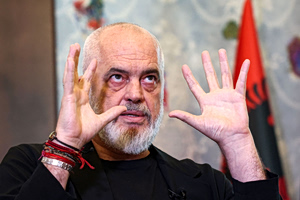
What began as a private flirtation rapidly turned into state policy. Immediately after Donald Trump’s re-election to the White House, the government of Edi Rama accelerated the procedures. The total value of the investment plan reaches between 1.4 and 1.6 billion dollars, making it one of the largest foreign investments in the country’s history. The plan foresees the creation of a monumental complex with 10,000 beds, ultra-luxury hotels, villas, private pools, and a yacht marina.
But where lies the scandal that triggered the uprising?
In order to satisfy the American investor, the Albanian government hastily passed Law 21/2024, which facilitated the construction of tourism infrastructure within strictly protected natural areas. It also granted the consortium the status of a “strategic investor.” In practice, this means: full exemption from tenders, bypassing environmental assessments, excessive tax breaks, and most importantly, the state’s ability to expropriate land from locals in order to transfer it to foreign oligarchs. The fact that the country’s special anti-corruption prosecution was forced to intervene and freeze bank accounts due to forged and fraudulent land ownership titles confirms that the “economic miracle” promoted by Rama is deeply flawed.
Cross-party rupture
What began as a localized environmental protest in Vlora and Zvernec quickly mutated. Through the dynamics of social media, images of blocked coastlines acted as the ultimate catalyst. The anger of the periphery was transferred to the capital, which, as the center of political decision-making, assumed the role of a national amplifier.
The most striking feature on the streets is the complete collapse of traditional political divisions. The “Flamingo Revolution” has achieved the unthinkable for a deeply polarized Albanian society: cross-party unity. On the same sidewalk stand environmental left-wing activists, conservative nationalists, disillusioned voters of the ruling Socialist Party, and the dynamic youth of universities.
Protesters shout slogans as they demonstrate against the government, following weeks of protest against a planned luxury resort backed by a company linked to Jared Kushner, the son-in-law of U.S. President Donald Trump, on an environmentally sensitive part of the Adriatic coast, in Tirana, Albania, June 20, 2026. REUTERS/Valdrin Xhemaj
At the heart of the protests in Tirana, Eriola (21, Sociology student) clearly outlines the motives of the new generation: “Many say that the Albanian people are opposing Trump or Kushner. What I want to make clear is that this is not personal or centered on individuals. We would be just as opposed if it were any other government or any other billionaire. The problem is not who buys our land, but that the people do not accept that it is sold—especially a protected area, where such transactions should not even be up for discussion. Beyond that, all of this is just the last straw. There are so many other reasons we are in the streets. The South has been abandoned to its fate, often without electricity and water for days in rural areas. Of course tourists will never experience this. What we are experiencing is the effect of gentrification, which started with the golden visas the government was so generously granting. When a British family or a digital nomad comes to live here and builds a house, prices rise. What does that mean? That we, the residents, must leave because there is no room for us anymore. It is either revolution or migration. We do not want to emigrate like our parents, who suffered so much. Why is the state trying to give us reasons to leave our own country?”
The “block” from Brussels
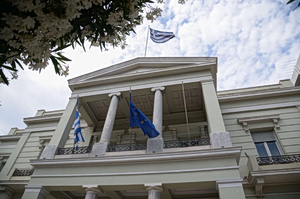
Events are now unfolding at a pace the government in Tirana can no longer control. The issue has moved beyond Albania’s borders and has become a European sore point. The European Parliament issued a strong emergency statement calling for an immediate moratorium on all construction projects in protected areas, directly pointing to Vjosa–Narta. The Brussels ultimatum is clear: the destruction of ecosystems for real estate purposes constitutes a violation of accession benchmarks and could fully freeze Albania’s EU integration path, jeopardizing the national goal.
This uprising has shifted tension from the streets directly into the Albanian parliament. Sessions are taking place in an atmosphere of extreme polarization, with the government politically trapped between commitments made to American investors and the risk of a total rupture with Europe.