 Μake us preferred on Google
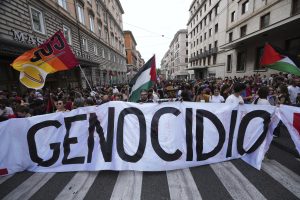
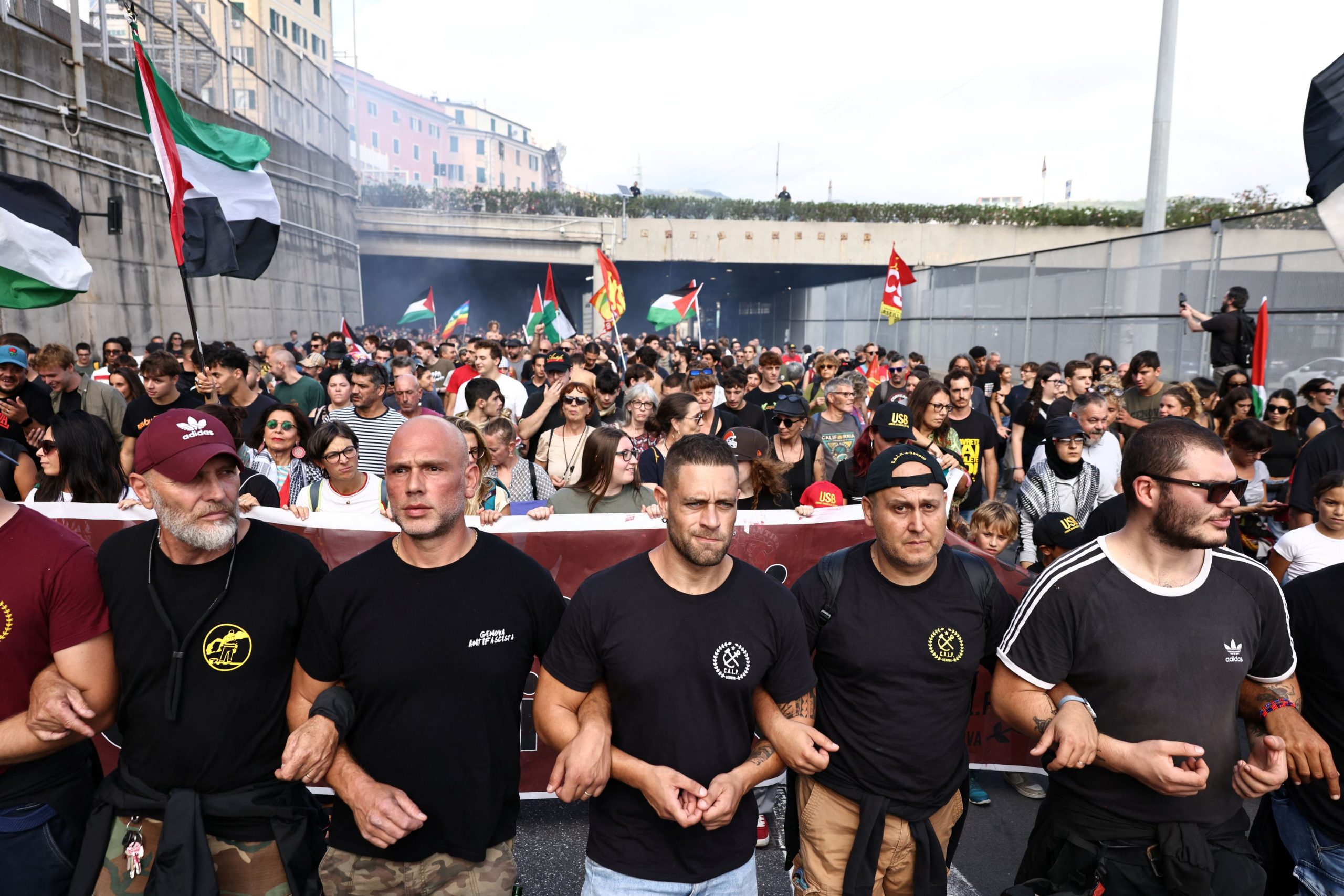
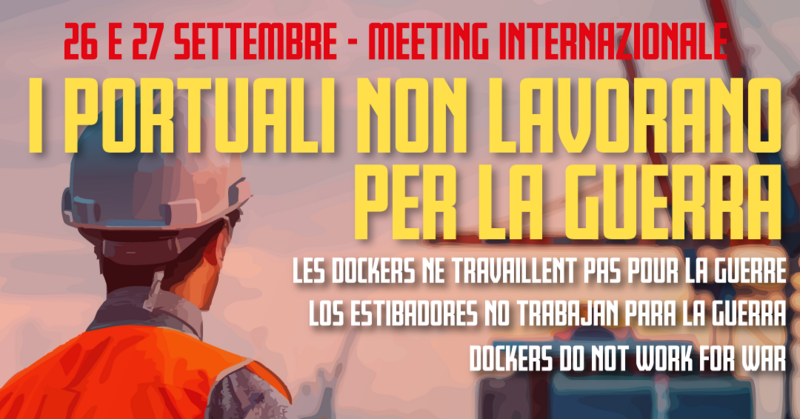
 Dockworkers from across Europe will convene in Genoa, Italy, on Friday and Saturday to discuss a coordinated response to shipments of weapons that could be used in Gaza — an effort that could expand into broader trade restrictions against Israel.
The meeting is hosted by Italy’s USB union and will include representatives from ports in Spain, France, Greece, Cyprus, Morocco, and Germany. “We hope to come out of this meeting with a plan for serious, concrete action — both immediate and long-term,” said Francesco Staccioli of USB’s confederal executive to Politico.
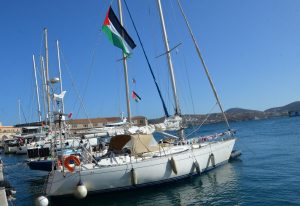
Talks are expected to focus on the Global Sumud Flotilla, a humanitarian convoy of 51 vessels that was targeted by Israeli drones in international waters south of Crete earlier this week. While discussions will initially centre on blocking military exports to Israel, union leaders say the scope could broaden.
“Looking ahead, it could mean coordinated industrial action in European ports against not just weapons, but all goods directed to Israel,” Staccioli said.
Union representatives say the initiative began as a push to declare Mediterranean ports “arms-free zones.” The urgency grew after vessels carrying weapons and military equipment bound for Israel docked in Piraeus, Marseille, and Genoa over the summer.
The Global Sumud Flotilla, involving more than 300 crew members, marks the fourth and largest maritime effort to challenge Israel’s blockade of Gaza. Following drone strikes on the convoy, Italy deployed a warship to monitor its citizens on board, with Spain and Greece following suit.
“The flotilla changed the game,” Staccioli said. “It amplified the debate and put Gaza front and centre, demanding strong, immediate intervention.” USB has warned that if contact with the flotilla is lost, Italian dockworkers will move to block shipments to Israel.
The Genoa meeting will open Friday with closed-door talks among port delegations aimed at agreeing on initial joint actions. On Saturday, dockworker unions will join a public session with other workers involved in the transport and production of military goods, continuing discussions on potential strike action.
Unions participating include Spain’s Coordinadora, France’s CGT Port & Docks, the main dockworker organizations in Greece and Cyprus, and Morocco’s ODT, representing Tangier dockworkers. Delegations from the Basque Country, Slovenia, and Germany are also expected, while Morocco and Turkey will join remotely. A Palestinian trade union delegation will also address the meeting.
The Genoa gathering follows recent actions to halt arms traffic through European ports. In Marseille, dockworkers blocked military shipments in June, while activists in Piraeus staged protests against cargoes in July. In Italy, USB has coordinated stoppages in Genoa, Livorno, Taranto, and other transport hubs.
“Everything that has happened has put our coordination in a new place,” Staccioli said. “The ports are now strategic battlegrounds — and we need a common stance and stronger coordination.”