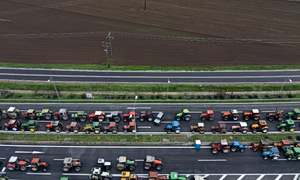
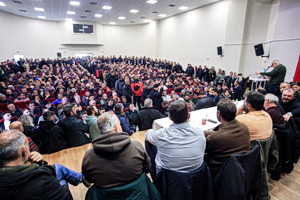
Thousands of European farmers are preparing to take to the streets of Brussels on December 18, coinciding with the EU Summit, to protest the upcoming EU-Mercosur trade agreement and the proposed post-2027 Common Agricultural Policy (CAP) funding.
Organizers expect around 10,000 farmers from across EU member states to participate, sending a “strong and united message” against current agricultural policies and the trade deal. Farmers have criticized the CAP proposals as underfunded and labeled the Mercosur agreement—which involves Argentina, Brazil, Uruguay, and Paraguay—as a “historic mistake” threatening European agriculture and food security. Demonstrators are also calling for simpler regulations and stronger legal protections for their profession.
The protests will culminate in a march to the European Parliament, though city closures are not planned. The timing is sensitive, as European Commission President Ursula von der Leyen intends to attend the Mercosur Summit in Brazil on December 20 for the agreement’s potential signing, pending approval from the EU Council.
Several EU member states have expressed reservations about the deal. Poland, Hungary, and Austria plan to vote against it, while Belgium remains temporarily neutral due to internal regional disagreements. France has voiced the strongest objections, with President Emmanuel Macron requesting a delay to ensure additional safeguards for sensitive agricultural products. Italy’s position remains unclear but is considered pivotal for achieving a qualified majority.
Meanwhile, the European Parliament approved enhanced protection measures for European farmers, including stricter monitoring of sensitive products such as beef, poultry, and sugar, and the possibility of reinstating tariffs in the event of market imbalances. The measures passed with 432 votes in favor and 161 against. Despite this, many farmers remain unconvinced, and the European Commission continues to push for the agreement to be signed before the end of the year, citing its economic, diplomatic, and geopolitical significance.
The Mercosur agreement may be discussed informally during the EU leaders’ summit, although it is not officially on the agenda. Farmers’ unions have expressed strong opposition and are mobilizing for demonstrations in Brussels to influence decision-makers before any final approval