
 Μake us preferred on Google
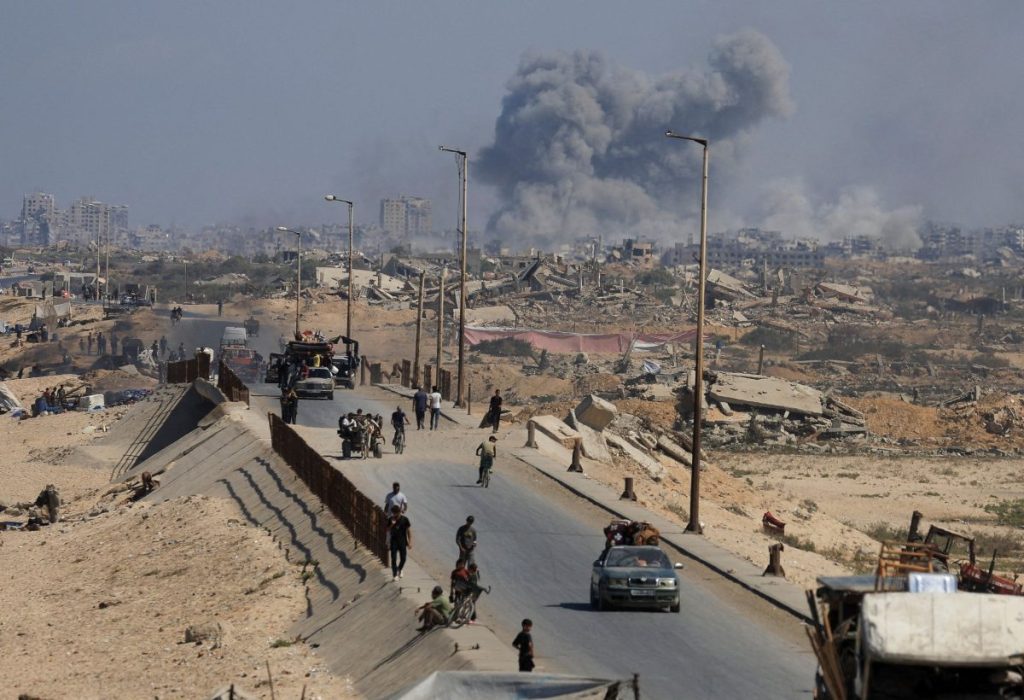
 Delegations from Israel and Hamas have arrived in Sharm el-Sheikh, the Egyptian resort on the Red Sea, to begin negotiations aimed at finalizing U.S. President Donald Trump’s plan for the future of Gaza, in what Washington hopes could bring an end to the war and lead to the release of hostages held by the militant group.
The talks began on the eve of the second anniversary of Hamas’s attack on Israel, and officials say hostages and prisoners are the top priority. Two Israeli sources confirmed to Reuters that the negotiations, part of Trump’s 20-point peace plan, focus first on freeing remaining captives. Hamas officials had arrived earlier in the day.
A source briefed on the discussions said the new round would not yield immediate results, warning that the process could take several days. “The goal is a comprehensive agreement with all details settled before any ceasefire takes effect,” the official said.
A Palestinian official close to the talks expressed skepticism, citing deep mutual distrust and concerns that Israel — led by its most right-wing government in history — might withdraw once it regains the hostages.
The Delegations
The Israeli delegation includes officials from the Mossad and Shin Bet intelligence agencies, Prime Minister Benjamin Netanyahu’s foreign policy adviser Ofir Falk, and hostage coordinator Gal Hirsch. Strategic Affairs Minister Ron Dermer, Israel’s chief negotiator, is expected to join later this week depending on progress.
The Hamas delegation is led by the group’s exiled Gaza leader Khalil al-Hayya, in his first visit to Egypt since surviving an Israeli airstrike in Doha that killed his son. Hamas negotiators are expected to seek clarification on the exchange mechanism for hostages and prisoners, Israel’s military withdrawal from Gaza, and the terms of a lasting ceasefire.
The Agreement
A key sticking point remains the Israeli demand for Hamas’s disarmament, a condition included in Trump’s plan. Hamas has repeatedly said it will not disarm unless Israel ends its occupation and a Palestinian state is established. Netanyahu, however, has vowed that no Palestinian state will ever be created, even as several Western nations, including Britain and France, recognized Palestinian independence last month.
Despite disagreements, both sides have reportedly agreed on the plan’s main framework, though details remain unresolved. Trump said on social media that the “first phase should be completed this week” and urged negotiators “to move fast.”
German Foreign Minister Johann Wandefuhl described the talks as “the most promising yet,” noting that for the first time in two years, discussions are “not just about a ceasefire, but about a sustainable political solution.”
Trump, who brokered normalization agreements between Israel and several Arab states during his first term, said his Gaza plan could pave the way for a broader peace across the Middle East.
The first phase of the talks centers on exchanging 48 remaining hostages in Gaza, of whom about 20 are believed to be alive, for Palestinian prisoners held in Israel. Hamas signaled on Friday that it had approved the hostage release and several other elements of the U.S. proposal.