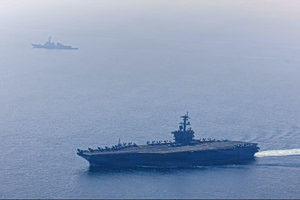
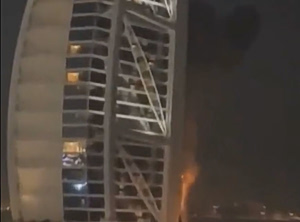
Overnight Iranian retaliatory strikes spread across the Gulf and the wider Middle East, reaching beyond U.S. bases and interests and inflicting damage in the United Arab Emirates, including at Dubai International Airport and the iconic Burj Al Arab.
Four people were injured at the airport, the emirate’s media office said early Sunday. In a post on X, Dubai’s press office reported that “a concourse at Dubai International Airport (DXB) sustained minor damage from an incident that was quickly brought under control,” without elaborating further. It later confirmed that a drone had been intercepted, and that falling debris sparked a small fire on the outer façade of the Burj Al Arab.
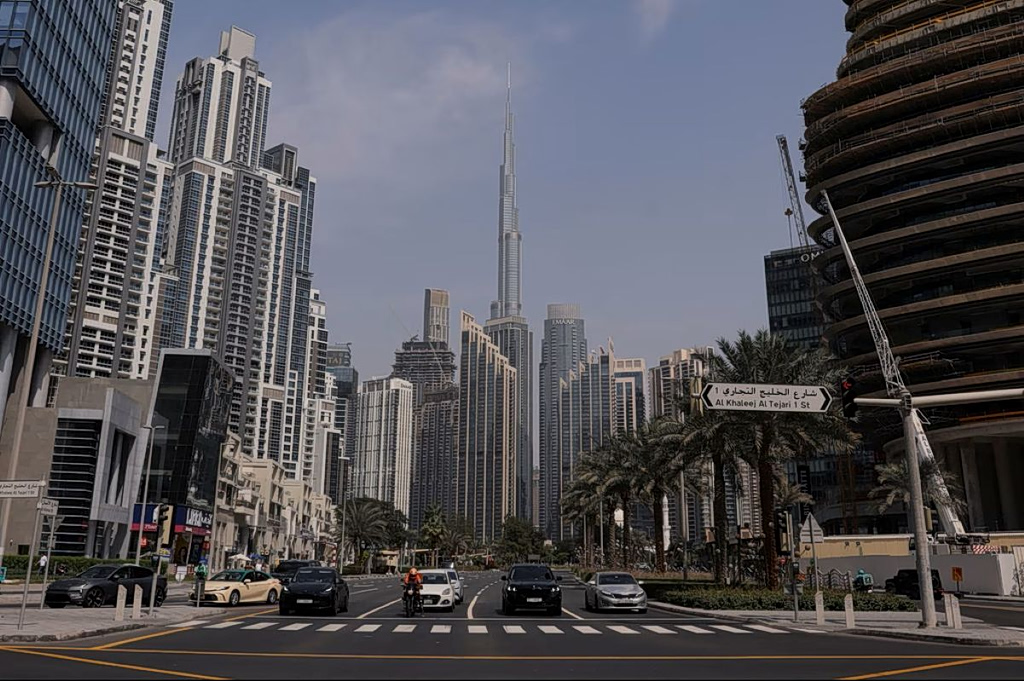
Dubai is the Middle East’s largest tourism and commercial hub, and its airport ranks among the busiest in the world, serving as a critical crossroads for global air travel.
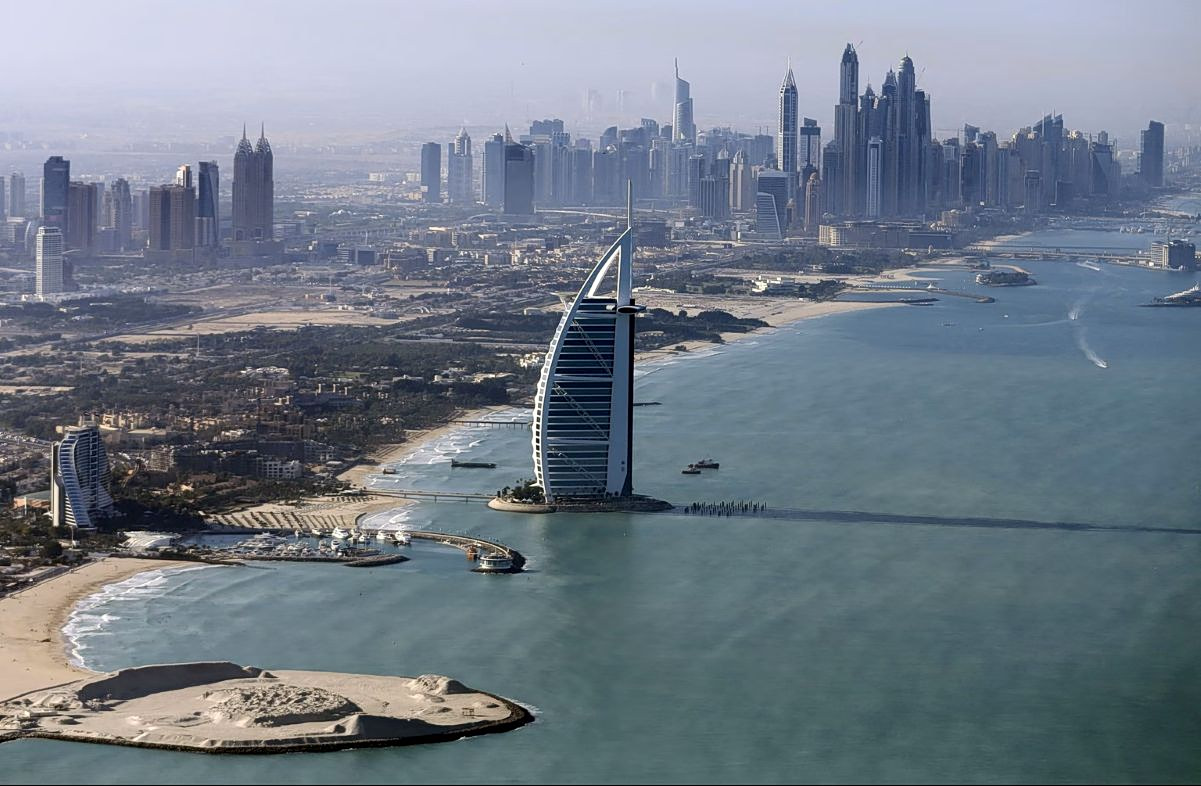
Το Burj Al Arab
The Burj Al Arab, one of the emirate’s most recognizable landmarks, has long symbolized Dubai’s global brand of luxury. Opened in 1999 on an artificial island off Jumeirah Beach, the sail-shaped tower quickly became an emblem of a city intent on projecting opulence on the world stage.
On Saturday, a fire also broke out near another hotel on the man-made island of Palm Jumeirah. Aviation industry sources told Reuters that the overnight Iranian attack had damaged one of the airport’s terminals.
In the capital, Abu Dhabi Airports said in a post on X that an incident at Zayed International Airport resulted in the death of one Asian national and injuries to seven others. The post was later deleted.
Debris from an aerial interception also ignited a fire at Dubai’s Jebel Ali Port, according to a separate statement from the emirate’s media office.
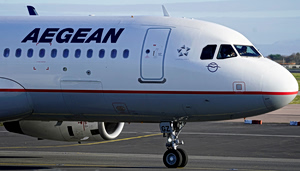
Airlines on Saturday suspended flights across much of the Middle East, including routes to and from Dubai and Abu Dhabi. Flight-tracking maps showed vast stretches of regional airspace nearly empty, underscoring the scale of disruption triggered by the escalating conflict.