U.S. President Donald Trump has rejected a proposal from Russian President Vladimir Putin to voluntarily extend limits on strategic nuclear weapons deployments for one year after the expiration of the New START treaty, the last remaining nuclear arms control agreement between the two countries.
In a post on his Truth Social platform, Trump said the United States should not prolong New START but instead pursue a new agreement. “Rather than extend New START, we should have our Nuclear Experts work on a new, improved and modernized Treaty that can last long into the future,” he wrote. Trump described the 2010 accord as “a badly negotiated deal” that he said was being “grossly violated.”
Putin had mentioned that Washington and Moscow continue to observe New START’s core limits for another year, capping deployed strategic warheads at 1,550 on 700 delivery systems, including missiles, aircraft and submarines. The treaty, signed in 2010 and extended once in 2021, expired this week and cannot be formally renewed again under its terms.
Arms control advocates warn that allowing the treaty to lapse without replacement could accelerate a nuclear arms race and raise the risk of miscalculation. Critics of New START in the United States, however, argue that the pact restricted Washington’s ability to deter nuclear threats from both Russia and China.
Trump’s criticism appeared to reference Russia’s 2023 decision to suspend on-site inspections and other verification measures, a move Putin said was prompted by U.S. support for Ukraine following Russia’s full-scale invasion in 2022. Despite the suspension, neither side has formally accused the other of breaching the treaty’s numerical limits.
The White House said the United States would continue talks with Russia. Kremlin spokesman Dmitry Peskov said Moscow remained open to dialogue if Washington responded constructively to Putin’s proposal. The United Nations has also urged both countries to return swiftly to negotiations.
Beyond limiting weapons, it established inspection and transparency measures that experts say helped build trust and stability between the two nuclear rivals. Without any successor deal, analysts warn the security environment could become more volatile, particularly as China continues to expand its nuclear arsenal.
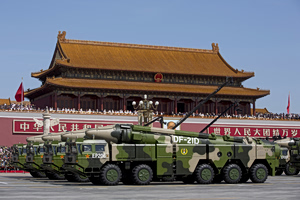
Trump has repeatedly said he wants a broader agreement that includes China. Beijing, which has an estimated 600 nuclear warheads compared with roughly 4,000 each for the United States and Russia, has declined to join talks, calling such proposals unreasonable. On Thursday, China said the expiration of New START was regrettable and urged Washington and Moscow to resume dialogue on “strategic stability.”