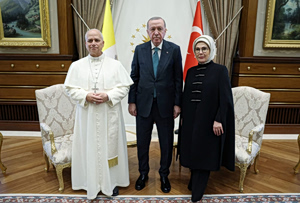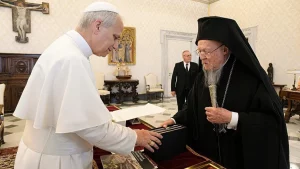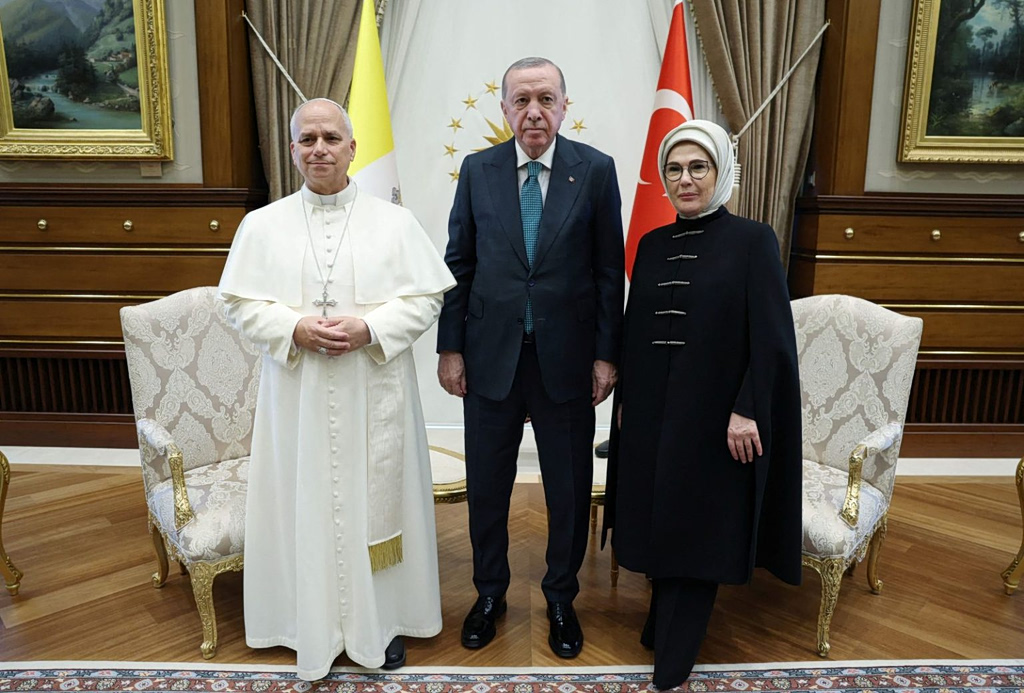
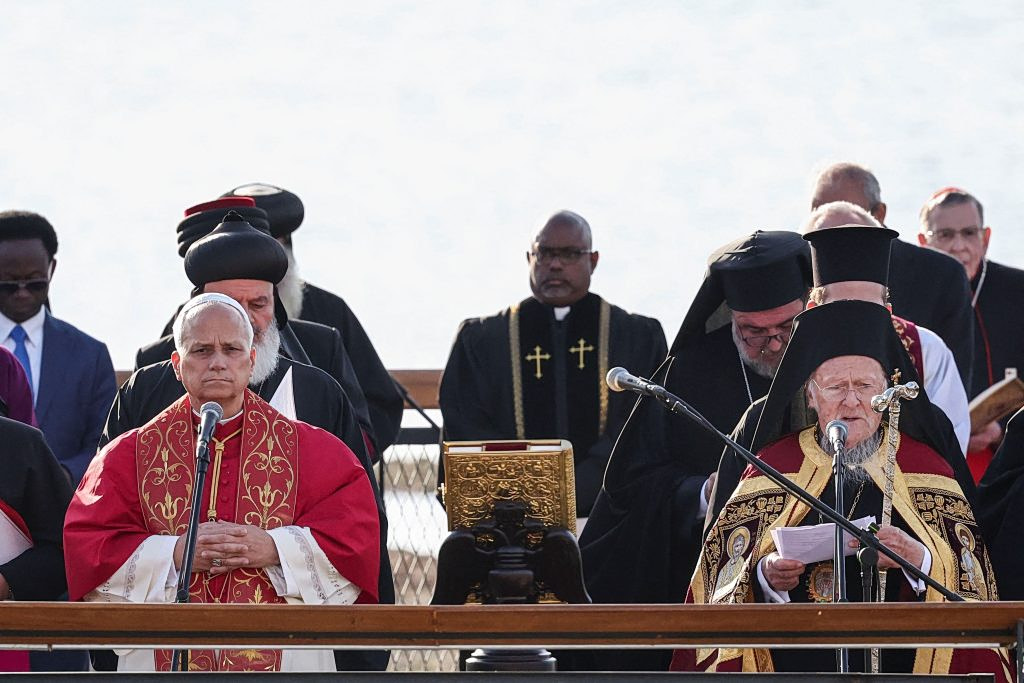
In a seminal moment in Pope Leo XIV’s visit to Turkey, the Roman Pontiff and Ecumenical Patriarch Bartholomew recited the original Creed of Faith together in Iznik (Nicaea), Turkey, the historic site of two Ecumenical Councils.
During a joint prayer ceremony, attended by leaders of other Christian denominations, and in a show of unity, the heads of Western and Eastern Christianity recited the Creed without the “filioque” (and the Son, referring to the eternal procession of the Holy Spirit) clause, one of the major theological points of contention.
In his address, the Pope thanked Patriarch Bartholomew for his “great wisdom and foresight” in inviting the leaders of the Churches to celebrate this important anniversary together. He also expressed his appreciation to the Primates of the Churches and the representatives of Christian ecumenical communities for their participation in the event.
Pope Leo XIV reminded attendees that the Council of Nicaea took place in 325 AD, noting that it continues to call all Christians, even today, to reflect on who Jesus Christ is for each of us personally. Representatives of various Christian churches and denominations were also present in prayer.
“We return to this cradle of the Christian faith,” the Ecumenical Patriarch said in his speech, sending a message of unity and of victory for faith and Truth. He added, “Let us listen to all the voices of the faithful calling for unity.”
“We are deeply moved that all of you responded positively to our humble invitation to honor, through this common pilgrimage, the memory and legacy of the First Ecumenical Council, which took place here in Nicaea seventeen hundred years ago,” Patriarch Bartholomew stated.
“Despite all that has occurred over the centuries—the turmoil, the difficulties, and the divisions—we approach this sacred anniversary with shared reverence and a common sense of hope,” he continued, emphasizing that the gathering was not merely to remember the past but “to give living witness to the very faith expressed by the Fathers of Nicaea.”
“In Nicaea, history bears witness to eternity—the truth that our Lord and Savior Jesus Christ is true God from true God, consubstantial with the Father. Enshrined in the Nicene Creed, these expressions distill and present the faith of the Apostles,” he said.
Patriarch Bartholomew, the spiritual leader of Eastern Orthodox Christianity, stressed that the Nicene Creed serves as a seed for the entirety of Christian life—“not a symbol of the minimum, but a symbol of the whole.”
Sending once more a message of unity, the Ecumenical Patriarch concluded: “With the faith of Nicaea burning warmly in our hearts, let us ‘run the race’ of Christian unity.”
A formal dialogue between the Roman Catholic and Eastern Orthodox Churches has been ongoing since 1980 to foster better understanding between the two sides about nuanced theological disputes spanning a thousand years, which led to the schism of 1054 AD.