
 Μake us preferred on Google
 Thomas Frank, the American author, historian and political commentator, argues that what we call “populism” today has been distorted from its true origins. Speaking to TO BHMA he explains why the Democrats’ estrangement from working people paved the way for Trump, and why economic populism remains a powerful—yet contested—force in U.S. politics.
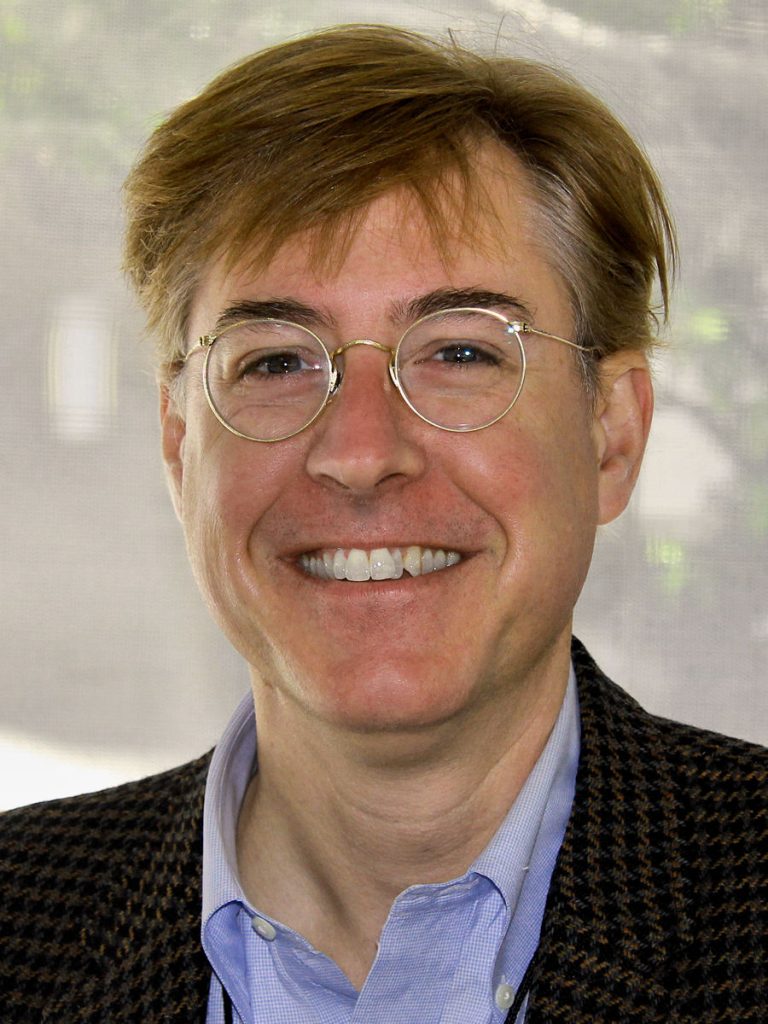
Thomas Frank is an American political analyst, author, historian./ Wikimedia Commons
We tend to see populism as a political abnormality, synonymous with politicians like Trump. You on the other side tend to believe that populism is a progressive movement, not a threat for democracy. Could you explain us your opinion on the issue?
The word “populist” was invented by left-wing reformers in my home state of Kansas, back in 1891. In Europe you would call them “social democrats,” but the name these reformers chose for themselves was “populists.” They were a third-party movement made up of farmers and workers that swept over the Midwest and the South in the 1890s. “Populist” is what they called themselves. It is a word they made up.
The idea of populism as a form of political psychosis was invented by conservatives of the day because that is how they regarded social-democratic movements: as utterly crazy. Through a long and interesting process, that right-wing interpretation of Populism was then taken up by centrists in the 1950s and applied to whatever they disliked. Modern-day scholars of American history, however, do not generally regard the Populists as crazy or abnormal or anti-progress or any of those things. On the contrary, the Populists were the movement that introduced the left-wing critique of industrialism and monopoly in this country.
You claim that the Democrats were defeated because gradually they turned away from working people and their concerns. You see Trump as a right-wing reaction against neoliberalism?
The Democrats did turn away from working people and their concerns, they announced this more or less openly back in the 1970s and 1980s and 1990s, and that is one of the reasons they are no longer the dominant party in our system. This, in turn, made it possible for someone like Trump to come to the fore using a kind of workerist language. There were many right-wingers before Trump who built their careers on the same thing, denouncing elites and prosecuting the culture wars, but Trump has made this long-term development painfully obvious.
Trump is a reaction against neoliberalism in the sense that he says he cares about working people and is dubious about free trade and immigration. His rise was made possible by the global financial crisis, by which I mean Wall Street misbehavior. But in other ways Trump is very much like the Republicans who came before him. He cuts taxes, he does favors for certain industries, he promises a crackdown on crime, he wants to downsize government, he loves the military, and so on. His worldview is very much a product of the 1970s and 80s, and to me he often seems like a throwback to Reaganism.
After the elections you have mentioned that Biden administration did some inspiring things for the working class. Why do you think Democrats didn’t make any electoral profit from that achievements?
Back in 2016, I thought Joe Biden was one of the very few Democrats who understood Trumpism and where it came from. Unfortunately, that version of Biden seemed to disappear during his presidency. Many of the things Biden did while he was president were excellent, but they were too little and too late. His big spending programs took years to make their way into reality—they are just being implemented now, so that Trump can take credit for them. Also, on some of Biden’s most notable achievements, like antitrust, there were members of his own administration who were pushing exactly the opposite way. This sort of disarray is typical of Democratic administrations, and Biden’s in particular seemed to lack any kind of strong central direction.
Almost one year after Trump’s win we see a bunch of Democrats make their move for the presidential elections on 2028. Gavin Newsom, AOC, JB Pritzker are considered frontrunners. Do you think any of them has the intention to reshape the relationship of the party with the working people?
They might intend to do so, but you have to remember that there are also powerful forces within the Democratic Party that have no desire to become a social democratic party again. Those forces tend to get their way. Their argument is that Trump will probably walk into some huge crisis or disaster in the next few years, just like he did with the Covid pandemic the first time around. Trump will screw up somehow, he will become horribly unpopular, and if the Democrats nominate an attractive centrist, that person will automatically win. In other words, no change is necessary.
There is a counterargument, which claims that the Democrats tend to overemphasize economy over ideology, while Republicans takes advantage focusing on issues like identity or migration. What kind of role the ideological factor plays from your experience? Is the embracement of economic populism enough and what populism says about the fight against racism and discrimination?
Michael Dukakis said in 1988 that the contest between him and George Bush was about “competence, not ideology.” That is really what the leadership faction of the Democratic Party believes: they love the idea of the competent but passionless technocrat. They deeply distrust ideology and they dislike the party’s left wing almost as much as they dislike the Republicans.
Would economic populism be enough, that’s a good question. Economic populism is very popular, that’s for sure: everyone wants a good healthcare system and a good retirement system and decent wages and leaders who make sure Silicon Valley and Wall Street play fair. But the culture wars—this kind of phony populism in which people rail against the elites who make our movies, write our newspapers, educate our children, etc.—are also immensely powerful. It would be fun to see a real battle between the two.
You also have to consider another factor and that’s money. Many billions of dollars were spent on the 2024 presidential election, with the Democrats slightly outraising the Republicans. If the Democrats were suddenly to change direction and nominate an economic populist, like a Bernie Sanders type, most of that money would immediately go to the Republican, whoever it is. One of the achievements (if we can call it that) of Democratic centrism is that it appeals to the wealthy. Indeed, the Democrats are very much the party of the upper-middle class today, and if they nominated an economic populist, all that would disappear overnight.