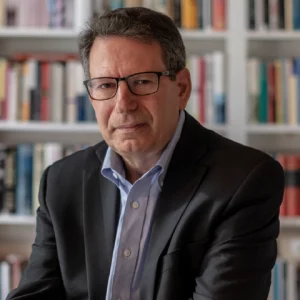
In an exclusive interview with TO BHMA, Richard Caplan, Professor of International Relations and Official Fellow of Linacre College at the University of Oxford, offers his perspective on Gaza, Ukraine, and the rise of China, with a particular focus on conflict management.
On September 3, Beijing hosted a military parade. Do you share the opinion that this was more of a global projection of power from Beijing and what are the ambitions of China?
The September 3 event was indeed a projection of Chinese power but also a demonstration that China is seeking to be a counterweight to the US-dominated international order. China’s broad ambition is to become a rule maker rather than a rule taker and thus play a decisive role in shaping the global order.
After the Trump-Putin meeting, expectations were raised about the prospect of peace in Ukraine. In your opinion, how willing are Kremlin and Putin to serve such an expectation?
The question is peace at what price? Putin is willing to agree to peace that is tantamount to Ukraine’s capitulation – in other words, peace that requires Ukraine to forfeit territory which Russia has forcibly seized and that requires Ukraine to relinquish its sovereign authority. Such terms would not constitute a genuine peace but rather the legitimization of conquest through coercion.
What we see in Gaza is appalling in humanitarian terms. What Israel is doing in Gaza to the Palestinian civilian population can be considered as a crime against humanity? And do you see any hope politically in the long term, in order to achieve peace in the region?
Israel’s actions in Gaza constitute serious breaches of international humanitarian law, including war crimes, crimes against humanity, and, according to numerous respected jurists, genocide. Nevertheless, I do see grounds for hope that peace in the region is possible, as a sustainable resolution of the Palestinian question will require an equitable accommodation of the Palestinian right to self-determination. Hope also resides in the fact that the tide of international opinion is turning against Israel which could lead ultimately to the withdrawal of critical diplomatic support, military assistance, and economic cooperation, thus generating pressure for meaningful policy change. But this is a slender thread of hope.
Given your experience on peacekeeping and UN’s role we see a further deterioration of the organization’s significance, with states attacking directly to UN agencies. Is there any space for optimism, regarding the future of the organization?
We are at an inflection point in the history of the United Nations. Geopolitical rivalry is rendering the organisation ineffectual. Meanwhile the United States under Trump is withdrawing vital financial and political support. The space for optimisim is that the vast majority of states in the world recognise the importance of the organisation for the maintenance of a rules-based international order and that the weakening of that order will have far-reaching adverse effects.
In Europe there is a belief that the EU and its leadership is unprepared for the multipolar world, subjective to the domination of the United States of America. What’s your opinion on the issue?
Europe remains a subordinate – or perhaps erstwhile — partner of the United States, reliant on it for global leadership and strategic support. As that support has waned under the Trump administration and Europe’s own influence on the world stage declines, the continent has become increasingly vulnerable amid a fragmenting international order.
Is there a real danger for the war in Ukraine to spread into Europe after the incident with the Russian drone incursion in Poland?
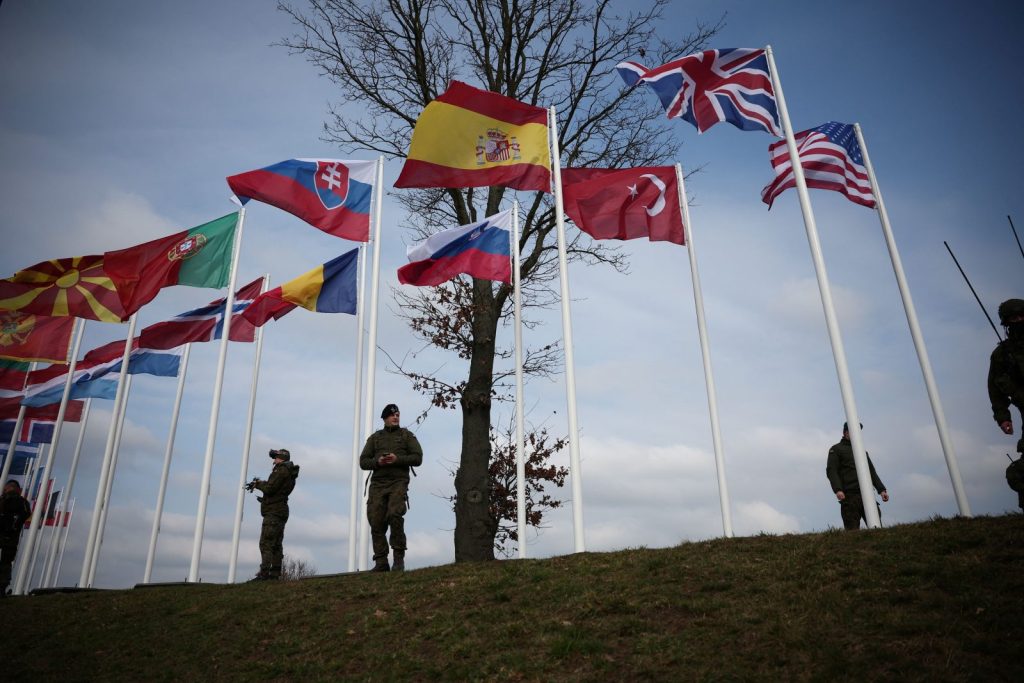
While there is the possibility for the war in Ukraine to spread into Europe following the drone incursion, there is no ‘real danger’ at this time. All effort will be made by Poland, the other NATO states, including the United States, and Russia to ensure that the conflict does not escalate because the risk would then be a confrontation between nuclear powers, which all parties will want to avoid. However, repeated incursions will test the credibility of NATO’s Article 5 by forcing the Alliance to demonstrate whether and how it can respond decisively to low-level, persistent provocations without escalating into full-scale war.
What are going to be the consequences for Palestine and the prospect of peace after the Israeli strike in Qatar?
The strike has destabilized the ceasefire negotiations and hostage-release efforts which were already vulnerable to collapse. The question now is whether Qatar will continue to play a role seeking to mediate between Israel and Hamas. If Qatar steps back, the space for meaningful mediation may shrink further, leaving fewer international actors willing or able to fill the gap. The larger question is whether there is scope for diplomacy or whether Israel will rely increasingly on military ‘solutions’ to pursue its objectives. Such an approach risks deepening the humanitarian catastrophe in Gaza, aggravating regional tensions, and further undermining the prospects for a sustainable political settlement.