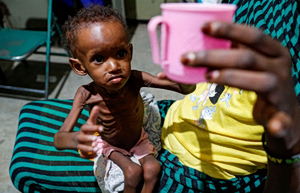
Malnourished children in Somalia are facing worsening hunger as global shipping disruptions linked to the U.S.-Israeli war on Iran compound an already severe humanitarian crisis, aid workers say.
Clinics across the country are being forced to ration life-saving therapeutic foods or turn away children suffering from severe acute malnutrition, as supplies become increasingly scarce and expensive, Reuters reporting shows.
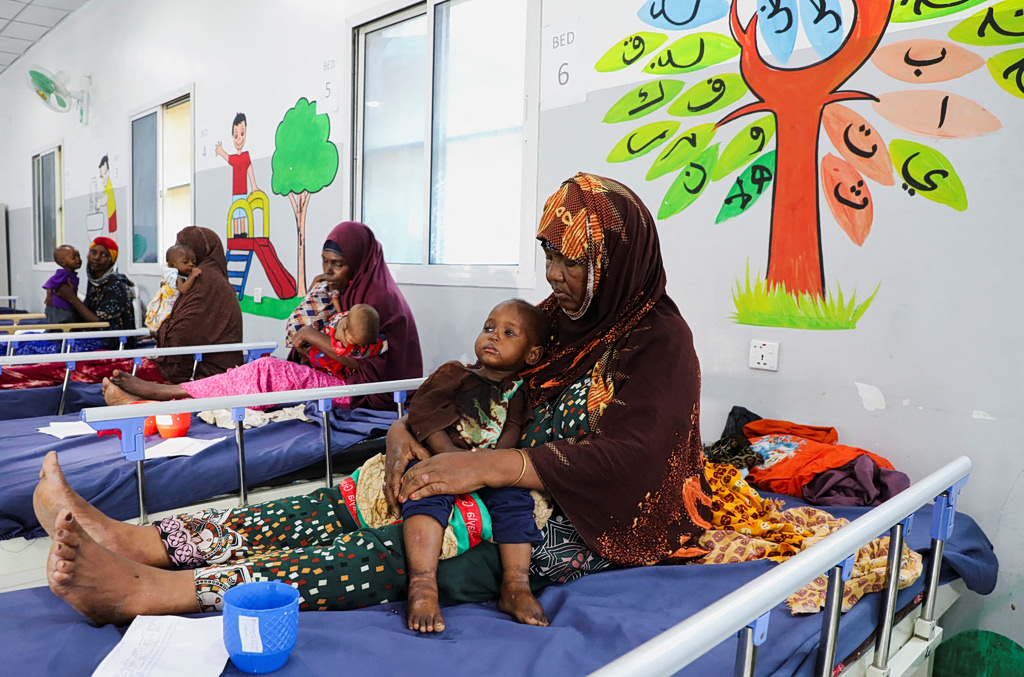
Internally displaced Somali women hold their malnourished children at the pediatric ward within the Daynile hospital as shortages of lifesaving therapeutic foods caused by shipping disruptions due to the Iran war have forced clinics treating severely malnourished children to turn away patients and ration supplies in drought-hit Somalia, in Daynile district of Mogadishu, Somalia April 20, 2026. REUTERS/Feisal Omar
Aid shortages deepen in drought-hit Somalia
In Somalia, nearly half a million children under the age of five suffer from severe acute malnutrition, the most dangerous form of hunger. Health workers say the situation is being made worse by delays in humanitarian deliveries and rising transport costs.
Nurse Hassan Yahye Kheyre said clinics have been forced to reduce rations due to limited stocks. “Since the needs are large and we don’t have a lot of supplies, we have had to keep reducing the amount we give children,” he said.
At his clinic, just 225 cartons of peanut-based therapeutic paste remain for more than 1,200 children and are expected to run out within two weeks, according to the International Rescue Committee (IRC).
“If treatment is on-and-off, the children will become very weak, physically and mentally. And it may not be possible to reverse it,” Kheyre warned.
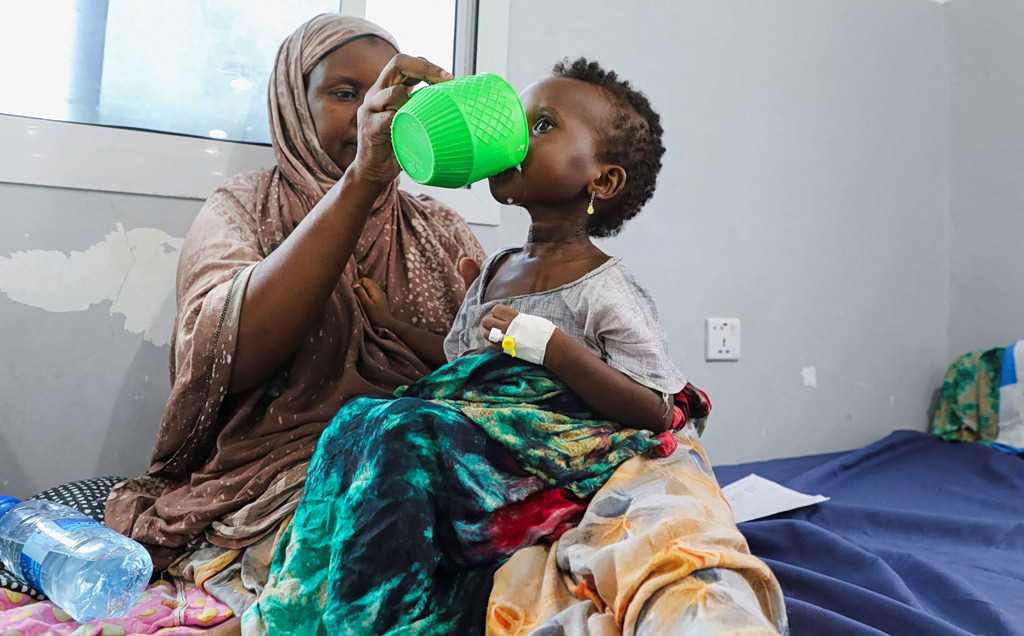
An internally displaced Somali woman feeds her malnourished child at the Daynile hospital as shortages of lifesaving therapeutic foods caused by shipping disruptions due to the Iran war have forced clinics treating severely malnourished children to turn away patients and ration supplies in drought-hit Somalia, in Daynile district of Mogadishu, Somalia April 20, 2026. REUTERS/Feisal Omar
Shipping delays and rising costs
Aid groups say disruptions linked to the Iran war have slowed deliveries of essential nutrition supplies. Goods that previously took 30–35 days to reach Somalia from Europe are now taking up to 65 days.
Action Against Hunger reports that shipping routes have been heavily affected since the conflict began, with vessels diverted and shortages of available transport.
The IRC said one order of peanut paste, which would have fed more than 1,000 children, was stuck for two months in the Indian port of Mundra due to congestion from diverted cargo. The shipment was eventually cancelled after further delays were expected.
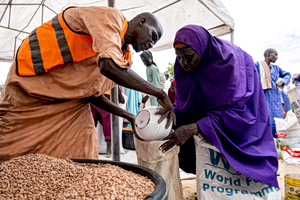
Meanwhile, the cost of aid has surged. According to CARE International, the price of a single carton of therapeutic food has risen from $55 to $200, drastically reducing the number of children that can be treated.
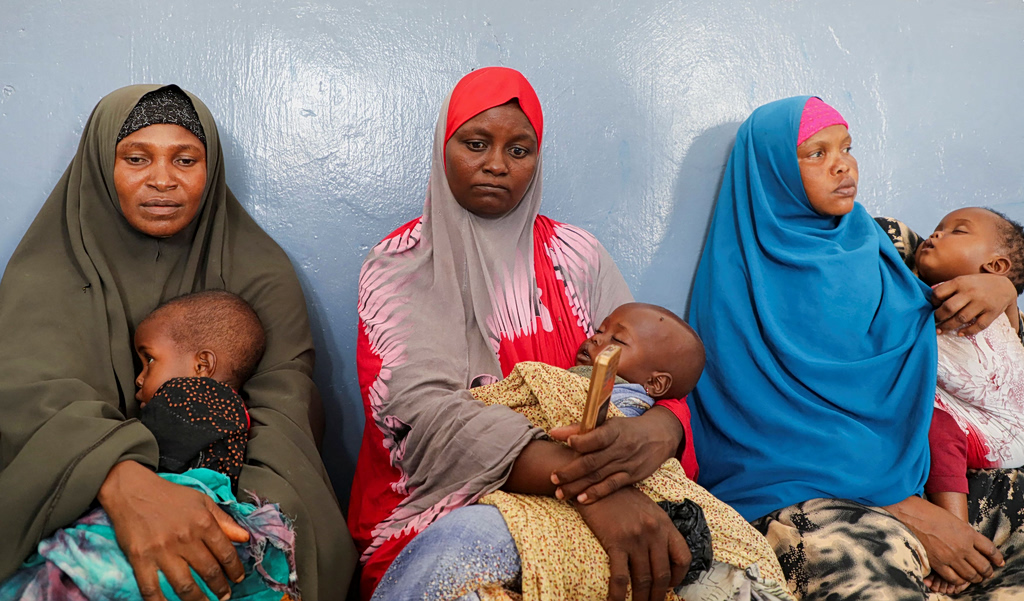
Internally displaced Somali women carry their children as they wait for medication at the Daynile hospital as shortages of lifesaving therapeutic foods caused by shipping disruptions due to the Iran war have forced clinics treating severely malnourished children to turn away patients and ration supplies in drought-hit Somalia, in Daynile district of Mogadishu, Somalia April 20, 2026. REUTERS/Feisal Omar
Children left without consistent treatment
In Baidoa, mother-of-nine Muumino Adan Aamin has repeatedly been unable to access treatment for her 11-month-old daughter due to shortages at the clinic. She previously nearly lost another child during a past drought in 2017, a crisis that left many children severely affected by hunger.
Aid workers warn that interruptions in treatment can have irreversible consequences for children’s physical and cognitive development.
At Daynile General Hospital, which is treating 360 children for wasting, staff say supplies are critically low. “Some children’s nutritional status has already worsened,” said health supervisor Xafsa Ali Hassan.
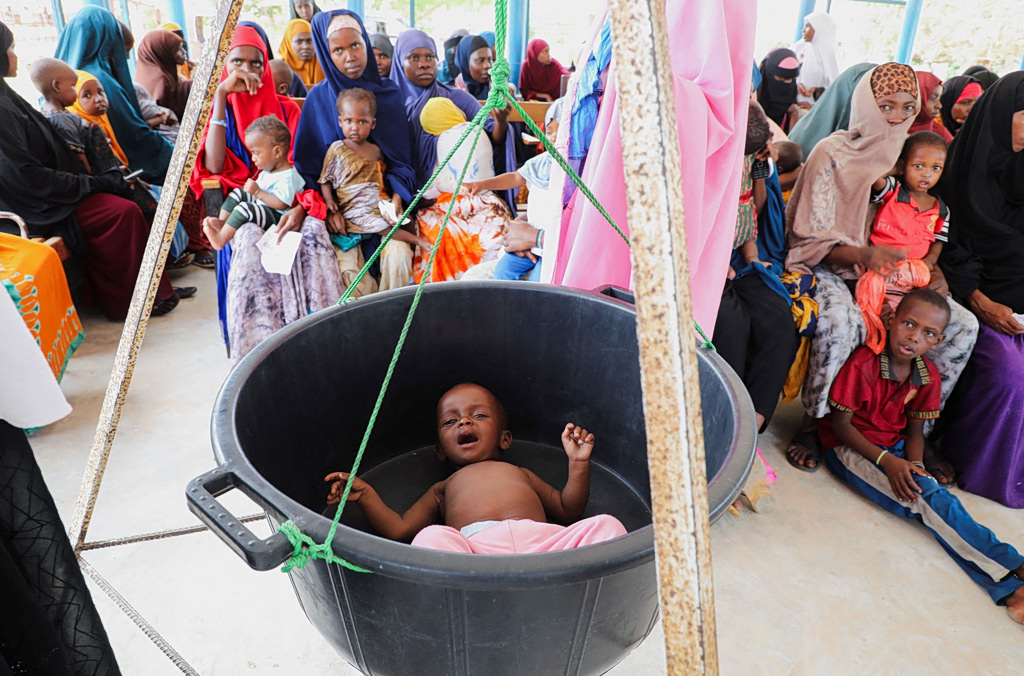
An internally displaced Somali child is screened for malnutrition at the Daynile hospital as shortages of lifesaving therapeutic foods caused by shipping disruptions due to the Iran war have forced clinics treating severely malnourished children to turn away patients and ration supplies in drought-hit Somalia, in Daynile district of Mogadishu, Somalia April 20, 2026. REUTERS/Feisal Omar
Worsening humanitarian crisis
Somalia is also experiencing a severe drought that has pushed 6.5 million people—about one in three citizens—into acute hunger. More than 2 million are now classified in the “Emergency” phase of food insecurity, just one step before famine.
Aid agencies say the crisis has been compounded by cuts in foreign aid and funding shortages. The UN Office for the Coordination of Humanitarian Affairs (OCHA) reports that more than 200 health facilities have closed and mobile medical teams have been disbanded.
OCHA estimates that over 60,000 severely malnourished children have already gone untreated due to funding gaps, with the number potentially rising to 150,000 if conditions do not improve.
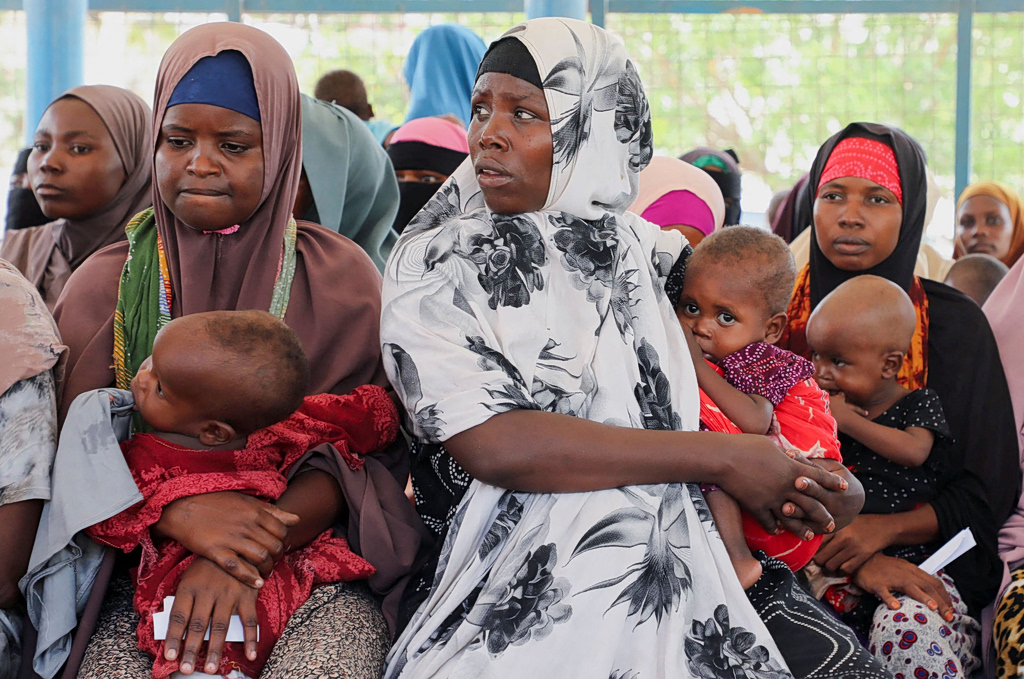
Internally displaced Somali women carry their children as they wait for medication at the Daynile hospital as shortages of lifesaving therapeutic foods caused by shipping disruptions due to the Iran war have forced clinics treating severely malnourished children to turn away patients and ration supplies in drought-hit Somalia, in Daynile district of Mogadishu, Somalia April 20, 2026. REUTERS/Feisal Omar
Fuel price shock adds pressure
Since the outbreak of the Iran war, fuel prices in Somalia have also surged by around 150%, further increasing transport and delivery costs for humanitarian operations.
Aid workers say the combined effects of drought, funding cuts, and global supply disruptions have left vulnerable families with fewer options than ever before.
OCHA is appealing for $852 million in emergency funding to prevent a wider famine, but says it has so far received only a fraction of the amount needed.
“This is very difficult for people to absorb,” said IRC Somalia coordinator Shukri Abdulkadir, describing the overlapping crises as overwhelming for communities already under extreme strain.