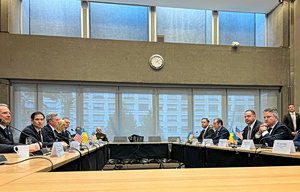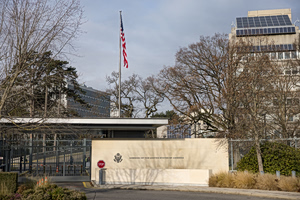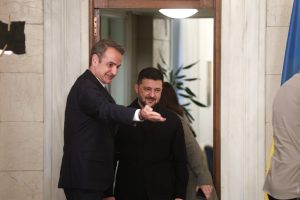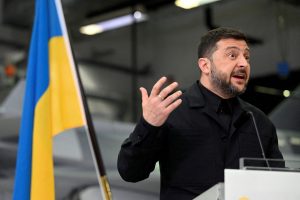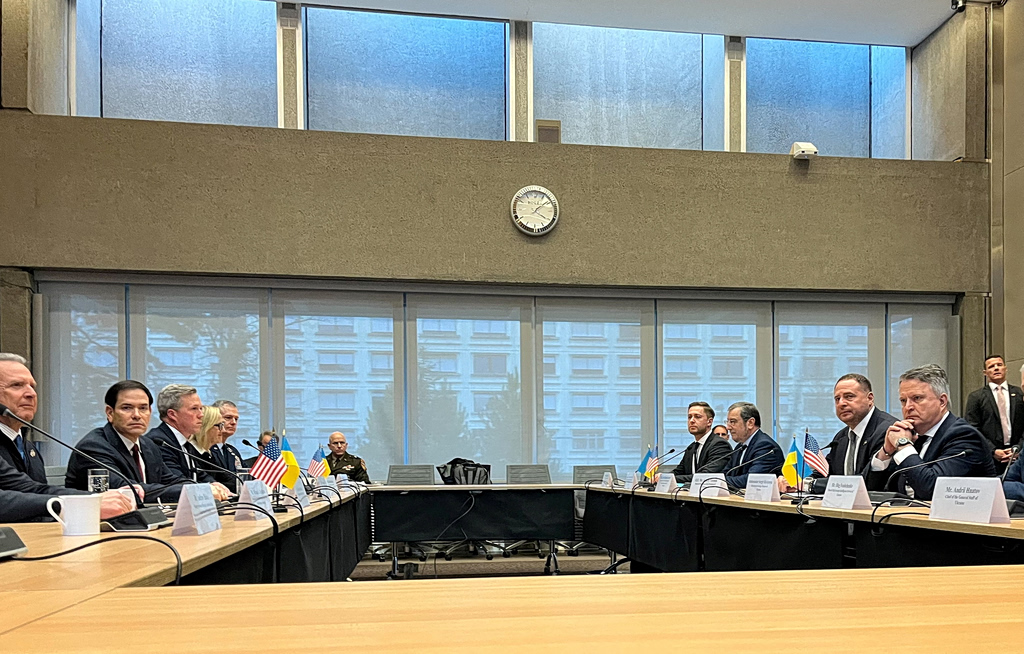
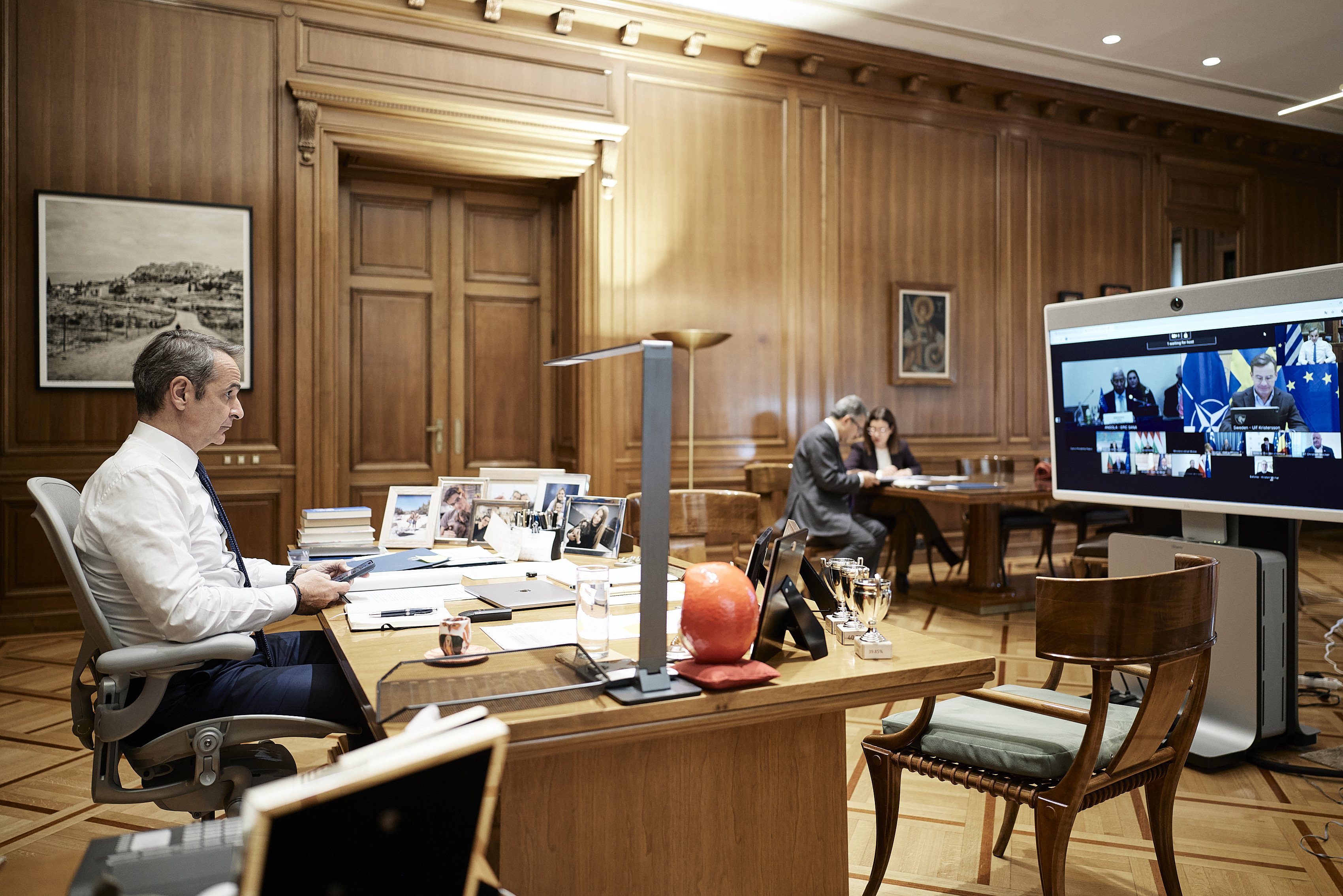
European officials offered a measured sense of progress on Tuesday after an EU leaders’ meeting this morning, where Greek Prime Minister Kyriakos Mitsotakis participated via video conference to discuss the latest developments in the Ukraine negotiations. According to the Greek prime minister’s office, leaders agreed that talks between U.S. and Ukrainian officials in Geneva had moved ahead in a constructive manner, and they welcomed the broader diplomatic engagement of Presidents Donald Trump and Volodymyr Zelenskyy. They also reaffirmed that any decision falling within EU responsibilities will need to be debated and approved collectively by member states.
Brussels Urges Unity and Continued Engagement
European Commission President Ursula von der Leyen said after the meeting that sustained European involvement in the Geneva talks had created conditions for “good progress,” even as she stressed that the diplomatic process remains incomplete. She underlined that the EU must remain united and keep Ukraine’s interests at the forefront, adding that Ukraine’s sovereignty, territorial integrity, and right to determine its own security arrangements remain essential principles. European Council President António Costa described the overall direction as positive, while noting that issues tied specifically to EU authority, including sanctions and decisions on frozen Russian assets, require full involvement of the bloc.
Coalition of the Willing to Reconvene Tomorrow
A spokesperson for the European Commission confirmed that the so-called “coalition of the willing,” led by France and the United Kingdom, will hold its next video conference tomorrow to assess the state of negotiations and coordinate next steps. The group is preparing for potential long-term support for Ukraine once a settlement is reached, including peacekeeping arrangements. In parallel, EU officials said work is intensifying on a loan mechanism for Kyiv that would be backed by returns from frozen Russian securities, with repayment contingent on eventual reparations, an idea Russia has rejected outright.
Trump Notes Signs of Progress
Earlier today, U.S. President Donald Trump weighed in on the diplomatic developments, sharing a message on social media. “Is it really possible that big progress is being made in Peace Talks between Russia and Ukraine??? Don’t believe it until you see it, but something good just may be happening. GOD BLESS AMERICA!” he wrote.
What We Know About the Competing Peace Plans
Reporting from multiple outlets suggests that European allies have drafted an alternative peace plan to the initial U.S. proposal, though the BBC notes it has not independently verified the document and U.S. Secretary of State Marco Rubio has denied knowledge of it. According to these reports, the European concept would allow Ukraine to retain a larger peacetime force and keep the prospect of NATO membership open, while limiting the alliance’s permanent presence inside the country and creating a joint enforcement mechanism involving Western partners, Kyiv and Moscow. It would also require Ukraine to pursue the return of occupied areas through political rather than military means. The U.S. draft, by contrast, reportedly envisaged a smaller Ukrainian military, would have formally ruled out Ukraine’s future accession to NATO, placed monitoring of any agreement under a U.S.-Russia structure, and treated Crimea as well as parts of Luhansk and Donetsk as effectively under Russian control, freezing the front lines in place. These details remain unconfirmed, but they illustrate the differing approaches now shaping the diplomatic landscape.