 Μake us preferred on Google
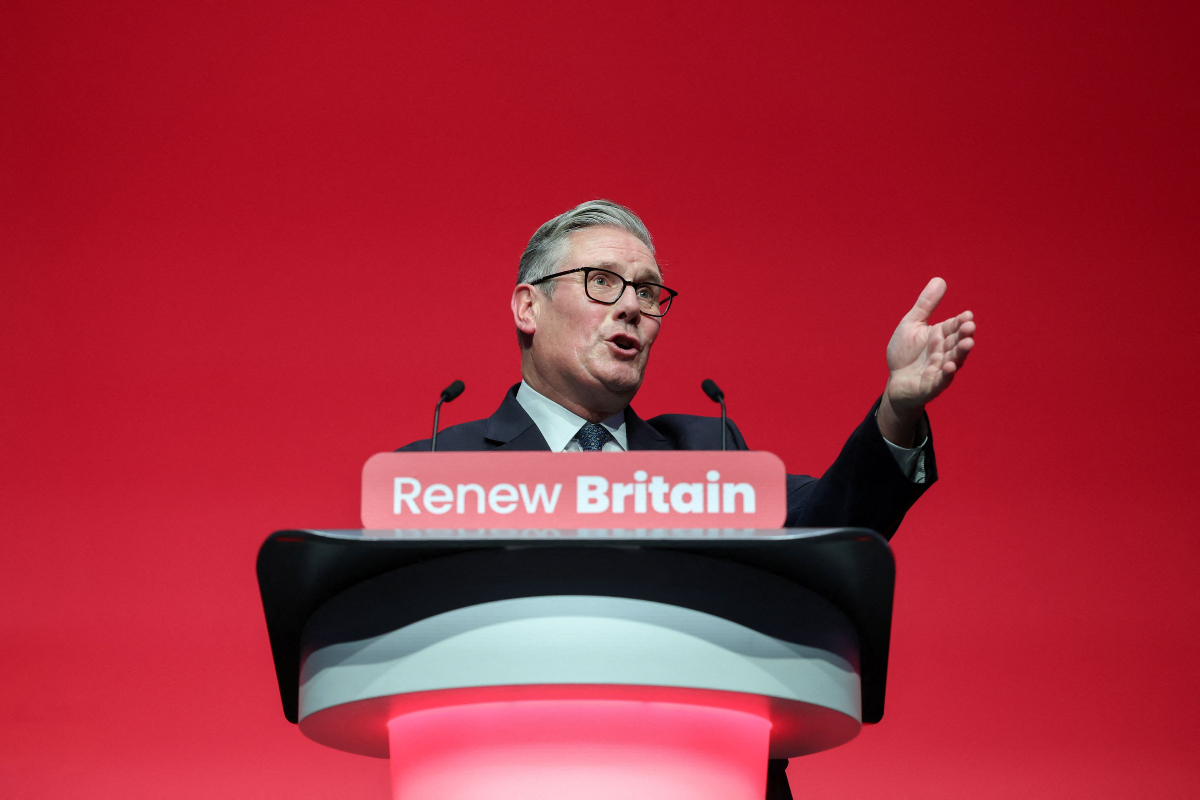
 The Labour Party Conference, held only days ago, unfolded in a political landscape marked by turbulence, declining poll numbers, and an emboldened Reform UK.
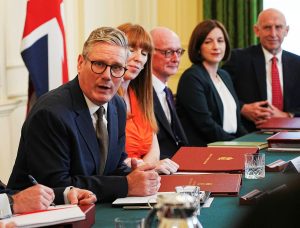
For Prime Minister Keir Starmer, the gathering was not just an opportunity to showcase Labour’s governing agenda but also an urgent attempt to regain momentum in the face of challenges from both within his party and outside it.
A Government Under Pressure
Labour entered the conference weakened by recent events and setbacks. Speaking TO VIMA, Peter Sloman, Professor of British Politics at the University of Cambridge, captured the sense of unease:
“This drama has clearly come under a huge amount of pressure in recent months. The Labour government fell very sharply in the polls over the winter. It did poorly in the local elections in May and particularly lost ground to Reform UK, which did very well. Labour’s also been losing support on the centre-left of the Liberal Democrats in the Green Party. And Keir Starmer faced some significant blows in early September as a result of Angela Rayner’s resignation and the controversy over Peter Mandelson’s relationship with Jeffrey Epstein, which led the Prime Minister to remove Mandelson as ambassador to the United States. And I think there’s generally been a strong sense over the summer of the government being on the back foot in the face of really quite ugly efforts to whip up anti-migrant sentiment on the part of Reform UK and other far-right groups. So Keir Starmer’s speech was, I suppose, really an attempt to regain the initiative there. He’s also facing significant tensions within his own party, as with Andy Burnham, quite openly on the manoeuvres as a potential alternative leader.”
Reform UK at the Centre of Labour’s Strategy
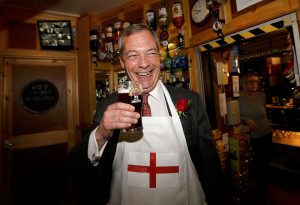
Unusually, Labour’s conference was dominated not by attacks on the Conservatives but by a sustained focus on Nigel Farage and Reform UK. This shift, Sloman noted, reflects the altered political terrain:
“I know that there is pressure right now on the UK Prime Minister because of the results of the recent polls. But for someone that observes, you know, the current existing political environment, is it something that we might have expected to come? Yeah, I mean, I think the key thing to understand here is that the Labour Party has traditionally seen itself as a central group and traditionally been the main representative of working-class voters, particularly in industrial parts of northern England and the Midlands and indeed Wales. And those are areas where reform has been doing very well. There are also areas that supported Britain’s departure from the European Union, voted to leave in large numbers in 2016. And so for much of the last decade, Labour’s strategic focus has been on trying to regain ground in those areas. Some of them became known as Red Wall seats in 2019. Boris Johnson won some of those seats for the Conservatives. So a lot of Labour’s polling, a lot of its strategies, particularly since Keir Starmer became Labour leader in 2020, has been focused on winning those constituencies.”
The electoral threat from Reform is real, Sloman argued, pointing to recent local election victories:
“A lot of the voters that Labour had been targeting actually went to Reform UK, which was OK for Labour at the last election when it was mainly fighting the Conservatives. But the local elections where Reform won control of, I think, ten county councils, including Lancashire and Durham and Staffordshire and Lincolnshire, it’s really scared parts of the Labour Party. And of course, because of the way the first-past-the-post electoral system works here, that is what Labour sees as its key battleground.”
Shoring Up Starmer’s Position
If the aim was to stabilise his leadership, Starmer may have partially succeeded. Sloman observed:
“I think Keir Starmer has shored up his position, at least in the short term. But he’s done so by making quite an interesting move. I mean, it’s very clear that his team have basically decided that the next election, that Reform rather than the Conservatives are the main rivals, which of course is a big thing, right? You know, the Conservative Party has been the strongest political party in this country for most of the last century. And Labour is basically saying the Tories are irrelevant.”
Yet this strategy also carries risks. Starmer’s speech leaned heavily on traditional working-class themes, placing limits on immigration and stressing apprenticeships and skills. Whether such a pitch can resonate in today’s globalised economy remains uncertain.
A Return to Labour Traditions?
Patrick Diamond, Professor of Public Policy at Queen Mary, University of London, told TO VIMA that while the conference may not shift the polls, it did mark a turning point in Labour’s rhetoric:
“I don’t think the conference will fundamentally change anything because these speeches tend to be forgotten within days of them being made. But I do think Keir Starmer has set out a frame or a political argument, particularly around Labour opposing the politics of Reform, which is going to, I think, define the political landscape for the next few years.”
Diamond argued the strategy represents not something new, but something older:
“I don’t think it’s necessarily completely different. I think it’s a return, actually, to almost like a more working class approach to Labour politics, which is more focused on, you know, issues like work and security and employment, wages, living standards, emphasising the importance of industrial policy. I think the theme of patriotism and obviously the relatively tough language on immigration, that all suggests that what Labour is doing is rediscovering maybe an older tradition of putting working class people at the centre of its politics.”
The Structural Limits Facing Reform
Still, analysts caution against overstating Reform’s prospects. Professor Victoria Honeyman of the University of Leeds stressed the institutional barriers small parties face:
“The UK electoral system has elements to it which make life difficult for small parties. Reform would be, by definition, a small party. While winning local council seats is something they do very well at, winning seats at a general election is considerably harder… There is no doubt that Reform are making the political weather in the UK over immigration, but that is a very long way short of being anywhere close to winning an election.”
Starmer’s Dilemma
For some, the heavy focus on Reform revealed Labour’s anxieties. Jon Todge of the University of Liverpool remarked: “It was extraordinary that Labour Prime Minister Starmer – with nearly 400 MPs and a huge parliamentary majority – spent so much of his party conference attacking Reform – a party with only 5 MPs. It reflects how Labour is frightened by opinion polls putting Reform way ahead. It was also an attempt by Starmer to restate the value of multicultural Britain versus what was portrayed as negative, divisive Reform.”
Similarly, Dr Christopher Massey of Teesside University emphasised the challenge of converting rhetoric into results: “The Labour Party Conference was successful for Keir Starmer, but the challenge remains translating his improved messaging into tangible policy changes in government. Labour’s communication since the 2024 election has been poor and is partly the reason for Reform’s surge in the polls… Starmer must translate the ideas shared during his leader’s speech on immigration, education, patriotism and the budget into specific policies which improve the lives and life chances of voters to lead Labour into the next election.”