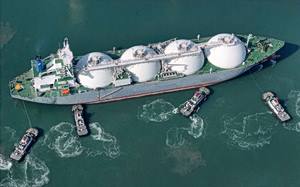
President Donald Trump has ordered federal support for oil tanker insurance and signaled that the U.S. Navy could begin escorting commercial vessels through the Strait of Hormuz, as escalating conflict in the Middle East disrupts global crude shipments and drives up energy prices.
Speaking on Tuesday, Trump said the Navy could escort tankers “if necessary” and that he had directed the U.S. International Development Finance Corporation (DFC) to provide political risk insurance and financial guarantees for maritime trade in the Gulf. The move marks one of the administration’s most aggressive efforts yet to contain soaring oil prices after Israeli and U.S. forces began striking Iran over the weekend.
Global crude prices have spiked since the strikes, with oil shipments largely blocked through the Strait of Hormuz, a chokepoint between Iran and Oman that carries around a fifth of the world’s oil supply. Several tankers have reportedly been damaged, while others remain stranded.
“No matter what, the United States will ensure the free flow of energy to the world,” Trump said in a social media post, adding that more measures are under consideration. Treasury Secretary Scott Bessent and Energy Secretary Chris Wright were expected to present policy options to the president on Tuesday afternoon, according to sources familiar with the matter who reported to Reuters.
Trump acknowledged that Americans might face higher oil prices in the short term but expressed confidence that costs would fall once the conflict subsides. Keeping fuel prices low has been central to his economic messaging, and sustained increases could complicate Republican efforts to retain control of Congress in November’s midterm elections.
War-risk premiums
Shipping companies and insurers are reassessing their exposure to the region. War-risk premiums have jumped, with some insurers scaling back or withdrawing coverage altogether. Higher insurance costs have made it more expensive for tankers willing to transit the area, prompting some operators to delay voyages or seek alternative routes.
The DFC, a government agency launched in 2019 to partner with private investors on projects in developing countries, would backstop insurance and provide financial guarantees under Trump’s directive.
However, shipping sources questioned whether naval escorts and insurance guarantees alone would be enough to stabilize the market while fighting continues. As of Monday, the U.S. Navy had 12 warships in the Middle East, including an aircraft carrier, though some are engaged in strikes against Iran or intercepting missiles. Escort missions could expose naval vessels to Iranian projectiles or small armed boats.
Multinational naval task forces, including CTF-152 currently commanded by Qatari forces, could also play a role in securing maritime routes.
Rohit Rathod, a senior analyst at ship-tracking firm Vortexa, said the measures may not ensure wide and safe passage for all vessels. “The attacks could still take place,” he said, suggesting insurance costs are likely to remain elevated even if some ships manage to pass.
The administration has so far been reluctant to tap the Strategic Petroleum Reserve, though officials could signal readiness to use it if prices continue to rise, according to one source. Analysts caution that focusing solely on shipping risks may not fully offset the broader market impact of the conflict, including potential threats to oil production sites.