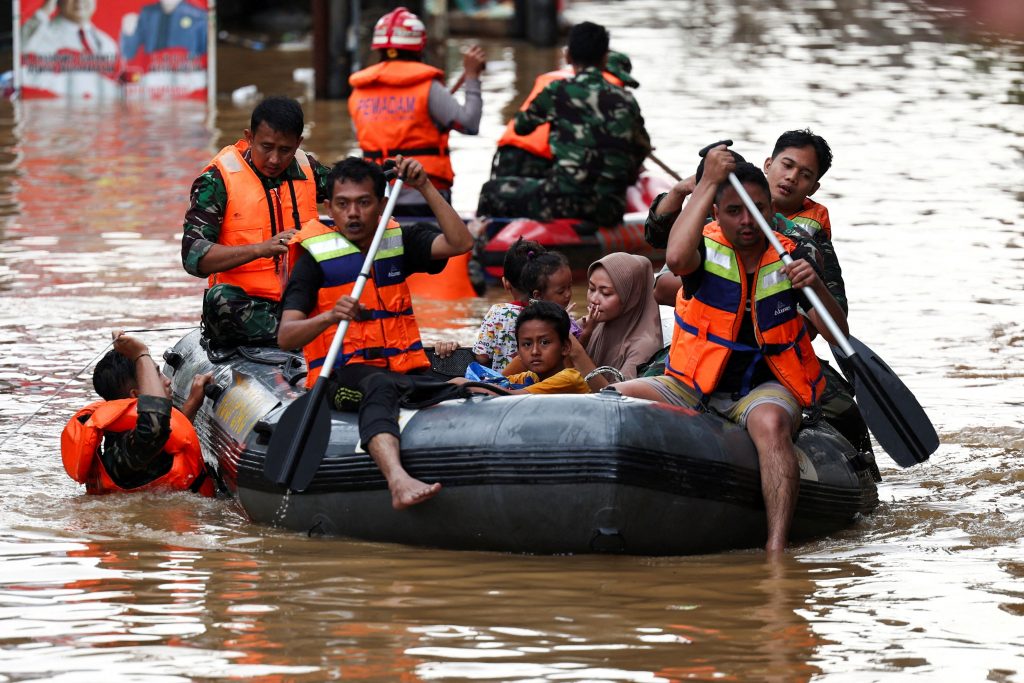
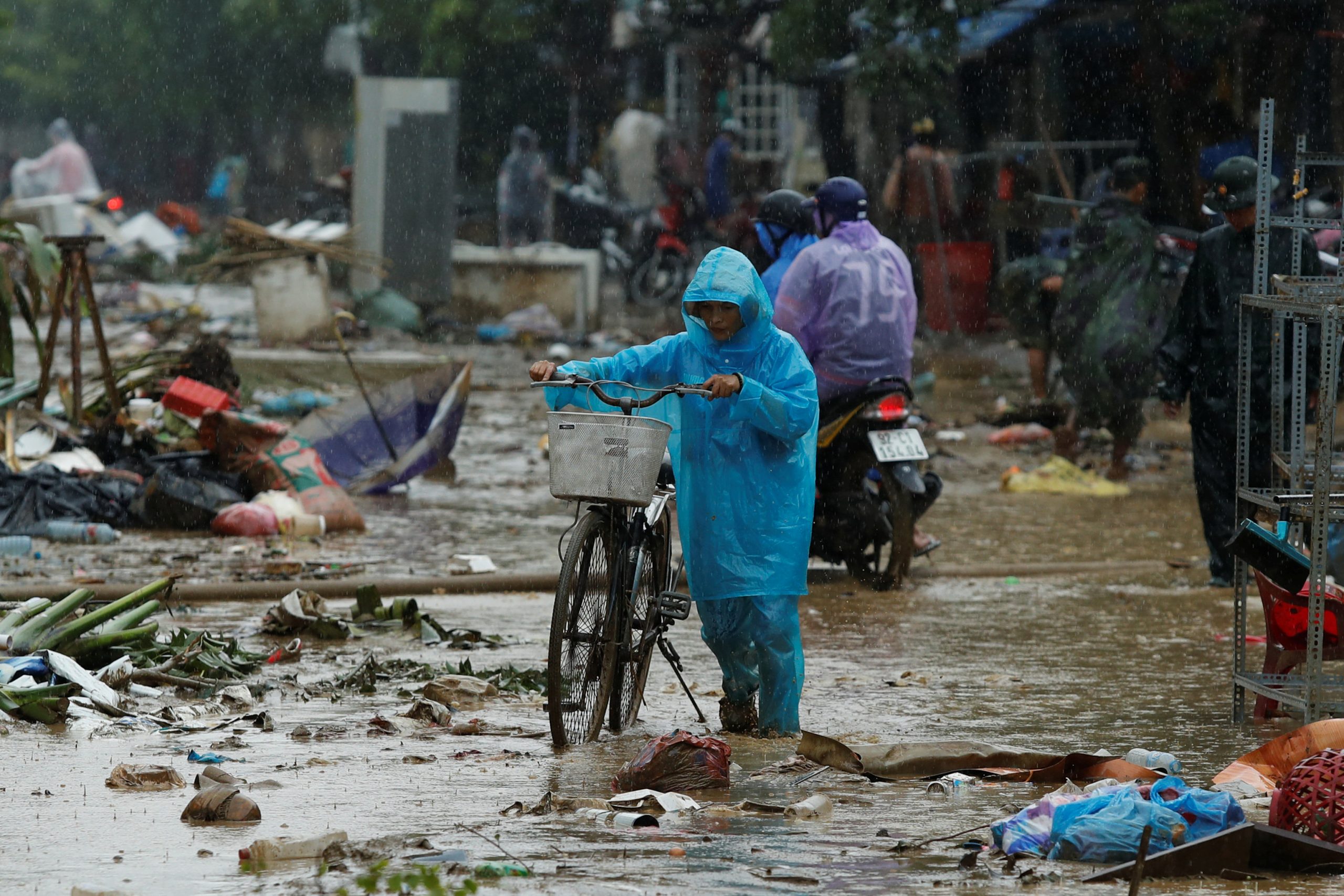
Typhoon Kajiki battered Vietnam’s north-central coast on Monday, unleashing torrential rains that flooded homes, uprooted trees, and cut power in several provinces.
By 0900 GMT, the storm had made landfall in Nghe An and Ha Tinh provinces, with wind speeds easing to 118–133 kph after earlier gusts reached up to 166 kph, according to Vietnam’s weather agency.
“It’s terrifying,” said Dang Xuan Phuong, a 48-year-old resident of Cua Lo, a tourism town directly struck by the storm. “When I look down from the higher floors, I could see waves as tall as 2 metres, and the water has flooded the roads around us.”
State media reported that power outages, damaged roofs, and destroyed floating fishing farms were among the storm’s immediate impacts.
Mass Evacuations and Closures
Ahead of Kajiki’s arrival, authorities shut airports, closed schools, and evacuated roughly 30,000 residents from coastal areas. More than 16,500 soldiers and 107,000 paramilitary personnel were mobilised to assist with evacuations and stand ready for search and rescue operations.
Two airports in Thanh Hoa and Quang Binh provinces were closed, while Vietnam Airlines and Vietjet cancelled dozens of flights on Sunday and Monday.
The weather agency warned that rainfall in some northern regions could reach 500 millimetres between Monday afternoon and Tuesday, raising the risk of flooding and landslides.
Path Through China Before Vietnam
Before hitting Vietnam, Typhoon Kajiki brushed past China’s Hainan Island, forcing Sanya City to suspend businesses and public transport. By Monday morning, China’s southernmost province downgraded its emergency response but warned of continued heavy rainfall.
Local media reported that residents in Sanya took shelter in underground garages as large trees were toppled, leaving streets littered with broken branches.
China’s transport ministry urged officials across multiple provinces, from Guangxi and Yunnan to Heilongjiang and Jilin, to remain on alert for flooding, landslides, and other secondary disasters.
A Region Prone to Storms
With its long coastline facing the South China Sea, Vietnam is highly vulnerable to typhoons, which often trigger deadly flooding and mudslides. The government had earlier described Kajiki as “an extremely dangerous fast-moving storm.”
On Monday, the Chinese embassy in Hanoi also issued a reminder for its citizens in Vietnam to prepare for strong winds and heavy rainfall.