
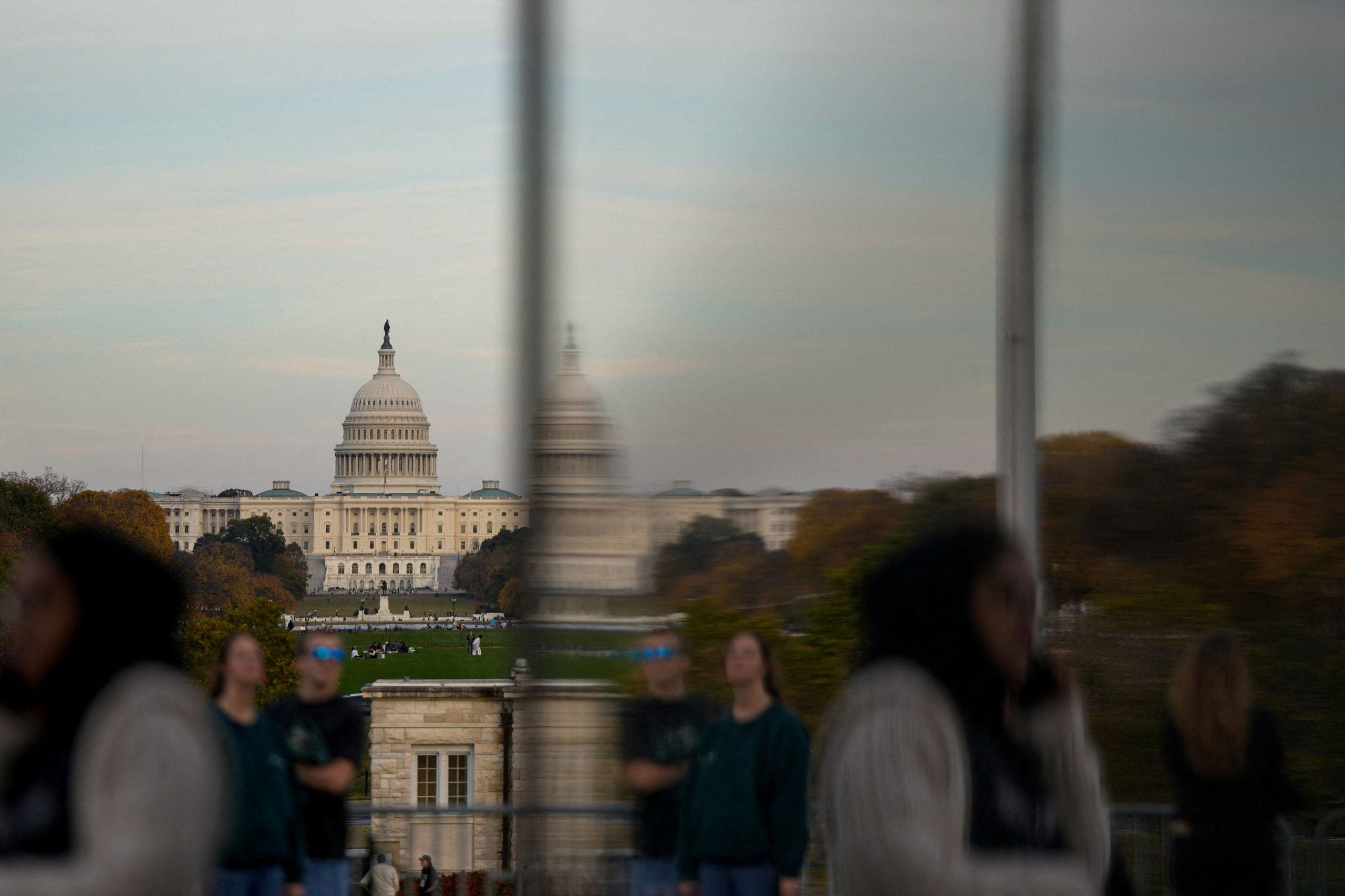
The U.S. government shutdown reached its 35th day on Tuesday, equaling the record for the longest in American history, as Republicans and Democrats in Congress remain locked in a standoff over spending legislation and healthcare subsidies.
The shutdown’s impact is growing by the day. Food assistance for millions of low-income Americans has been suspended for the first time, while federal workers — including law enforcement, military personnel, and airport staff — are missing paychecks. Travel delays have affected more than 3 million passengers, and economic data collection has been severely disrupted, leaving policymakers “flying blind.”
The Senate has repeatedly rejected a stopgap funding measure passed by the House, with no sign of compromise. Republicans, who hold a 53–47 majority, need seven Democratic votes to overcome the chamber’s 60-vote threshold. Democrats, meanwhile, are withholding support unless an extension of healthcare insurance subsidies is included. “The victims of the Democrats’ shutdown are starting to pile up,” Senate Majority Leader John Thune said Monday, accusing Democrats of prolonging the crisis.
His counterpart, Senate Majority Leader Chuck Schumer, responded sharply: “While Donald Trump is bragging about remodeling bathrooms at the White House, Americans are panicking about how they will afford healthcare next year,” he said, referring to a recent renovation the president touted.
A Historic Stalemate
The current shutdown — the 15th since 1981 — mirrors the 35-day impasse during Trump’s first term in 2018–2019. But this time, the partisan dynamic is reversed: Democrats have blocked the Republican-controlled Congress’s funding bills, arguing that the legislation must include healthcare measures.
The Congressional Budget Office estimates the shutdown could cost the economy $11 billion if it continues another week. Analysts warn that the absence of government data could complicate the Federal Reserve’s decisions on interest rates and employment policy.
Meanwhile, about 42 million Americans enrolled in the Supplemental Nutrition Assistance Program (SNAP) were cut off from aid on Saturday. The administration has pledged partial funding for November benefits, but officials say delays in distribution could stretch for weeks.
Early learning programs such as Head Start are also facing closures, while staffing shortages have hit transportation hubs across the country.
Political Fallout
President Donald Trump has shifted focus between foreign policy and domestic politics, while urging Senate Republicans to end the filibuster rule that requires a 60-vote majority to pass most legislation. “If we terminate the filibuster, we will get everything approved,” Trump wrote in a social media post, warning his party could “lose brutally” in next year’s midterms if they fail to act.
Polling by Reuters/Ipsos shows Americans are nearly split on who deserves most of the blame — 50% fault Republicans, while 43% point to Democrats.
Some moderate Democrats have crossed party lines to support reopening the government, saying the human and economic toll outweighs any political leverage. But others insist holding firm is essential to reassert Congress’s constitutional spending powers. “The trust deficit has been there for a long time because of how Trump’s acted,” said Senator Andy Kim of New Jersey. “Any deal we get — how do we know that a deal is going to be a deal?”
The Longest Shutdowns on Record
The current standoff ties the 2018–2019 shutdown as the longest in U.S. history. Other lengthy shutdowns include a 22-day closure under President Bill Clinton in 1995–96 and a 16-day shutdown during President Barack Obama’s term in 2013.
For now, Washington shows little sign of breaking the deadlock — and millions of Americans are left wondering how long the political impasse will drag on.