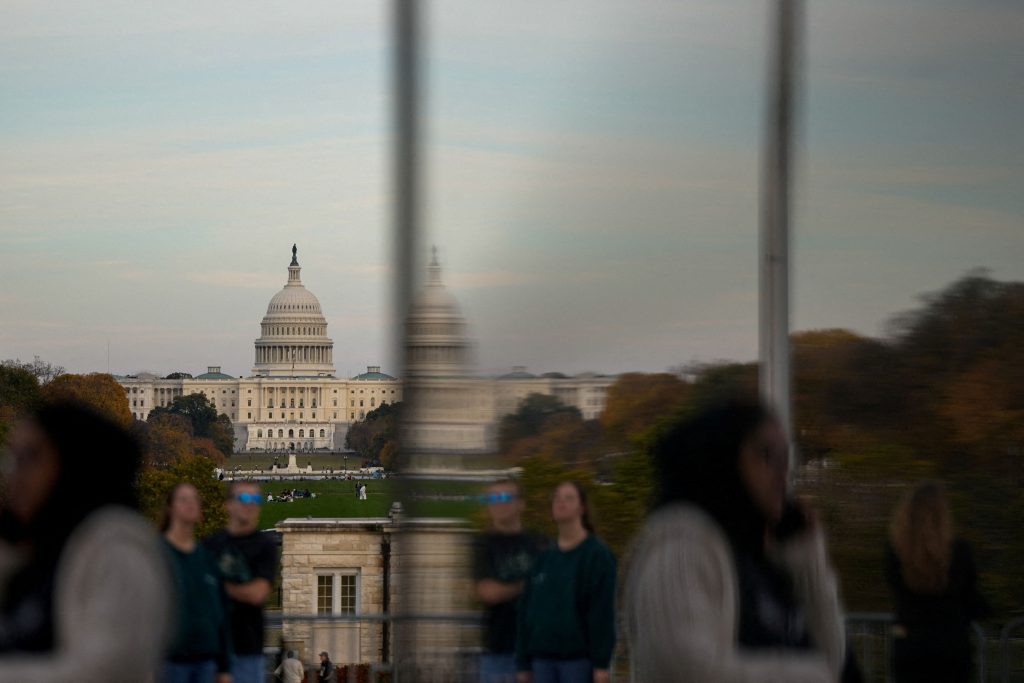

The U.S. government on Wednesday ordered a 10% reduction in flights at 40 major airports, citing safety risks from severe air traffic control staffing shortages as the record-breaking government shutdown stretched into its 36th day.
Transportation Secretary Sean Duffy said the cuts were necessary to “keep the airspace safe” after a confidential assessment found increased fatigue and strain among air traffic controllers working without pay. “Our job is to make the hard decisions to continue to keep the airspace safe,” Duffy told reporters as mentioned in Reuters.
The plan, which could take effect within 36 hours, has sent airlines scrambling to adjust schedules and manage thousands of customer inquiries. According to aviation analytics firm Cirium, the move could reduce 1,800 flights and eliminate more than 268,000 airline seats nationwide.
Officials said the Federal Aviation Administration (FAA) will begin cutting capacity by 4% this week, ramping up to 10% by next week. The cuts will focus on the country’s busiest airports — including those serving New York City, Washington D.C., Chicago, Atlanta, Los Angeles, and Dallas — while international flights will be exempt.
FAA Administrator Bryan Bedford said the action was necessary to prevent further degradation of the system. “When we see pressures building in these 40 markets, we just can’t ignore it,” Bedford said. “The system is extremely safe today, and will be extremely safe tomorrow.”
The shutdown has already caused tens of thousands of flight delays and impacted an estimated 3.2 million travelers, according to industry sources. More than 13,000 air traffic controllers and 50,000 Transportation Security Administration agents have been working without pay since October 1.
Airlines scramble to respond
United Airlines (UAL.O) CEO Scott Kirby said the carrier would prioritize long-haul international and hub-to-hub routes, trimming regional and secondary domestic flights instead. “Any customer traveling during this period is eligible for a refund if they do not wish to fly — even if their flight isn’t impacted,” Kirby said.
American Airlines (AAL.O) and Southwest Airlines (LUV.N) both indicated they are reviewing schedules and preparing to notify customers. “We are evaluating how the cuts will affect our operations and will communicate with customers as soon as possible,” Southwest said, urging lawmakers to end the funding standoff.
Shares of major U.S. airlines fell roughly 1% in extended trading after the FAA announcement.
Safety and politics collide
The move underscores growing concern that the shutdown — the longest in U.S. history — is straining critical infrastructure. The FAA has warned it may impose further flight and space launch restrictions if staffing levels worsen.
Duffy suggested the cuts could be reversed if Democrats agree to reopen the government. Republicans have blamed Democrats for holding up funding over healthcare subsidy extensions, while Democrats argue the shutdown stems from Republican refusal to negotiate.
Union leaders condemned the situation. Sara Nelson, president of the Association of Flight Attendants-CWA, called the shutdown “a cruel attack on all Americans.” She added, “The false narrative that this shutdown is a choice between paying federal workers or protecting healthcare is outrageous.”
The closure has already halted food assistance for millions, furloughed 750,000 federal employees, and disrupted essential government services.