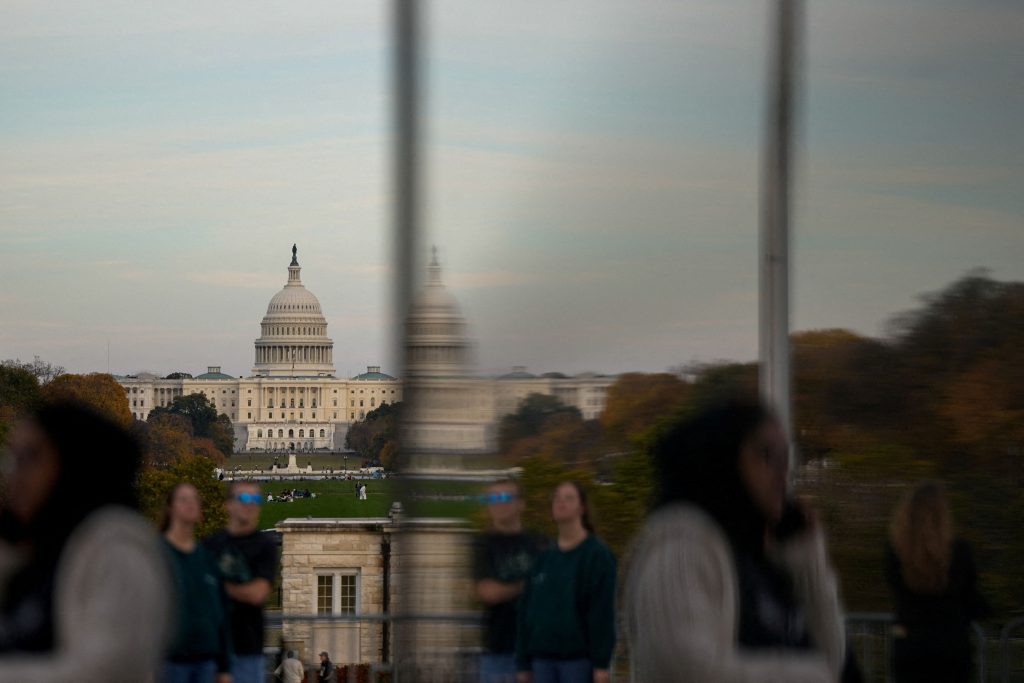
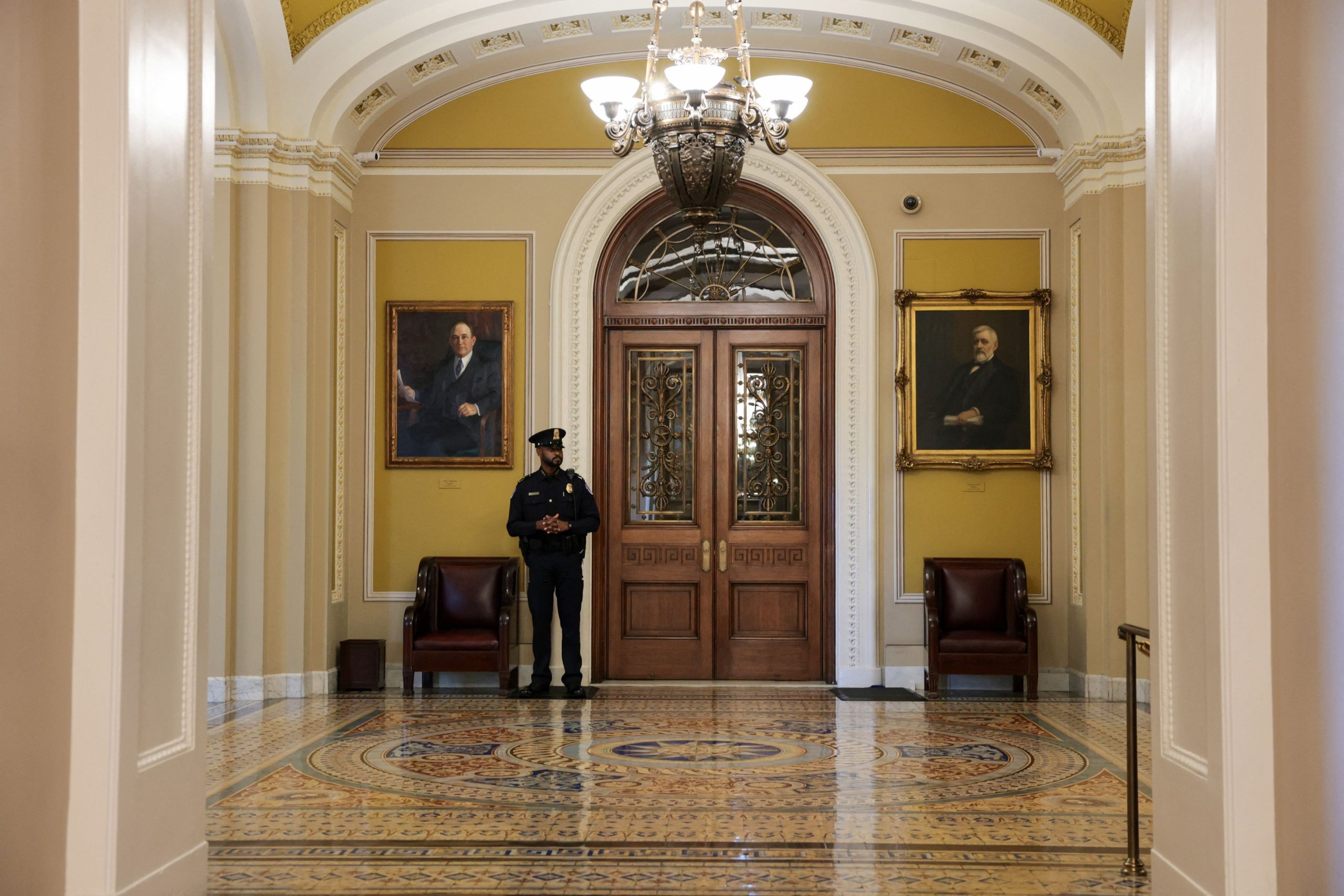
The U.S. Senate on Sunday advanced a bipartisan bill aimed at reopening the federal government, moving closer to ending a 40-day shutdown that has disrupted travel, delayed food aid, and sidelined hundreds of thousands of federal workers.
In a key procedural vote, senators voted 60-40 to advance the measure, which will fund the government until January 30 and include three full-year appropriations bills. The legislation, originally passed by the House of Representatives, will now be amended in the Senate before being sent back to the House and ultimately to President Donald Trump for his signature.
“It looks like we’re getting very close to the shutdown ending,” Trump told reporters at the White House ahead of the vote.
The bill includes a prohibition on federal layoffs through January 30 — a win for unions representing government employees — and guarantees back pay for federal workers, military personnel, and air-traffic controllers.
Health Subsidy Deal Paves Way for Vote
In a breakthrough deal, Republicans agreed to hold a December vote on extending Affordable Care Act (ACA) subsidies that help lower-income Americans pay for private health insurance. The subsidies, set to expire at the end of the year, have been a Democratic priority throughout the budget standoff.
“For over a month, I’ve made clear that my priorities are to both reopen government and extend the ACA enhanced premium tax credits,” said Democratic Senator Jeanne Shaheen of New Hampshire, who helped broker the deal along with Senator Maggie Hassan and independent Angus King of Maine.
The measure faced opposition from some Democratic leaders, including Senate Minority Leader Chuck Schumer, who voted against it. “If you can’t lead the fight to stop healthcare premiums from skyrocketing for Americans, what will you fight for?” Representative Ro Khanna wrote on X, calling for Schumer’s replacement.
Economic and Political Pressure Mounts
The prolonged shutdown — now the longest in two decades — has caused staffing shortages at airports, threatened Thanksgiving travel, and delayed food assistance programs. Republican Senator Thom Tillis said the mounting pressure pushed lawmakers to act.
“Temperatures cool, the atmospheric pressure increases outside and all of a sudden it looks like things will come together,” Tillis told reporters.
White House economic adviser Kevin Hassett warned that continued disruptions could tip the U.S. economy into negative growth for the fourth quarter if air travel does not normalize by Thanksgiving, which falls on November 27.
The Senate will reconvene Monday, when Republican leaders hope to reach unanimous consent to fast-track passage. Without such agreement, procedural steps could delay the final vote until late in the week, potentially extending the shutdown into next weekend.
Meanwhile, Trump reiterated his opposition to ACA subsidies, calling them a “windfall for Health Insurance Companies” and vowing to replace them with direct payments to individuals once the government reopens.
As the legislative clock ticks, both parties are under pressure to end a shutdown that has tested Washington’s political resolve — and strained millions of American households just weeks before the holiday season.