 Μake us preferred on Google
 The United States and China have agreed to extend their tariff truce by 90 days, preventing a sharp increase in duties on each other’s goods and providing relief for businesses ahead of the critical end-of-year shopping period.
U.S. President Donald Trump announced on Monday that he had signed an executive order delaying higher tariffs until November 10, with all other elements of the existing truce remaining in place. China’s Commerce Ministry issued a similar order on Tuesday, also pausing the planned addition of U.S. firms to its trade and investment restriction lists.
The move avoids U.S. tariffs on Chinese goods rising to 145% and Chinese duties on American goods hitting 125%, rates that trade analysts said would have amounted to a near-total embargo. Current tariffs will remain at 30% for Chinese imports into the U.S. and 10% for U.S. goods entering China.
The extension comes as retailers in the U.S. prepare to increase imports of electronics, clothing, and toys for the holiday season, and as both governments face pressure to stabilise economic ties.

The reflection of silhouettes of people is visible on a glass on a terrace of a shopping mall overlooking Beijing’s central business district (CBD), China , August 11, 2025. REUTERS/Tingshu Wang
Talks Remain Ongoing
The truce was first agreed in May after discussions in Geneva, then reaffirmed during a July meeting in Stockholm. U.S. negotiators recommended extending the deadline following the latest round of talks, with both sides citing national and economic security concerns.
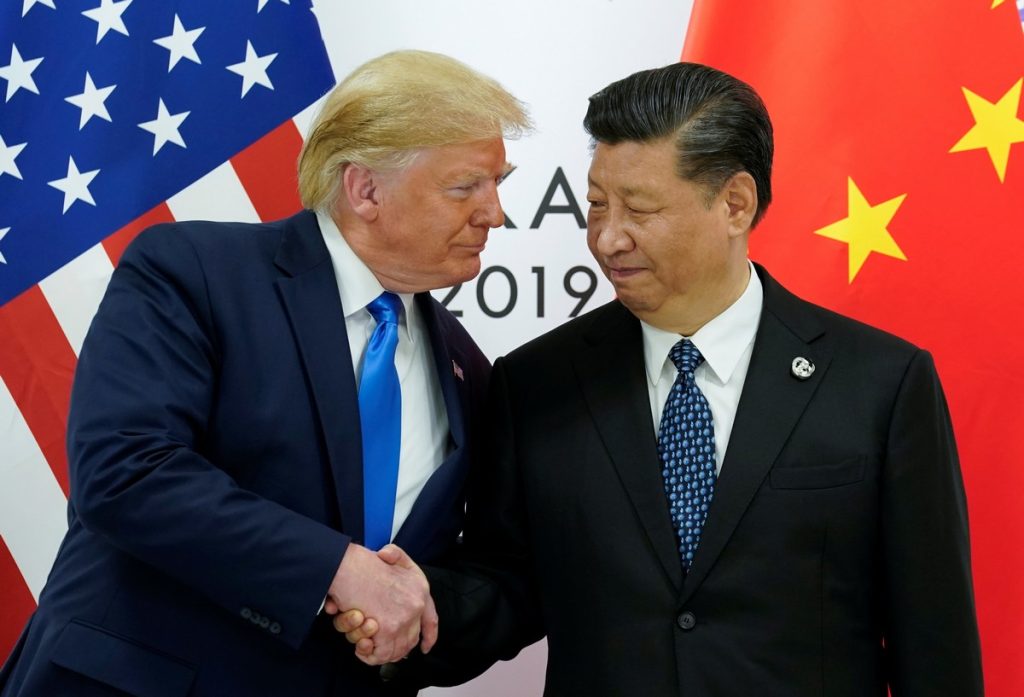
Trump has said the two countries are close to a broader trade deal and has indicated he will meet Chinese President Xi Jinping if an agreement is reached before the end of the year. Analysts see the extension as improving the chances of such a meeting.
While the decision was welcomed by markets, some experts cautioned that tensions remain. Trump recently urged China to quadruple its soybean purchases, while Beijing has pushed for greater access to U.S. high-tech goods. Differences also persist over U.S. tariffs linked to fentanyl flows and Washington’s pressure on China to halt purchases of Russian oil.
Economic Impact
China’s exports to the U.S. dropped 21.7% year-on-year in July, while shipments to Southeast Asia rose 16.6% as manufacturers sought alternative markets. U.S. data shows the trade deficit with China hit its lowest level in more than two decades in June.
Despite these shifts, experts believe the two economies remain too intertwined to risk a long-term breakdown in trade. “This will undoubtedly lower anxiety on both sides as talks continue,” said Ryan Majerus, a former U.S. trade official, as reported in Reuters, adding that the extension allows time to work toward a framework agreement in the autumn.