
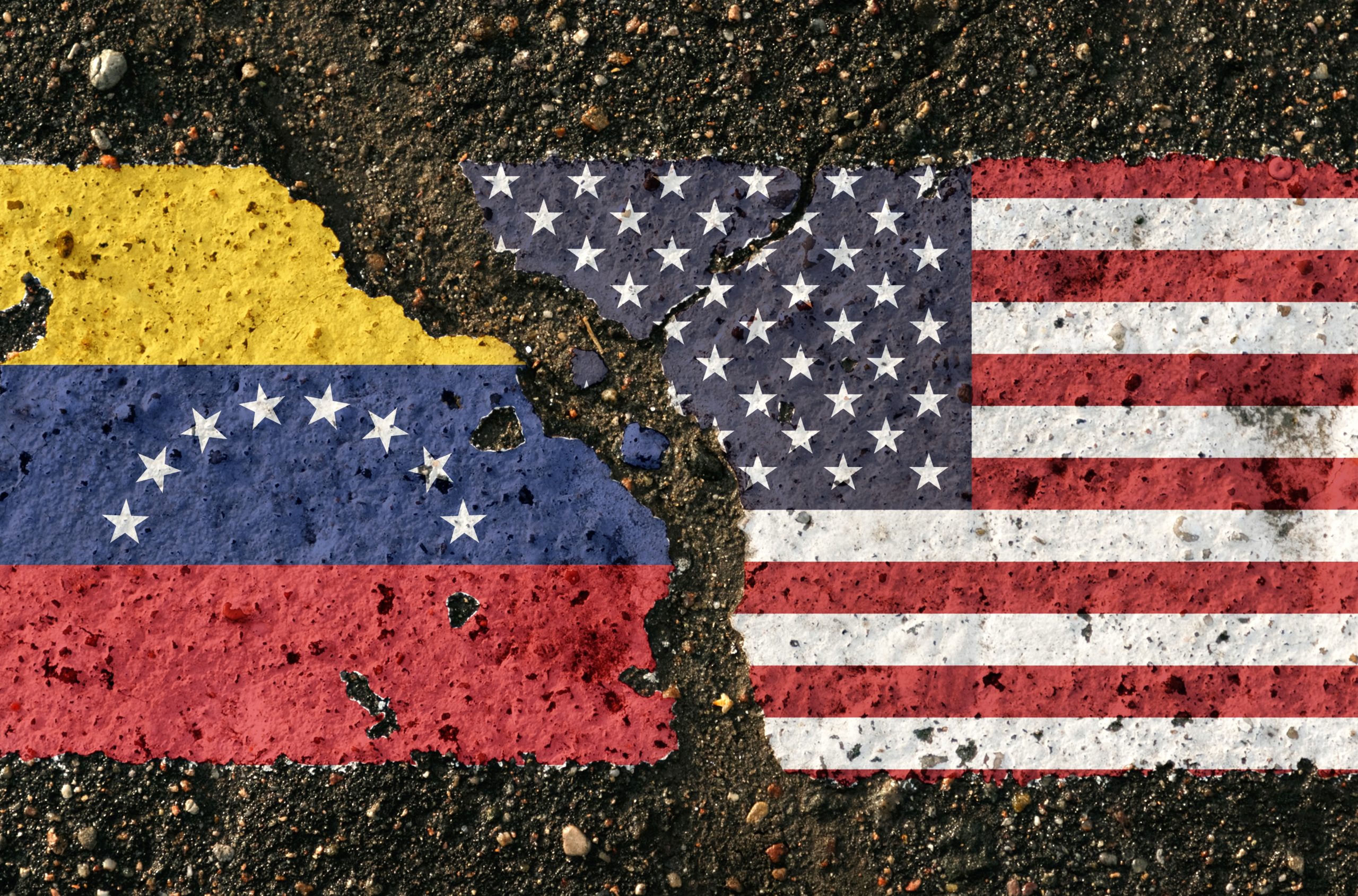
Tensions between the United States and Venezuela are rising rapidly, fueled by U.S. President Donald Trump’s expanded military buildup in the Caribbean and Venezuelan President Nicolas Maduro’s mobilization of troops along the country’s coast.
The latest flashpoint came after a U.S. strike last week sank a Venezuelan vessel in the southern Caribbean, killing 11 people. Trump said the boat was carrying narcotics destined for the United States, though critics in Washington, including senior Democrats, questioned the legal justification for the attack and warned of potential escalation.
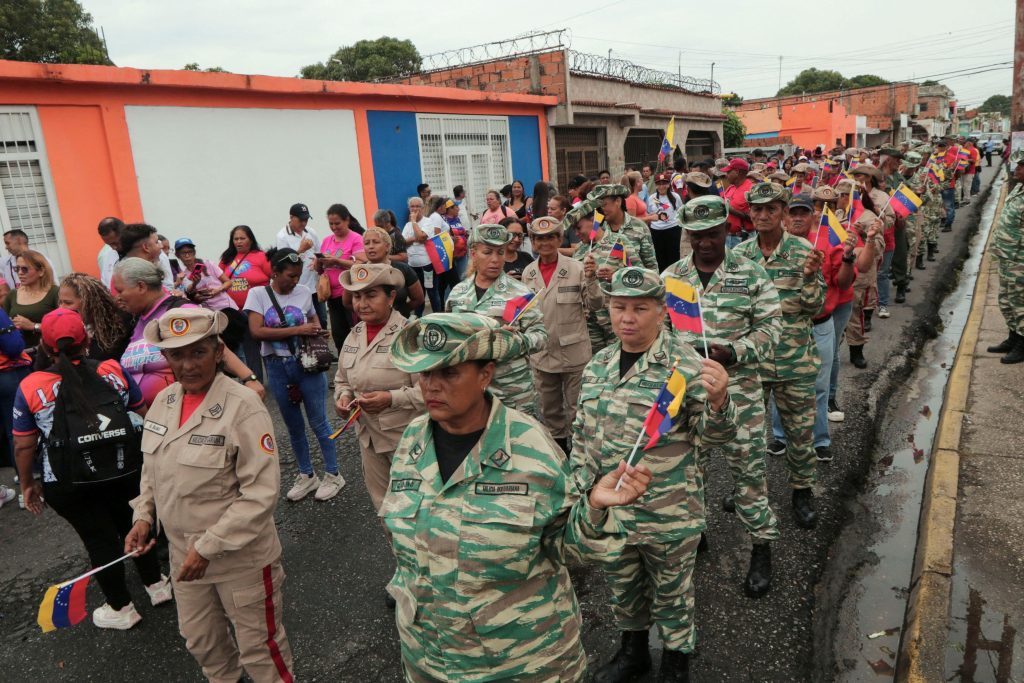
FILE PHOTO: Members of the National Bolivarian Militia gather after responding to Venezuela’s President Nicolas Maduro’s call to defend national sovereignty amid escalating tensions with the U.S., in Valencia, Venezuela September 5, 2025. REUTERS/Juan Carlos Hernandez/File Photo
Maduro’s government has rejected the allegations of drug trafficking, with officials insisting Venezuela does not produce cocaine and accusing Washington of fabricating evidence. As reported in Reuters, Vice President Delcy Rodriguez dismissed U.S. claims, saying, “They need to fix their GPS.” Caracas has also alleged that video footage of the strike shared by Trump was manipulated.
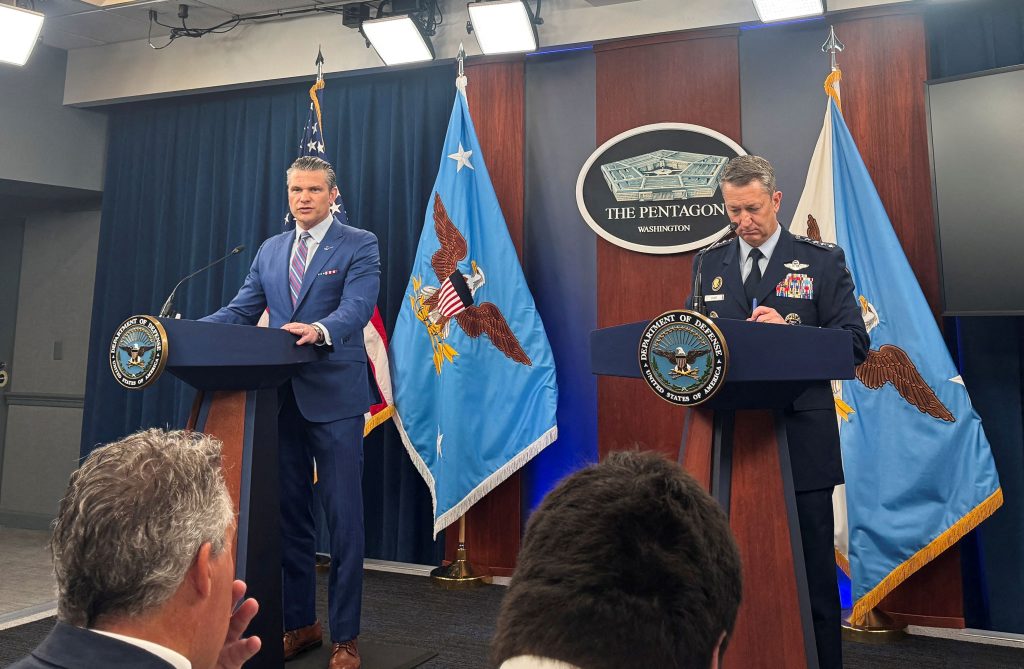
FILE PHOTO: U.S. Defense Secretary Pete Hegseth and Chairman of the Joint Chiefs of Staff Air Force General Dan Caine, speak during a press conference at the Pentagon in Arlington, Virginia, U.S., June 26, 2025. REUTERS/Idrees Ali/File Photo
The clash has been compounded by a series of military maneuvers. Last Thursday, the Pentagon accused Venezuela of a “highly provocative” action after two Venezuelan F-16 jets flew over a U.S. destroyer in international waters. At the same time, Defense Secretary Pete Hegseth told sailors aboard the USS Iwo Jima off Puerto Rico that they were not on a training mission but on the “front lines” of a campaign against drug cartels.
Trump has ordered the deployment of 10 additional F-35 fighter jets to Puerto Rico, alongside seven U.S. warships and more than 4,500 service members already operating in the region. He has also directed the Pentagon to rebrand itself as the “Department of War,” a move that would require congressional approval.
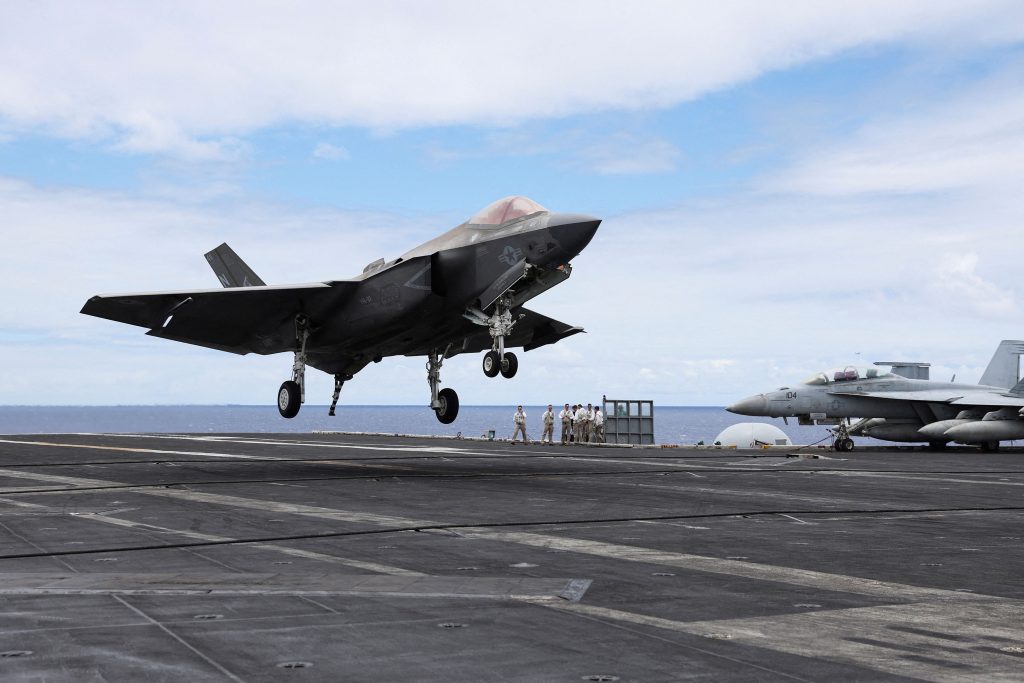
FILE PHOTO: A F-35 jet lands on the runway of the USS Carl Vinson aircraft carrier during the Rim of the Pacific (RIMPAC) military exercises about 100 miles south of Oahu, Hawaii, U.S. July 19, 2024. REUTERS/Marco Garcia/File Photo
In response, Venezuela’s defense minister announced plans to deploy 25,000 troops to coastal states and strategic islands, up from 10,000 currently in place. Maduro has framed the U.S. naval presence as part of an effort to impose regime change, calling it “the biggest threat our continent has seen in 100 years.”
The standoff extends beyond military maneuvers. As reported in Reuters, The Trump administration has ended Temporary Protected Status for Venezuelan migrants in the U.S., potentially affecting over 250,000 people, while also designating Venezuela’s Tren de Aragua criminal network as a global terrorist organization.
Despite Trump’s insistence that regime change is not his goal, analysts and lawmakers warn that the aggressive U.S. posture, coupled with Maduro’s defiance, risks tipping an already volatile standoff into open confrontation.