Public health experts are preparing a disease surveillance operation to monitor potential outbreaks during the World Cup, using wastewater analysis, social media monitoring and other data sources to identify health threats among millions of international visitors.
A public health team based in Washington, D.C., plans to track infectious diseases across the United States, Canada and Mexico, where the tournament will bring together players, officials and more than 6.5 million fans from over 100 countries.
The 39-day event, featuring 104 matches, is expected to create additional challenges for disease monitoring because of the scale of global travel involved.
Sewage and digital signals used as early warnings
The newly formed team has transformed a Georgetown University laboratory into an epidemiological command centre designed to provide real-time information on possible health risks.
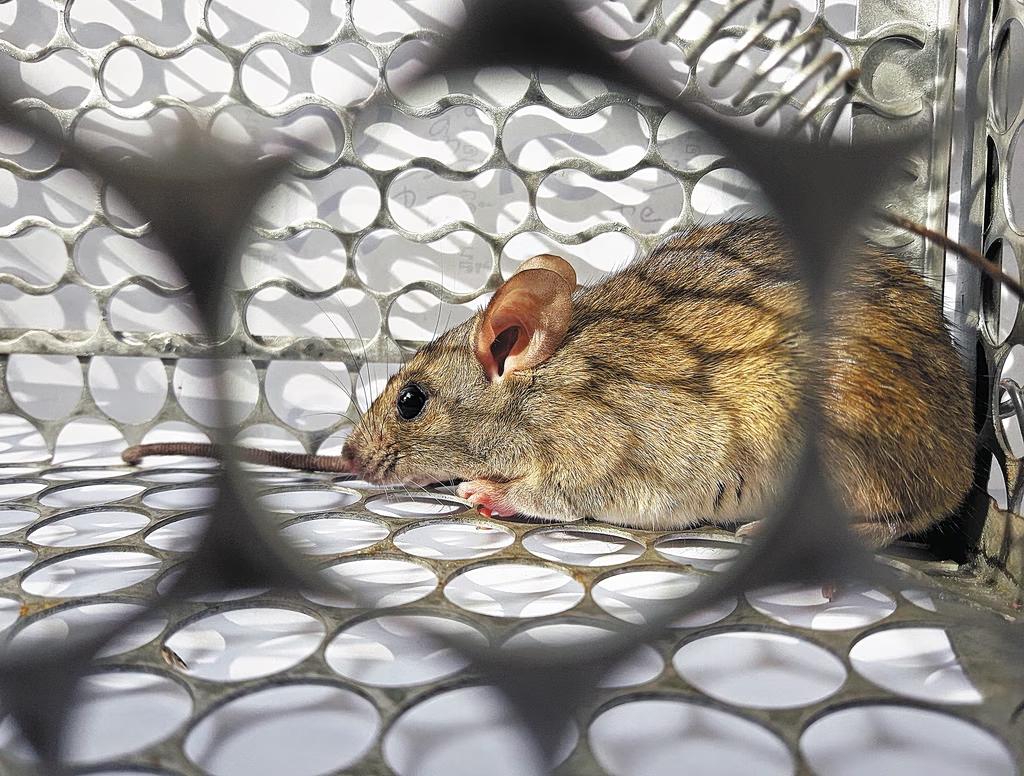
One of the main tools will be wastewater surveillance, which uses DNA and RNA sequencing to identify genetic material from microbes without needing to grow them in laboratories.
Rebecca Katz, director of Georgetown’s Center for Global Health Science and Security and leader of the initiative, said the technology can provide early warnings of emerging outbreaks.
The team is already receiving wastewater data from collection sites in the U.S. and Canada, as well as other health monitoring sources across all three host countries.
Daily reports will be shared with hospitals, public health authorities, international partners and FIFA, the governing body of world soccer.
Measles, Ebola and mosquito-borne illnesses monitored
Health experts said the monitoring effort comes as countries face several infectious disease concerns, including measles, Ebola and mosquito-borne illnesses.
Katz said Ebola remains a very low risk to the general public in North America, despite attention surrounding the current outbreak in Africa.
The team will pay particular attention to measles, which has seen a rise in cases in the United States, Mexico and Canada.
Mosquito-borne diseases such as dengue and chikungunya are also being monitored because infected travelers could introduce the viruses into new areas where mosquitoes can spread them.
Social media adds another layer of surveillance
Alongside wastewater testing, researchers will monitor anonymized health information and public online discussions for signs of unusual disease patterns.
Katz said social media activity has previously helped officials identify outbreaks, including cases where changes in online conversations and consumer behavior pointed to rising illness levels.
The Georgetown-led operation will support existing work by U.S. health agencies, including the Centers for Disease Control and Prevention and the Administration for Strategic Preparedness and Response.
The project is also expected to serve as a test model for future large-scale events, including the 2028 Summer Olympics in Los Angeles.