For nearly two days, injured and alone, a U.S. aviator hid in a remote mountain crevice as Iranian forces and militias closed in on him with helicopters and drones.
“God is good,” the Air Force colonel had radioed once he reached an elevated ridge, a message that was initially met with suspicion in Washington as a possible Iranian trap as officials scrambled to verify he was still alive.
Early Sunday, he heard the heavier roar of U.S. aircraft and a barrage of fire as U.S. commandos reached him 200 miles deep inside Iran. As they whisked him to safety, they blew up aircraft stranded on the ground rather than risk the sophisticated military equipment falling into Iranian hands, leaving behind a final explosion and a plume of smoke.
The rescue mission that U.S. officials said unfolded in the craggy gorges of southwestern Iran was the kind of operation that military commanders both plan for and dread: a downed American airman in enemy territory, hostile forces converging and early attempts faltering under fire.
The aviator, who hasn’t been identified, had been one of the two crew flying in an F-15E Strike Eagle with the aircraft call sign “Dude 44” when it was shot down by Iranian forces on Friday.

Shortly after the plane crashed, Defense Secretary Pete Hegseth and Gen. Dan Caine , chairman of the Joint Chiefs of Staff, briefed President Trump about the situation, according to U.S. officials. They told him the Pentagon had long planned for this scenario and could rescue the airman.
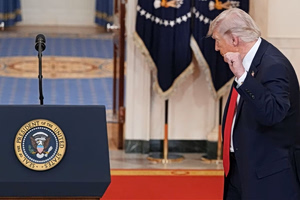
Once the Pentagon confirmed the aviator’s identity, Hegseth rushed to the Oval Office to tell him and seek a final order, officials said. Trump immediately gave his approval: “We have to get him,” Trump said, according to White House press secretary Karoline Leavitt.
The effort to recover the officer set off a sprawling, high-risk rescue mission involving some 100 special-operations forces, dozens of U.S. warplanes and helicopters, and a last-minute Central Intelligence Agency deception campaign to buy more time, the officials said.
“When airmen go down, you can’t get them in very tough countries, like in Vietnam,” Trump told The Wall Street Journal on Sunday morning. “He was able to climb, climb up as wounded as he was, he was able to climb up into a crevice,” the president continued, saying the airman could hear the U.S. forces looking for him. “A lot of great things happened.”
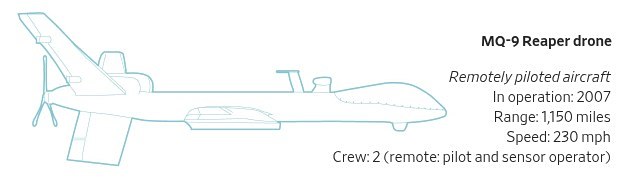
Troops led by Central Command brought a devastating array of firepower to keep its enemy at bay. Four B-1 bombers, part of a larger air armada, dropped nearly 100 2,000-pound satellite-guided bombs, according to two U.S. officials. MQ-9 Reaper drones also struck suspected fighters as they approached within kilometers of the aviator’s hiding site.
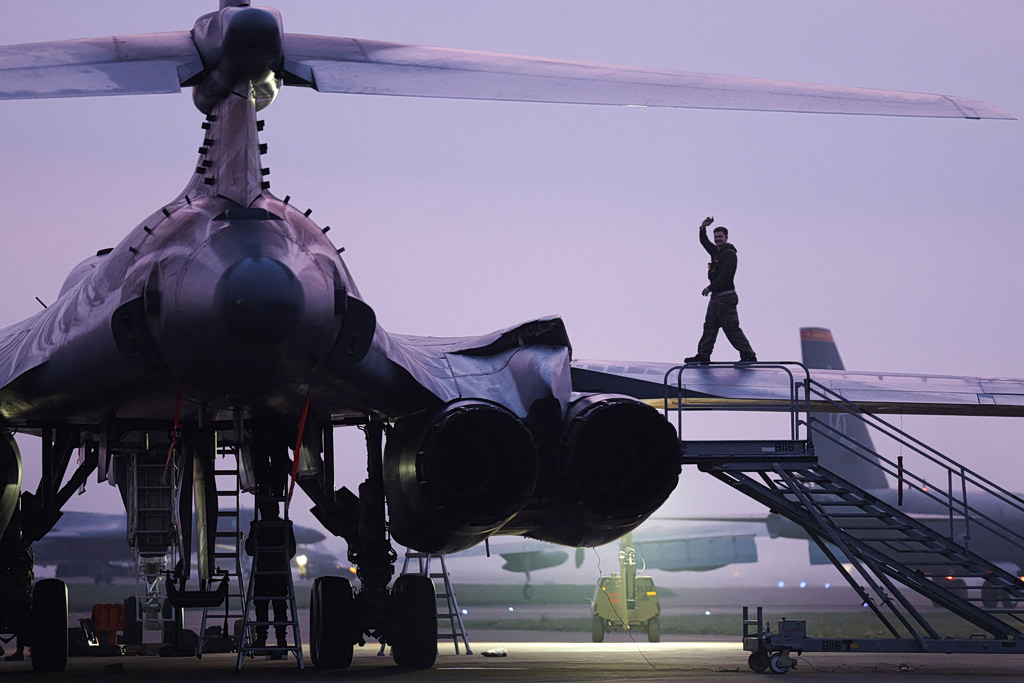
A member of the ground crew prepares a USAF B-1 bomber before dawn at RAF Fairford airbase, used by United States Air Force (USAF) personnel, amid the U.S.–Israeli conflict with Iran, in Fairford, Gloucestershire, Britain, March 23, 2026. REUTERS/Toby Shepheard
The search for an American airman stranded behind enemy lines jolted the U.S., making what had been an abstract air war feel visceral beyond the grainy footage of explosions released by the White House.
It also provided both sides with a new narrative as the war enters its sixth week. The Iranian regime has portrayed the downing of the jet as proof that the U.S. could be bloodied and has challenged Trump’s claims of American air superiority.
In triumphant interviews and posts, Trump and some of his allies have been calling the successful operation an “Easter miracle” as the administration seeks to mobilize flagging public support for the war.
“Open the Fuckin’ Strait, you crazy bastards, or you’ll be living in Hell,” Trump posted on Truth Social early Easter morning about the Strait of Hormuz , the strategic waterway that Iran has largely closed to commercial traffic since the war began. In a separate post, the president gave Iran an 8 p.m. Tuesday deadline to comply before the U.S. starts targeting bridges and electric plants .
The most famous rescue operation that the U.S. has previously attempted in Iran—aimed at freeing 53 U.S. Embassy staff hostages nearly 46 years ago—had failed dramatically after a series of mishaps, punctuated by a fiery crash at a desert staging area.
Worst-case scenario
When the F-15E came under fire on Friday, the aircrew pulled their ejection handle, which blew the canopy, blasted the seats out of the cockpit and deployed their parachutes. Below them, the damaged plane crashed hundreds of miles inside Iranian territory.
But while a U.S. military team was able to quickly rescue the pilot, the other crew member who flew in the back seat of the fighter as a weapons-systems officer went missing.
“We didn’t play up the first one, because then they would have found out about the second one. So by not talking about the first one, it took them a day and a half to find out there was a second one,” Trump told the Journal on Sunday about the missing airman.
The news first broke on Iranian state television. Reading from a sheet of paper, a female anchor announced that a U.S. aircrew had ejected from a plane in southwestern Iran. The Americans were believed to be in Kohgiluyeh and Boyer-Ahmad, a mountainous province of steep ridgelines.
She urged “all tribespeople and villagers” to cooperate with the military and law enforcement. “If you capture the enemy pilot or pilots alive and hand them over to the police, you will receive a precious prize,” she said, with a backdrop of a military march.
For the Pentagon, this was a worst-case scenario. It was the first time a piloted U.S. aircraft had been lost over enemy territory in more than 20 years, military experts said. Video footage of a captured U.S. airman in enemy hands would have handed Tehran a major propaganda tool and a source of leverage at a critical moment in the war. U.S. officials worried that the regime would use the airman’s capture to seek maximalist concessions.
Trump was in the Oval Office on Friday and Saturday to receive constant updates from Hegseth, Leavitt said. Hegseth repeatedly visited the White House to deliver in-person briefings.
Soon after the airman landed, he was able to get to an elevated ridge and make contact by activating an emergency beacon to send his proof of life, according to senior officials. But as he went deeper into hiding in the mountainous terrain, communication went in and out as U.S. officials sought to keep track of his location.
The complex mission quickly ran into problems, officials said .
As the U.S. redirected aircraft in the region to help with the mission, some planned targets—including missile launcher sites—were left untouched. That allowed Iran to fire more weapons than usual in recent days, officials said.
The first attempt to rescue the airman had to be aborted. Two H-6 helicopters took small-arms fire from the ground, wounding the crews in both aircraft and requiring them to land safely in Kuwait, officials said.
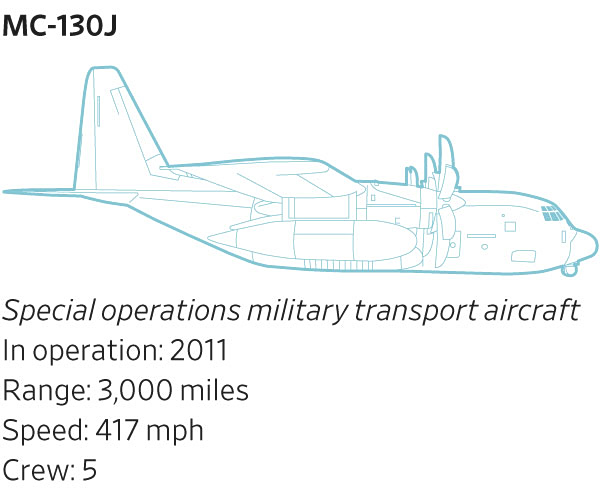
When two MC-130Js, a special-operations aircraft, landed in a makeshift forward-operating base inside Iran they ran into problems when their nose wheels sank into the ground and couldn’t take off, officials said. There was a contingency plan: Three smaller planes carrying specialized teams later made their way to the remote staging area.
Time was of the essence. Regular Iranian forces, pro-regime militia and members of the Islamic Revolutionary Guard Corps were on the airman’s trail, using helicopters and drones to find him. The U.S. deployed MQ-9 Reaper drones and other aircraft to strike the Iranian trackers, giving the airman a greater chance of survival.
The CIA also helped with the operation. After using its capabilities to pinpoint the aviator’s location to a mountain crevice, which a senior administration official described as finding a needle in a haystack, the agency shared that information with the Pentagon and White House, and continued to feed real-time information over the course of the operation.
The CIA also carried out a deception operation to throw the Iranians off the airman’s track. As the aviator hid from Iranian forces, the agency spread false word inside the country that the U.S. military had already located the downed airman and were preparing to move him overland for exfiltration.
Other U.S. intelligence agencies also provided support to the mission, officials said. U.S. officials coordinated with Israel to share intelligence and pause attacks in the area to help the mission, a U.S. and Israeli official said.
Israel also conducted strikes in the operation area in coordination with U.S. forces, striking assets that could pose a threat to the evacuation effort, the Israeli official said.
Once the mission was complete, the U.S. destroyed the two stuck MC-130Js, which cost more than $100 million each, and two MH-6 Little Bird helicopters, so that their sensitive technology wouldn’t be compromised after they were left behind.
After hours of speculation, Trump posted the news shortly after midnight. “WE GOT HIM!” Trump wrote on Truth Social. “The U.S. Military sent dozens of aircraft, armed with the most lethal weapons in the World, to retrieve him. He sustained injuries, but he will be just fine.”
Write to Vera Bergengruen at vera.bergengruen@wsj.com , Alexander Ward at alex.ward@wsj.com , Michael R. Gordon at michael.gordon@wsj.com and Shelby Holliday at shelby.holliday@wsj.com