It’s fashionable to hate Dubai. Especially among those who haven’t been to the Persian Gulf boomtown, or only visited for a glimpse of the mandatory tourist highlights—the Burj Khalifa skyscraper, the boozy brunch by the beach, malls and more malls.
And so, when Dubai and other parts of the United Arab Emirates were targeted by some 1,400 Iranian missiles and drones over the past several days, the reaction abroad was often gloating and snark.
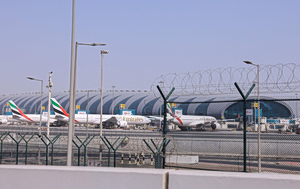
Social media was replete with jokes and memes about fleeing influencers, tax dodgers and crypto bros. Attention focused on the extraordinary fees—reportedly upward of $250,000 per head—that some stranded expats paid to flee the danger once the Dubai airport, among the world’s busiest until a week ago, shut down under fire.
Empathy for the four million people from all walks of life who have chosen to build their lives in this unusual city? There was little. The overwhelming majority who stayed put, and showed up for work the next day, didn’t make the headlines.
The presumption that Dubai is a transient mirage, a Hollywood set built on sand that would unravel once the going gets tough, was no doubt shared in Tehran. It may, in fact, have been a key reason why Iran decided to fire more missiles and drones at the U.A.E., which didn’t attack it, than at Israel, which did.
“Whenever there is a crisis, many believe that this will be the end of Dubai and of the U.A.E. model. Iran probably had just this in mind: to create panic,” said Emirati academic Abdulkhaleq Abdulla. “But the contrary has happened. Dubai has proven that it is not a bubble, that it is resilient and is a real place. Doesn’t get more real than this.”
I moved to Dubai in 2015, after a few years in Kabul, as the Journal’s bureau chief there. At first, the city was just a place between work trips, convenient because of its status as a global airline hub. Then, as the social fabric of friendships and relationships grew over time, with favorite spots away from the tourist trail, it became home.
Habits emerged. Sunset runs amid free-roaming peacocks and ghaf trees in a surprisingly rural area behind the skyscrapers. The gas station with the best sweet karak chai. Art movie nights in the Cinema Akil, set amid galleries in a converted industrial zone.
Just as in Kyiv, my city of birth where I was on the day when the Russian invasion kicked off in 2022, I felt a sense of personal insult as Iranian missiles started raining last Saturday. It was painful to stand on the balcony, where I grow my tomatoes and chilies, and watch plumes of smoke rise on the horizon as puffs of interceptions appeared in the blue sky.
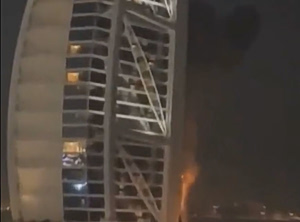
Dozens of Iranian drones—of the same Shahed variety as the ones targeting Kyiv—got through, hitting several data centers and symbolic targets such as luxury hotels and the U.S. consulate in Dubai. But an exceptionally high interception rate of Iranian missiles by sophisticated air defenses helped avoid catastrophic damage, at least so far. The city faced its first test of war, and it responded with dignity. There was no massive hoarding, no looting or crime spree, no exodus of residents.
“If there is a bomb, a war, so what?” said Aisha Katushabe, a Ugandan hostess at a Japanese restaurant in Dubai’s City Walk area, showing off her bravado. “We live in Dubai or we die in Dubai.”
By day five of the war, Dubai regained its relative composure. Traffic jams returned to the main roads and offices, malls and restaurants were full again. Vital infrastructure, such as power stations and desalination plants remain intact, and even the airport partially reopened to commercial flights. All in all, three people in the U.A.E. were killed by Iranian salvos, all last Saturday, and more than 100 injured, according to the ministry of defense.
“People were definitely shocked at first,” said Sunny Rahbar, co-founder of The Third Line contemporary art gallery, which focuses on regional artists, many of them from Iran.
Rahbar came to Dubai when she was 3, brought by her Iranian parents in 1980, shortly after the Islamic Revolution.
“Dubai has always been a safe place, a place for people seeking to put roots, to work, to start a new life” she said. “I never thought I would witness this—the U.A.E. under fire.”
Dubai is very much not your ordinary city. What used to be a small trading port on the Gulf, its economy centered on pearl diving, became one of the world’s fastest-growing metropolises in recent decades, expanding far beyond the old forts and merchant houses with their wind towers by the creek. The resident population doubled since passing the two-million mark in 2015, as brand-new urban areas mushroomed along the coast and in the desert.
Only an estimated 5% of the people residing in Dubai are citizens of the U.A.E., with the rest hailing from literally all over the world. Pakistanis living, studying or working side by side with Indians, Russians with Ukrainians, Israelis with Lebanese and Palestinians. Many were born or raised in Dubai, and—other than their passport—retain only limited links to their original country of citizenship. English is the common language.
“It is a city where you can be different from each other but live together, where you have an abaya and a bikini side by side on the beach, where everyone can be themselves, be accepted for what they are, and where it is safe to raise my child,” said Olha Danchenkova, a Ukrainian communications professional who moved to Dubai six years ago.
No novice to war zones, Danchenkova has been visiting Ukraine every summer since the full-scale Russian invasion of 2022. She, her husband and daughter slept in the corridor, away from windows, on Saturday night, when Dubai was subjected to the heaviest Iranian barrage. The adults have since moved back to their bedroom, the child, for now, spends nights in the corridor. “I won’t deny I was scared, as were many others. We are human, after all.”
Some families—particularly with children—have temporarily moved out of high-rises, to stay with friends, or to spend a few days in mountain lodges in the U.A.E. countryside. Others, for now, drove across the border to nearby Oman, or flew out.
Danchenkova said she was impressed by the sense of community in the hour of crisis. On the first day of the war, the psychologist at her daughter’s school reached out with advice on how to calm children’s frayed nerves. WhatsApp message groups traded other advice.
For many like Danchenkova, this isn’t their first war. After all, Dubai is home to hundreds of thousands of Lebanese, Syrians, Iraqis, Ukrainians, Bosnians and Sudanese, to name just a few hot spots.
“Storms don’t shake us. They remind us who we are,” proclaimed an electronic billboard in City Walk on Thursday night, with a quote from Dubai’s emir.
At a time when rich Western nations see mass immigration as the font of societal ills, Dubai and other Gulf cities stand as exceptional beacons for foreign talent. If you are an ambitious professional in a developing country—a Syrian doctor, an Egyptian lawyer, a Filipino engineer, and Indian accountant—you stand little chance of quickly securing the visas and permits to work in your profession in the West. But in Dubai, you can, often at salaries that exceed Europe’s.
“Dubai is a city that has offered me so much, the opportunities and possibilities that one doesn’t necessarily have in the West,” said Rahbar, the art gallery co-founder.
Opportunity exists lower down the socio-economic ladder too, even if life for construction workers, taxi drivers or waiters from countries like India, Pakistan or Nigeria can be tough. They often live in spartan conditions and earn meager wages. Yet, they flock to Dubai because a few years of working in the city can nevertheless generate enough savings to maintain a family back home, and maybe even purchase a property.
“I love Dubai. And I have no fear,” said Abdul Halim, a delivery scooter driver from Bangladesh, just after an incoming missile warning alert sounded on his phone. He said he’s focusing on getting a promotion from driver to manager so that he can bring his family to the U.A.E.
“Nothing is easy in Dubai,” said the hostess, Katushabe, who uses her earnings to maintain children and parents back in Uganda. “But if you give it all, you can change your life here.”
The country has dramatically changed its legislation in recent years to attract new residents and business. It passed labor laws that aim to eradicate abuses, and liberalized the visa rules that shackled most foreign residents to their employers. It also allowed professionals—or anyone buying an apartment—to obtain so-called golden visas, the renewable 10-year residence permits that are not linked to a particular job. The country has no personal income tax—a reason why people moving here are often resented in their home nations. But the U.A.E. also has no social safety net for foreigners. If you don’t work, you’re on your own—and, unless on a golden visa, can’t stay.
Foreigners can also set up companies with 100% ownership in an increasing number of industries and areas, creating a new class of entrepreneurs in anything from artificial intelligence to financial consulting to interior design.
“The U.A.E. was very smart in making sure that these people establish roots and have a stake in the success of the country. Had this been in 2010, or 2015, there would have been a very different reaction, by some people, who don’t own their businesses, who don’t own their houses, don’t own their apartments,” said Emirati writer and intellectual Sultan Sooud al-Qassemi. “Now, almost nobody that I know is planning on leaving. They feel that this is their home for the long term. And for us, the best expression of love is—if possible—for these people to remain here.”
The U.A.E., of course, is not a liberal democracy: It is a federation of seven emirates, with the hereditary ruler of the most powerful of them, oil-rich Abu Dhabi, serving as president, while the ruler of Dubai, the most populous, serves as a prime minister. Citizenship is only rarely granted to newcomers, and there are no elections. Some of the country’s foreign entanglements, particularly in the Sudan civil war, have earned widespread condemnation abroad.
But it’s also a place where things work: quickly, efficiently, and, unusually for many parts of the Middle East, without the need to pay bribes. Dubai, in particular, has already shown its resilience during the Covid pandemic, ensuring that it never had shortages of food and essentials, that the lockdown was brief, and that its inhabitants were among the first in the world to access vaccines. Its economy—and property prices—quickly bounced back afterward. If the threat of attacks from Iran doesn’t become permanent, many expect it to recover this time, too.
“It’s normal and quite understandable to feel nervous and anxious anytime the umbrella of safety feels compromised. But just as during Covid, people in the U.A.E. know very well the government will do everything it can to ensure their safety and security,” said Yousef Al Otaiba, the country’s minister of state and ambassador to Washington who returned to the U.A.E. shortly after the war began. “And, just like Covid, we will come out of this stronger.”
Write to Yaroslav Trofimov at yaroslav.trofimov@wsj.com