Formula One had just celebrated its 70th anniversary when the world’s premier motor-racing series found itself at a crossroads.
A sport built to the glory of the internal combustion engine and propelled by the roar of the V-12 was hurtling into an era of electric vehicles and corporate responsibility. F1 executives had come to a hard realization: If their high-octane enterprise was to survive another 70 years, then Formula One could no longer hold back the tide of electrification.
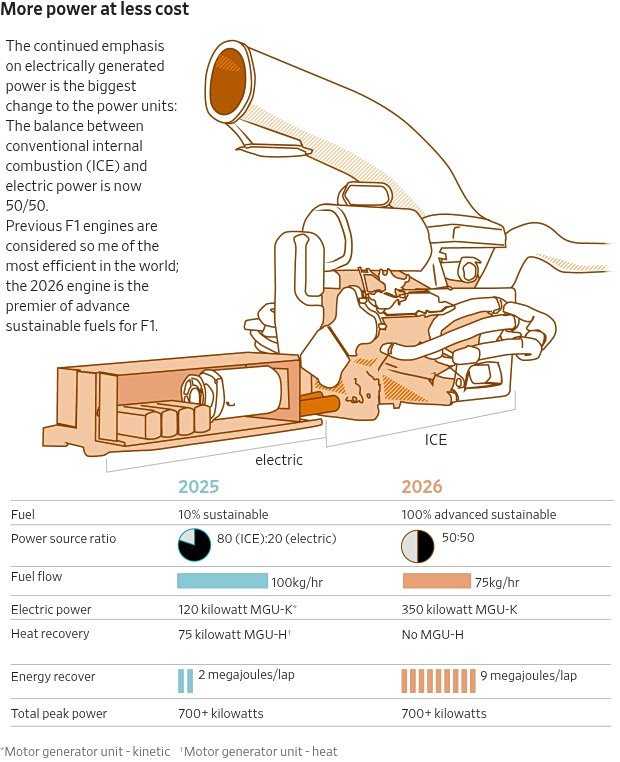
So, ahead of the 2026 season, the globe-trotting series conceived as the ultimate R&D department for the automotive industry redrew the rules—and took the sport into uncharted territory—by mandating that all of its race cars must be hybrids. For the first time since 21 gentleman racers lined up for the inaugural Formula One Grand Prix at Silverstone in 1950, the pinnacle of motor sports would run in equal measure on internal combustion and electric power.
F1 was going green.
Easy does it
But three races into this groundbreaking, eco-friendly experiment, the sport is divided on whether Formula One without its raw, fossil-fueled muscle is really Formula One at all.
“We’ve come from the best cars ever made in Formula One and the nicest to drive,” says reigning world champion Lando Norris, “to probably the worst.”
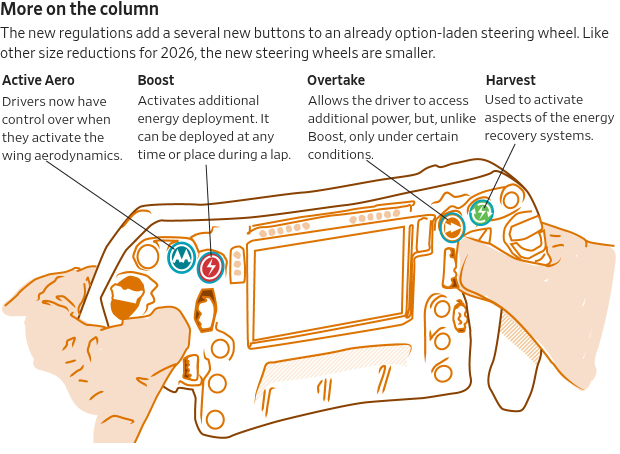
The reason is that changing the power units, as the new engine-battery combination is known, didn’t just change the way the cars reach their top speed; it also reshaped the way they are driven. The man in the cockpit is now required to manage how much energy the car is using, often by lifting his foot off the gas to let the battery recharge. For the daredevils who live to test the boundaries of automotive performance and push their 200-mph machines to the brink, it is the equivalent of being stuck in third gear.
“As a pure driver, I enjoy driving flat out,” four-time world champion Max Verstappen says. “And, at the moment, you cannot drive like that.… For me, that’s just not Formula One.”
The drivers aren’t the only ones who are up in arms. Fans who have long mourned F1’s transformation from hell-for-leather test of nerve into slick entertainment product see this as merely the latest in a string of measures to sanitize the sport.
In particular, they object to drivers’ having to “lift and coast” in some of the fastest parts of the track. Even qualifying is no longer the pedal-to-the-metal spectacle of raw speed, cornering skill and courage that separates the great from the merely quick. Instead, it has become an exercise in conserving energy and managing performance.
“I’ve known more fun,” says Charles Leclerc, who races for Ferrari.
All shall pass
The irony is that many of these new measures were explicitly designed with fans in mind. One of the main goals of the regulations was to increase the frequency of passing during races in a sport that has often been too processional. The solution was a power hack known as “manual override mode” that gives any car less than one second behind another the ability to trigger a temporary speed boost. And while it has made overtaking more common, the turbo button has also diminished the difficulty of passing in the eyes of purists.
Leclerc, who has spent more than 20 years mastering the art of the overtake since his days in go-karts, compared the whole thing to a videogame power-up: “This is like a mushroom in Mario Kart.”
F1 and the FIA, the world governing body of motor sport, have heard the uproar. In recent weeks, they have scheduled several meetings to discuss important tweaks to the formula designed to address the drivers’ concerns and potential safety issues, and to restore some intensity to qualifying. The last thing they want is for F1 to be mistaken for Formula E, the fully electric racing series launched by the FIA in 2014.
The first of those updates will be introduced at this weekend’s Miami Grand Prix, where an adjustment to the battery-recharge limit during qualifying should allow drivers to spend more time at top speed. It’s likely there will be further fine-tuning in the months ahead, too. Still, any rules changes will be relatively minor because the sport tries to avoid sweeping overhauls to its regulations outside of set windows that occur every six to eight years.
‘Act with a scalpel’
“We all share the same objectives,” Mercedes team principal Toto Wolff says. “How can we improve the product, make it out-and-out racing and look at what can improve in terms of safety. But act with a scalpel and not with a baseball bat.”
Wolff, of course, had a vested interest in rooting against wholesale changes: His team has won the first three Grands Prix of the season. But no matter how the rules evolve, it is clear that F1 will never fully return to the way things were. The sport has insisted that its green revolution is essential to maintaining Formula One’s relevance for years to come in a world that might look askance at the sport as a lavish, global celebration of the combustion engine.
“What I don’t like is people who love to criticize,” F1 chief executive Stefano Domenicali said recently. “I take on board everything, but have a clear line on what we want to do for the future.”
The immediate question is whether that future will include Verstappen, the most successful champion of his generation. The 28-year-old has made no secret of his disgust with the new approach and openly discussed walking away from the sport.
“As a driver, the feeling is not very Formula One-like,” Verstappen says. “It feels a bit more like Formula E. On steroids.”