Toward the end of Elizabeth II’s reign, critics argued that the queen had been too soft on her son Andrew. The former prince was known in his youth as “Randy Andy” for his parade of girlfriends and playboy lifestyle, but his ties to Jeffrey Epstein cast those dalliances in a new, unflattering light. He wasn’t just a ladies’ man; he stood accused of sexual abuse. He denied it and his mother dealt with it: She paid the bulk of the settlement to his accuser with her personal fortune.
King Charles III has not been so generous.
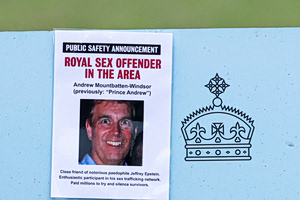
While Elizabeth compelled Andrew to step back from royal duties and took away his royal patronages and military honors, Charles went further. In 2024, he stopped paying for Andrew’s private security and ended his annual allowance of £1 million. He began pressuring the prince to leave the 30-room house near Windsor Castle that had been his residence for more than two decades. Last year, after the initial batch of Epstein files was released, he stripped Andrew of his titles and announced that he would be called Andrew Mountbatten-Windsor.
When Andrew was shockingly arrested last month, the first such event for a senior member of the royal family in roughly 400 years, on suspicion of misconduct in public office, the king pledged his “wholehearted support and cooperation” in the investigation. The former prince, who did not respond to requests for comment, has consistently denied any wrongdoing in relation to his dealings with Epstein. But in a country with a long memory for royal misbehavior, the mark on his legacy is permanent.
By all measures, Charles is choosing country over family, tough love over sibling loyalty, preserving the crown above all else. But is it enough to quiet critics at a time when antimonarchy sentiment is louder than ever?
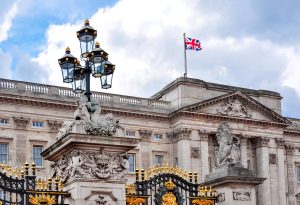
Buckingham Palace declined to comment on Andrew or the king’s management of the situation.
During Elizabeth II’s 70-year reign, the longest in over 1,000 years of royal rule, republican forces opposing the crown were essentially invisible. Although Elizabeth II lacked power, she had influence. She was a model monarch as well as a comforting and reliable presence—“the sheet anchor in the middle for people to hang on to in times of turbulence,” as Lord Airlie, a palace courtier and her lifelong friend, described her to me.
But when Charles became monarch in 2022, antimonarchists began taunting him with “Not My King” signs at some of his public engagements.
King Charles III’s popularity hovered around 70% in the aftermath of his accession before settling in at around 60%. He seamlessly managed the transition to a new reign and graciously navigated the falling-out between his two sons, maintaining traditions of the monarchy as he modernized it. He has kept up his well-known workaholic pace that only slowed somewhat after he was diagnosed with cancer in January 2024.
Until the initial release of Epstein documents by the U.S. Department of Justice last year, the popularity of senior members of the royal family and the monarchy as an institution had held steady. But from November 2025 until early 2026, Ipsos polling found that Charles’s favorability dropped from 53% to 48%. (By contrast, his mother’s peaked at 90% during her Diamond Jubilee in 2012 and hovered consistently around 80% until her death at 96.)
Though most polls show that Britons still largely support the crown, the furor around Andrew has given antimonarchists cause to celebrate. Since the fall, Charles has faced heckling about his brother during public appearances. Republic, Britain’s leading antimonarchy group, claimed credit for Andrew’s arrest , attributing it to a police report filed by the group’s CEO. Republic commissioned its own poll showing only 45% support for the monarch over an elected head of state, but that’s 20 points behind other leading surveys.
Public opinion has split between those who have taken the king to task for being dilatory and those who think he has played the situation correctly. If evidence emerges that he was warned and failed to act, however, his reputation could suffer. One person knowledgeable about palace thinking expects more light to be shed on financial arrangements for royal homes under public pressure for transparency.
“The Royal Household understands the importance of transparency and publishes an annual report clearly detailing how the publicly funded Sovereign Grant is used to fund the official duties of the Royal Family and the maintenance of the Occupied Royal Palaces,” a palace representative said in a statement. She emphasized that royal spending is audited by the state.
The attention on Andrew has detracted from Charles’s proudest achievements and initiatives. His most acclaimed, the King’s Trust, which has helped 1.3 million disadvantaged young people learn skills and find employment, marks its 50th anniversary this May.
Another anniversary around the corner is that of the queen’s birth. In April, the country will celebrate what would have been Elizabeth’s 100th birthday. Her memory remains the beating heart behind the throne. If it becomes enmeshed in the Epstein scandal, the standing of the monarchy could suffer.
The king has moved swiftly to protect it, displaying what James Knox, who has worked closely with Charles, once described to me as “steely determination cloaked in marvelous manners.” When Charles declared that Andrew could no longer be called prince or Duke of York, and forced him to relinquish his lease on the Royal Lodge , he said that the move was “deemed necessary” despite his brother’s denials of misconduct. A palace statement at the time said, “Their Majesties wish to make clear that their thoughts and utmost sympathies have been, and will remain with, the victims and survivors of any and all forms of abuse.”
Dame Julia Cleverdon, who served as Charles’s special adviser to the Prince’s Charities, said that Queen Camilla has “a long history of commitment to victims of sexual abuse, and I think the king has understood much more as a result of her absolute dedication.”
Now the British government is weighing removing Andrew from the line of succession—he is currently eighth in line for the throne—and authorities are investigating him for allegedly sharing nonpublic information with Epstein during his time as Britain’s global envoy for trade and investment from 2001 to 2011. If he is charged, he could face a maximum life sentence.
undefined While that plays out, Charles appears committed to defending and elevating the crown. The King’s Trust 50th anniversary gala at the Royal Albert Hall on May 11 will give the king an opportunity to shine a light on the benefits of the monarchy at its best. One of his greatest success stories is helping Idris Elba train to become an actor through a $2,000 Trust grant. Scores of other celebrity ambassadors, from Damian Lewis to Helen Mirren, will praise the Trust’s work for young people at a time when the monarchy needs support from Gen Z, where republican sentiment has been rising.
Like his mother, King Charles III has pledged to remain on the throne for his lifetime. As he said in an interview in 2005, “I find myself born into this particular position. I’m determined to make the most of it and to do whatever I can to help, and I hope I leave things behind a little bit better than I found them.”
Sally Bedell Smith is the author of “Elizabeth the Queen” and “Prince Charles,” as well as Royals Extra on Substack. undefined