The U.S. Army is rushing to the Middle East counterdrone systems that have been battle-tested in Ukraine, in an effort to thwart Tehran’s destructive attacks across the region, U.S. officials said.
A small number of the defensive systems, dubbed Merops, are being sent from U.S. Army stocks in Europe, along with U.S. personnel to operate them and train other troops, U.S. officials said.
U.S. officials said that additional systems will be provided by the U.S. company that produces them, Perennial Autonomy, in which billionaire Eric Schmidt is an investor. Schmidt declined to comment.
A U.S. official said that Ukraine is likely to provide trainers. Ukraine didn’t immediately respond to a request for comment, but Ukrainian President Volodymyr Zelensky has said the U.S. and its regional allies have sought Kyiv’s help against Iranian strikes.
The U.S. isn’t the only country interested in Ukraine’s battlefield experience. Representatives of Qatar and other Gulf states targeted by Iranian drones and missiles have traveled to meet with Ukrainian arms manufacturers and learn from their experience in building supply chains.
U.S. use of Ukraine-tested innovations marks a turnabout. For several years, U.S. military officers have sent equipment to Ukraine and studied the war there to learn how to defend against Russia’s large fleet of one-way attack drones. Now, Ukraine has become a laboratory for defensive systems to be used in President Trump’s new war against Iran—specifically in fending off Iran’s Shahed drones.
Shaheds, which Russia uses extensively, are an Iranian-developed weapon, so the U.S. faces a threat that is familiar from Ukraine. Moscow manufactures its own Shaheds and has developed versions that are even more advanced than those Iran is now launching.
The U.S. and its allies deployed some Merops systems in Poland and Romania last year following incursions by Russian drones. It has proved to be a popular system with Ukraine forces.
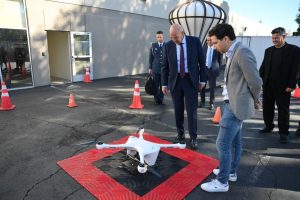
The Merops is itself a drone, small enough to be launched from a pickup truck. It can autonomously seek an incoming drone using radio waves, radar or the target’s heat signature. When roughly a mile from its target, it uses artificial intelligence to lock onto the target and detonate nearby, according to its users. Merops can travel at speeds of more than 180 miles an hour and reach an altitude of up to around 16,000 feet, according to one user.
Each Merops counterdrone drone costs less than $10,000, said one U.S. military official. The cost per unit should drop to around $7,000 as production volume increases, the official said. At least some of the Merops are produced in Taiwan, the official said.
The unit price is far lower than the cost of systems the U.S. and allies are now firing at incoming Iranian missiles and drones. Interceptor missiles from U.S.-made Patriot air-defense systems can cost around $4 million and producing them is a slow process.
The U.S. Air Force has also put relatively cheap laser-guided rockets on jet fighters to shoot down enemy drones, a capability it employed in the clash last year with the Houthis.
Still, many interceptors—including Merops—have limitations. They have a short range and their effectiveness declines in poor weather, operators say, though that is less of a concern in the Middle East than in Ukraine.
Since Saturday, Iran has used hundreds of ballistic missiles and Shahed drones in strikes against neighboring states and U.S. military bases. One UAV attack killed six American servicemembers . The United Arab Emirates said that it was targeted by 689 drones in just the first three days of this conflict, with 44 hitting the country.
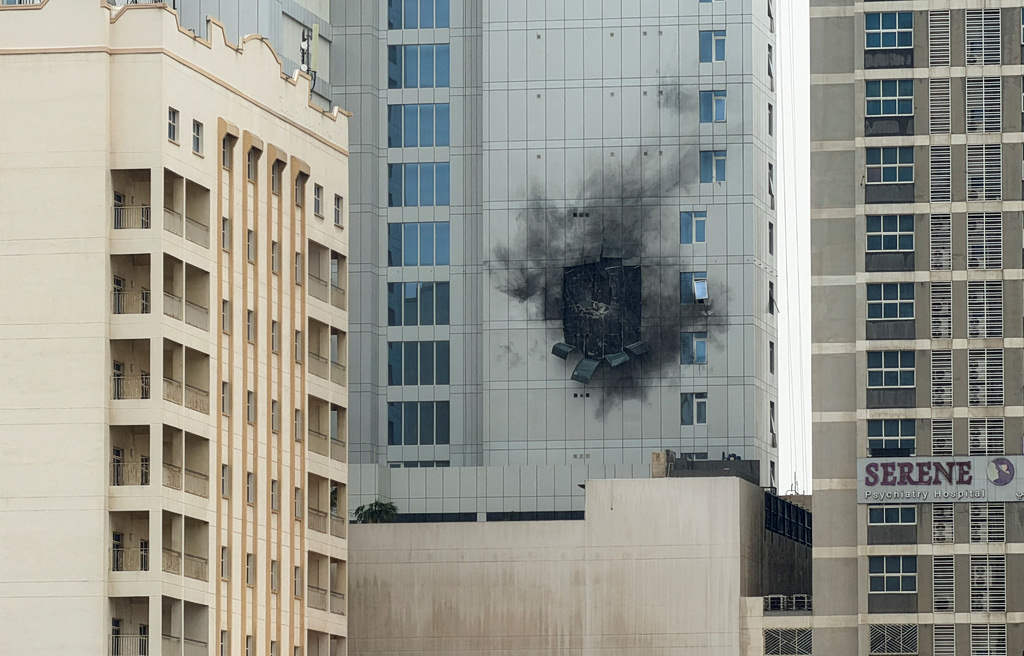
Damage caused by an Iranian drone strike on one of the buildings next to the Navy Base Headquarters of U.S. Navy 5th Fleet in Juffair, Bahrain, March 4, 2026. REUTERS/Stringer
An Iranian drone damaged a radar that was for the U.S. Thaad radar system in Jordan, where numerous U.S. combat aircraft are based. The Thaad is a sophisticated and costly ground-based missile-defense system that intercepts ballistic missiles above the atmosphere. U.S. Central Command declined to comment on the radar but said that the U.S. maintains “full combat capability.”
“The Shahed isn’t a simple target,” said Col. Yuri Ihnat, a spokesman for the Air Force. “Ukrainian forces learned how to intercept them effectively through hard experience, but that process took time,” he said.
More than a dozen Qatari officials toured the production facilities of a major Ukrainian defense company on Wednesday, according to its management, and sat for meetings with its directors. That visit came the same day as Zelensky fielded calls with Gulf leaders.
Qatari officials also visited a secret training ground in Ukraine, where Merops is also used, to learn how the country brings down Russian drones with Ukrainian and other technology.
“Everyone’s phone is ringing constantly. Calls from Oman, Dubai, Qatar, U.A.E.,” said Yury Hudymenko, the head of an independent group that oversees defense procurement.
Write to Michael R. Gordon at michael.gordon@wsj.com , Daniel Michaels at Dan.Michaels@wsj.com and Alistair MacDonald at Alistair.Macdonald@wsj.com