In the heart of Thessaly, along the banks of the Agiamoniotis River, one of the four rivers that flow through the city of Trikala, something remarkable is taking shape — a glimpse into what a greener, more climate-resilient Europe could look like. It’s called a “sponge park.”
Trikala now hosts Greece’s first “Sponge Park” — a living laboratory that demonstrates how nature-based solutions can be more effective than technology alone in tackling the climate crisis.
Part of a broader European initiative, the project transforms two hectares of land along the riverfront into an innovative environmental resilience park.
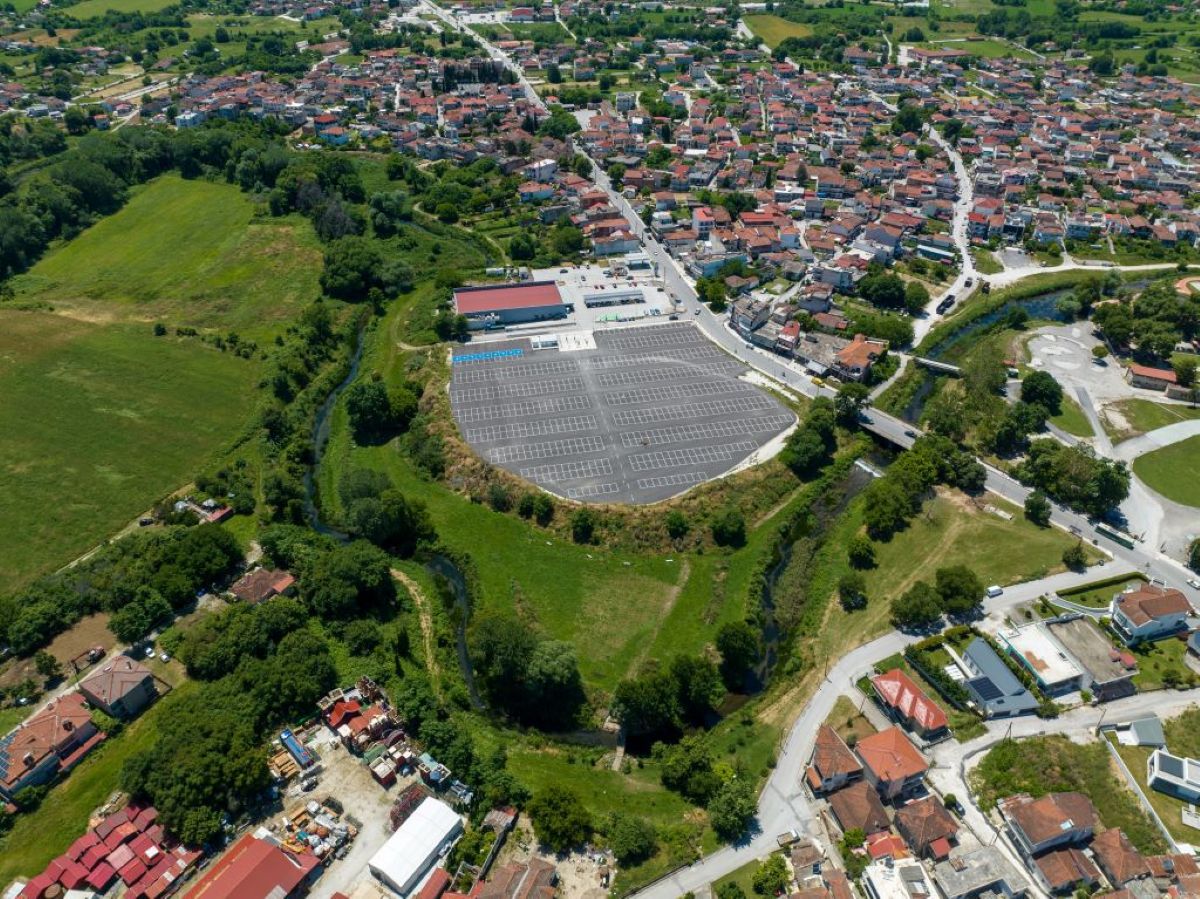
The concept behind it is both simple and ingenious: hold water where it falls, reduce runoff, recharge groundwater, and protect the soil. In essence, it mimics what healthy forests, wetlands, and farmlands do naturally when functioning well.
How is this achieved? Through a carefully designed mosaic of nature-based interventions:
• buffer zones,
• retention fences,
• low till farming,
• soil cover techniques,
• water harvesting systems,
• and riparian tree planting.
Each method is drawn from real-world examples across Europe, adapted specifically to the local conditions in Trikala. The park serves as a hands-on model: visitors can walk through the installations, see how they work up close, and gain an understanding of their impact. It’s a space for learning, research, and inspiration.
The project brings together 28 partners from across Europe, aiming to prove that nature-based solutions are not only environmentally friendly — they’re scalable and highly effective.
These so-called “sponge infrastructures” can serve as natural defenses against floods, help river basins suffering from water scarcity, and offer sustainable responses to drought and soil erosion.