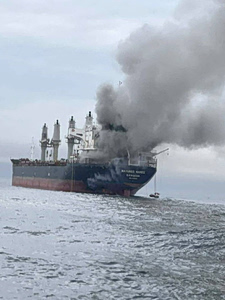
A new online tool launched by Climate TRACE reveals, in unprecedented detail, how industrial facilities and power plants worldwide expose billions of people to dangerous air pollution.
The tool, released at Climate Week NYC, uses atmospheric modeling to make visible the plumes of fine particulate matter (PM2.5) — a deadly pollutant linked to nearly nine million deaths annually. According to Climate TRACE, 1.6 billion people across more than 2,500 urban areas are breathing in pollution from facilities that are also major contributors to the climate crisis.
For the first time, the public can see how emissions from specific sources — including power plants, refineries, mines, shipping ports, and heavy manufacturing sites — disperse into surrounding neighborhoods over a 24-hour period. The data is drawn from Climate TRACE’s global database of more than 660 million greenhouse gas emission sources and modeled by Carnegie Mellon University’s CREATE Lab.
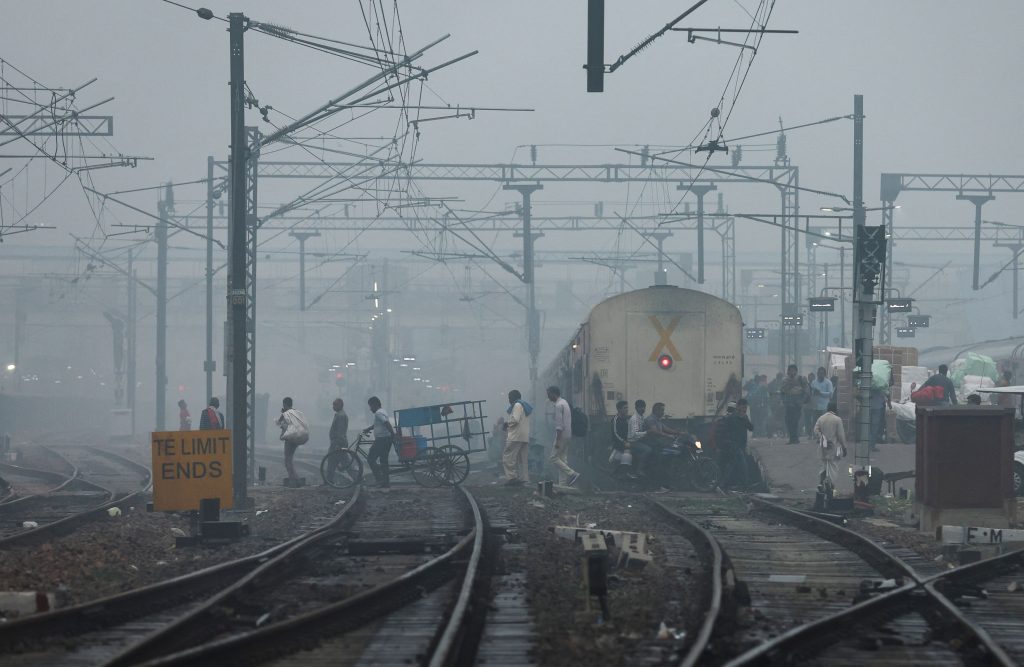
People cross railway tracks on a smoggy morning in New Delhi, India, November 3, 2023. REUTERS/Anushree Fadnavis
The project identifies “super emitters,” facilities ranked among the top 10% of PM2.5 polluters worldwide. These sources account for a disproportionate share of pollution exposure: of the 1.6 billion people living in plumes, 900 million are affected by super emitters.
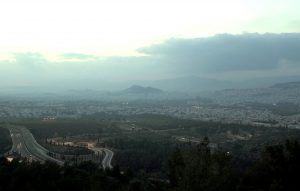
Greece is among the countries with several cities now mapped. The tool shows plumes from 20 emitting sources around the capital of Athens on July 3, 2024, a day representing prevailing conditions. Ten of those facilities are classified as super emitters, underscoring the high risk of exposure for residents of one of Europe’s most densely populated capitals. Viewers can also look at plumes in Thessaloniki, Patras, Chalkida, Chania, Heraklion, and Volos.
“Facilities that burn fossil fuels are the overwhelmingly dominant source of heat-trapping pollution that is driving the climate crisis — by using the sky as if it were an open sewer,” said Climate TRACE co-founder and former U.S. Vice President Al Gore in a press release by Climate TRACE. “The particulate air pollution they also create falls downwind into surrounding neighborhoods and is causing the deaths of 8.7 million people per year.”
Globally, the cities with the largest exposed populations include Karachi, Guangzhou, Seoul, New York, and Dhaka. Together, the top 10 urban areas account for more than 162 million people living under harmful plumes.
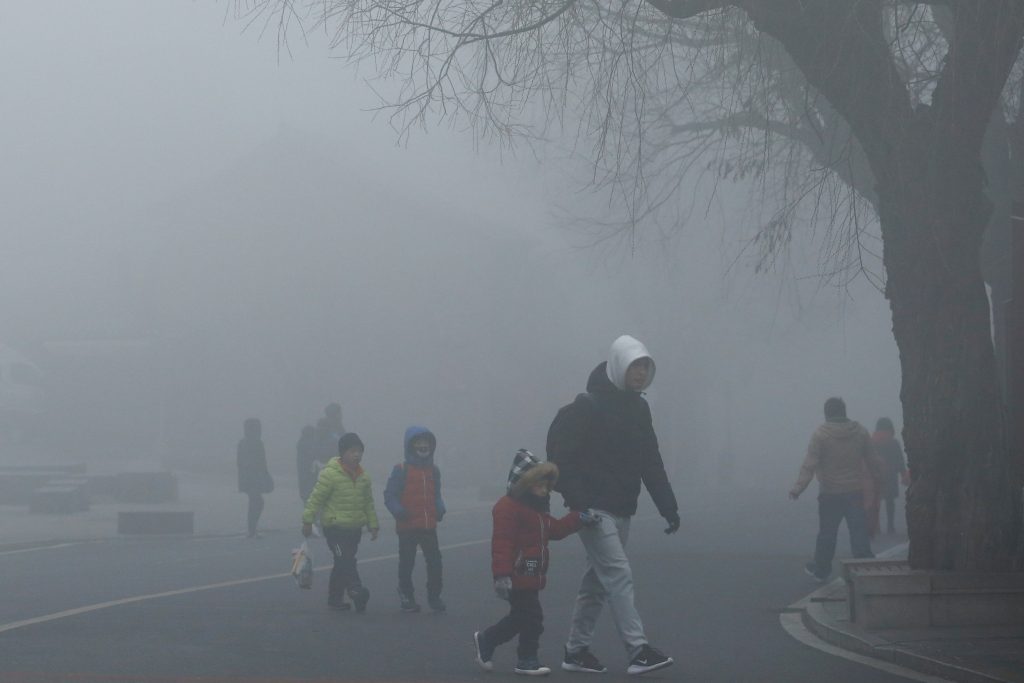
People walk on the road leading to the Badaling section of the Great Wall on a hazy day in Yanqing district in Beijing, China February 27, 2018. REUTERS/Thomas Peter
The coalition behind Climate TRACE brings together AI specialists, researchers, and NGOs, with support from organizations such as Carnegie Mellon’s CREATE Lab, Johns Hopkins University, Duke University, RMI, WattTime, TransitionZero, Global Fishing Watch, and former Vice President Gore himself.
Climate TRACE says it tracks nearly all sources of human-caused PM2.5 pollution, but has only visualized the flow of that pollution for power plants, heavy manufacturing sites, ports, refineries, and mines in the 2,572 urban areas where they exist. It adds that it is “important to note that the tool does not represent all sources of PM2.5 in these urban areas. There are many other sources of this type of air pollution — from fires, to dust, and more — that are common, particularly in cities around the world.”
The tool is designed for policymakers, journalists, researchers, and communities to identify hotspots and push for action, says Climate TRACE. While the current version focuses on stationary industrial sources, future updates plan to expand coverage to other major contributors, including transport and residential fuel use.
The interactive maps and facility-level data are freely available at ClimateTRACE.org.
Write to Cheryl Novak at cnovak@tovima.com