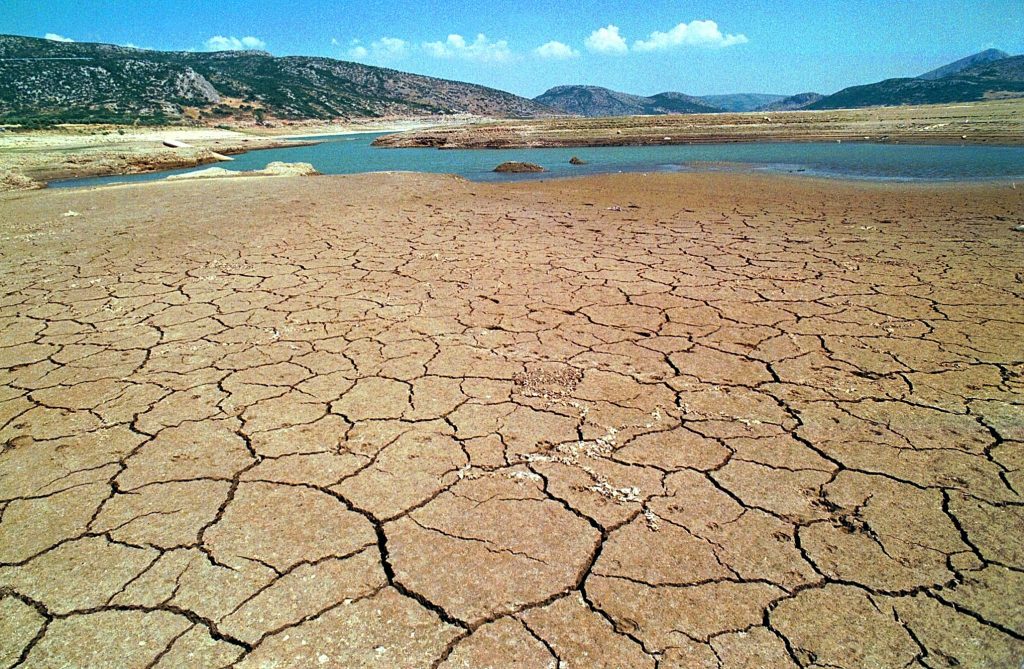
Eight countries in Europe are on high alert following record-breaking droughts in July, with projections for the coming years offering little reason for optimism.
Eastern Europe and the Balkans are particularly affected by drought, according to the relevant index from the Copernicus European program’s drought observatory (EDO), which is based on satellite observations and combines three parameters: rainfall, soil moisture, and vegetation condition. The index includes three drought levels (monitoring, warning, alert).
In this context, more than half of the land in Europe and the Mediterranean region continued to suffer from drought during the period from July 11 to 19, 2025, according to an analysis by Agence France-Presse based on data from the European Drought Observatory (EDO).
This 51.9% figure — 21 percentage points above the average for the 2012–2024 period — is the highest ever recorded during this time of year since observations began in 2012. The proportion of affected land remained stable compared to the first ten days of July.
In Serbia, where nearly the entire country (99%) is experiencing water scarcity, the percentage of land at alert level reaches 68%. This situation is worrying for raspberry growers, as the country is one of the world’s top exporters.
More than half of the land in Hungary, Bulgaria, and Romania is also at alert level, with rates of 63%, 52%, and 51% respectively.
In Western Europe, the situation has worsened compared to the first ten days of July. With 21% of land at alert level, the United Kingdom continues to face severe drought following the warmest spring in its history.
In Germany, the portion of the country under alert has risen sharply — from 9% to 26% — between the first and second ten days of July. In France, this percentage has reached 19%, mainly in the western part of the country. This drought is fueling wildfires, such as the deadly, historically large blaze that broke out Tuesday in the Aude department of southern France.
Turkey is also facing water shortages: more than three-quarters of the country (76%) is experiencing drought. The share of land at alert level reaches 18%. In the Izmir region, this drought is intensifying tensions over water use between tourists and local residents.
This is a problem also seen in other Mediterranean countries, which collectively attract 30% of global tourism and are expected, according to climatologists, to see reduced rainfall over the coming decades.
In contrast, Portugal and Spain are currently experiencing low levels of drought (10% and 7% respectively).