Nicosia is keeping the plug pulled on the Greece–Cyprus electricity cable project at a time when Turkish President Recep Tayyip Erdogan is accelerating efforts to connect Turkey’s power grid to the Turkish-occupied north of Cyprus.
A fourth high-level meeting on the Greece–Cyprus segment of the Great Sea Interconnector (GSI) is scheduled for July 30, marking the fourth such meeting in just under a month. Participants include energy regulators from Greece (RAAEY) and Cyprus (RAEK), the Greek transmission operator IPTO, and representatives from the European Commission.
The focus of the latest virtual meeting is to address concerns raised by Cyprus’s energy regulator RAEK regarding approval of the funding mechanism for the project—specifically, the share that would be borne by Cypriot electricity consumers.
The goal is to unblock progress on this strategically critical initiative, which has significant implications for both Greek and Cypriot energy security. However, as several sources suggest, Nicosia’s stance—channeled through RAEK’s opposition—signals a reluctance to proceed with a project that aligns with long-term European and Cypriot interests.
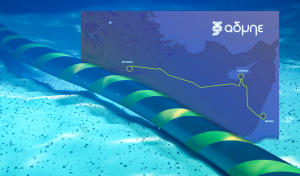
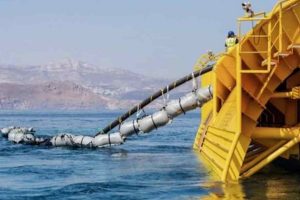
RAEK has refused to approve the regulated revenue component that would enable IPTO to secure the necessary funds for its share of the project’s costs. The undersea cable, stretching 1,000 kilometers, is being constructed by engineering firm Nexans.
Although the GSI has the backing of the European Commission, the project remains in limbo. It was first stalled last year by Turkish interference with offshore survey work required for cable installation. Now, internal resistance from Nicosia regarding its share of the funding threatens to derail the project further.
Meanwhile, Ankara is pressing ahead with its own project to electrically link Turkey with the occupied north of Cyprus—a plan Erdogan is pursuing with strategic precision. The Turkish president’s vision is clear: using energy infrastructure as a tool for the full integration of the breakaway region into Turkey.
The Turkish–northern Cyprus electricity link, first proposed in 2016 and formalized by a 2023 agreement, envisions a 300 MW cable running from Mersin to Agios Epiktitos near Kyrenia. Slated for completion by 2028, the project would make the occupied north energy-independent from the Republic of Cyprus—a move seen as a significant geopolitical defeat for Nicosia.