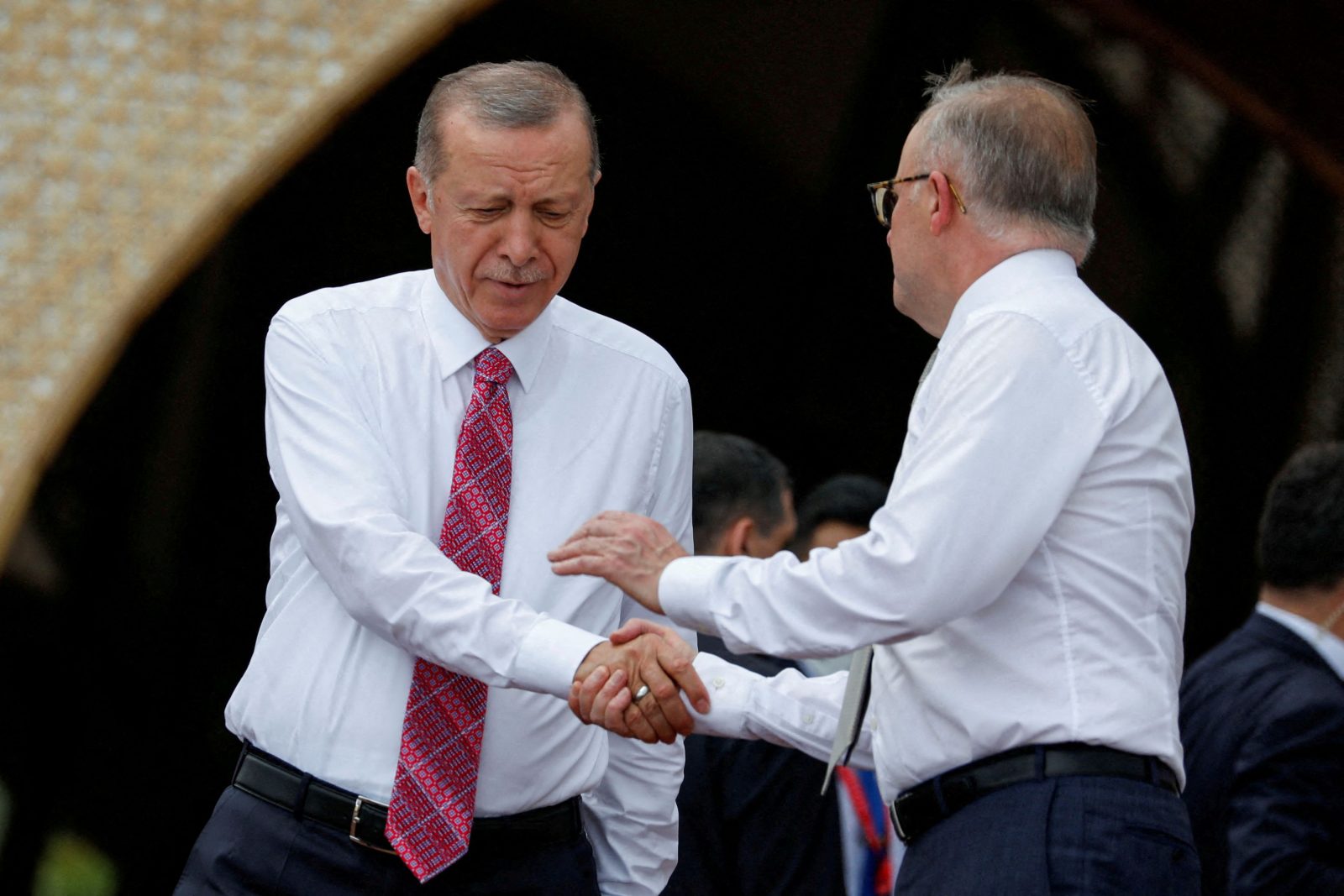
Turkey will host the COP31 United Nations climate summit next year, while Australia will lead the conference’s government negotiations under a compromise agreement taking shape at talks in Brazil, Australian Prime Minister Anthony Albanese said on Thursday.
The deal ends a years-long stalemate between Turkey and Australia, both of which bid in 2022 to host COP31 and refused to step aside. The annual COP summits serve as the world’s primary platform for advancing global climate action and typically draw tens of thousands of participants.
Under the emerging agreement, Turkey would stage COP31 as summit president, with a pre-COP event held in the Pacific, and Australia assuming leadership of the negotiations.
“What we’ve come up with is a big win for both Australia and Turkey,” Albanese told ABC Radio, noting that the arrangement allows both sides to contribute significantly to the conference.
Australia’s Climate Change and Energy Minister Chris Bowen said the compromise would still deliver Canberra’s core objectives. “It would be great if Australia could have it all. But we can’t have it all,” he said at COP30 in Belém, Brazil. “It was important to strike an agreement.”
As reported in Reuters, Bowen would hold full negotiating authority at COP31, including appointing co-facilitators, preparing draft text and issuing the summit’s cover decision. Turkey has not yet publicly commented on the deal.
Pacific Nations Voice Disappointment
Despite the inclusion of a Pacific pre-COP event, some leaders in the region expressed frustration. Papua New Guinea’s Foreign Minister Justin Tkatchenko called the outcome disappointing, saying Pacific nations had hoped to remain central to the summit itself.
“It is very important that the Pacific is completely involved in pre-COP events as we are the ones that are affected by climate change the most and we give out zero emissions,” he told Reuters. “Our people and countries are suffering because of the inability of others to make things happen.”
Australian Treasurer Jim Chalmers said the compromise still ensures the Pacific remains “front and centre,” a key objective of Australia’s original bid for a “Pacific COP” developed in partnership with island nations facing rising sea levels.
Australia had already spent A$7 million ($4.5 million) preparing its hosting capacity, confident that broad international backing would bolster its candidacy.
Turkey, which will host the summit in Antalya, has said it plans to use COP31 to promote solidarity between developed and developing nations and adopt a broader global focus.
Earlier this week, Albanese ruled out Turkey’s suggestion of co-hosting the summit, citing UN rules.
David Dutton, director of research at the Lowy Institute and formerly Australia’s assistant secretary of climate diplomacy, said the arrangement strikes a practical balance. “It alleviates some of the cost and burden of organising the COP while creating opportunities for Australia and the Pacific to do something with it,” he said.