An extensive algal bloom has once again discolored the waters of the Thermaikos Gulf along the Thessaloniki waterfront, raising environmental concerns as rising temperatures and favorable weather conditions accelerate the unsightly phenomenon.
Large stretches of the northern metropolis’ seafront have in recent days been covered by a thick layer of brownish phytoplankton, commonly referred to as a “red tide,” generating unpleasant odors and transforming parts of the gulf into a familiar but unwelcome sight for residents and visitors.
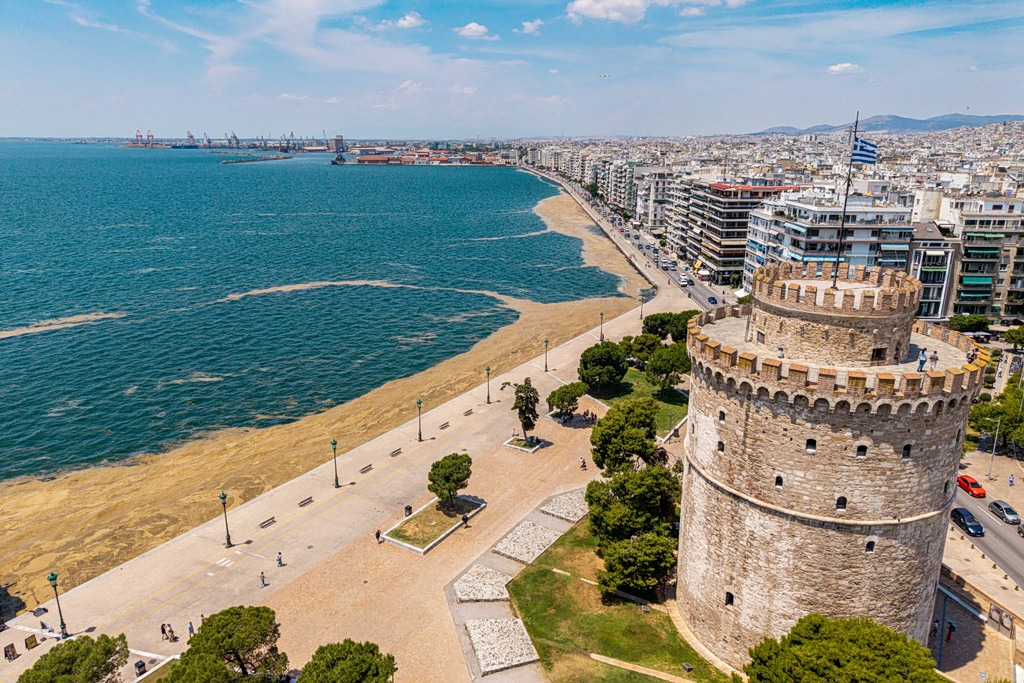
Aerial images show the extent of the bloom, which has spread across much of the waterfront from the Thessaloniki Concert Hall to the city’s historic promenade. Local reports said warmer weather and southerly winds have contributed to the accumulation of the algae near the shoreline, where it has formed a continuous layer on the surface of the water.
Scientists attribute the phenomenon to eutrophication, a process driven by excessive concentrations of nutrients such as nitrogen and phosphorus entering the gulf from urban wastewater, river runoff and agricultural fertilizers. Combined with higher sea temperatures, these nutrients promote rapid phytoplankton growth, resulting in dense blooms that can discolor the water and generate strong odors as organic matter decomposes.
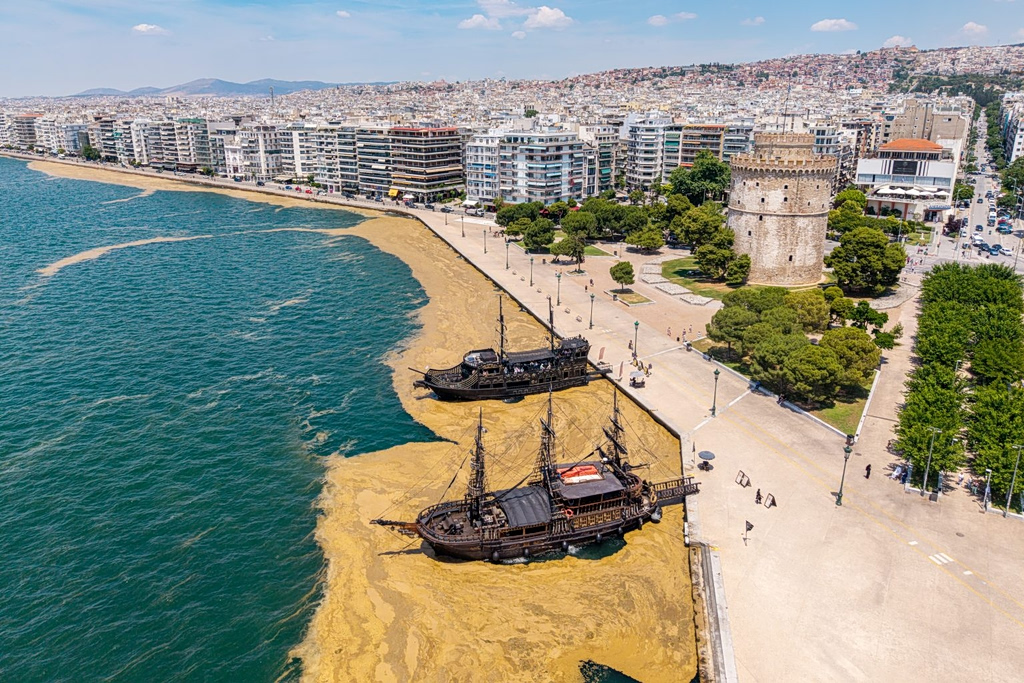
Environmental experts have repeatedly warned that the Thermaikos Gulf remains vulnerable to such episodes because of longstanding pressures from urbanization, agriculture and climate-related factors. Similar outbreaks have been recorded periodically in recent years, particularly during warmer months, and have become a recurring challenge for local authorities.
The latest algal bloom off Thessaloniki follows earlier signs of eutrophication reported in the gulf since the beginning of the year. Authorities have continued cleanup and monitoring efforts, including operations by the anti-pollution vessel Alkippi, which has been deployed to help contain floating organic material and limit the impact on coastal areas.
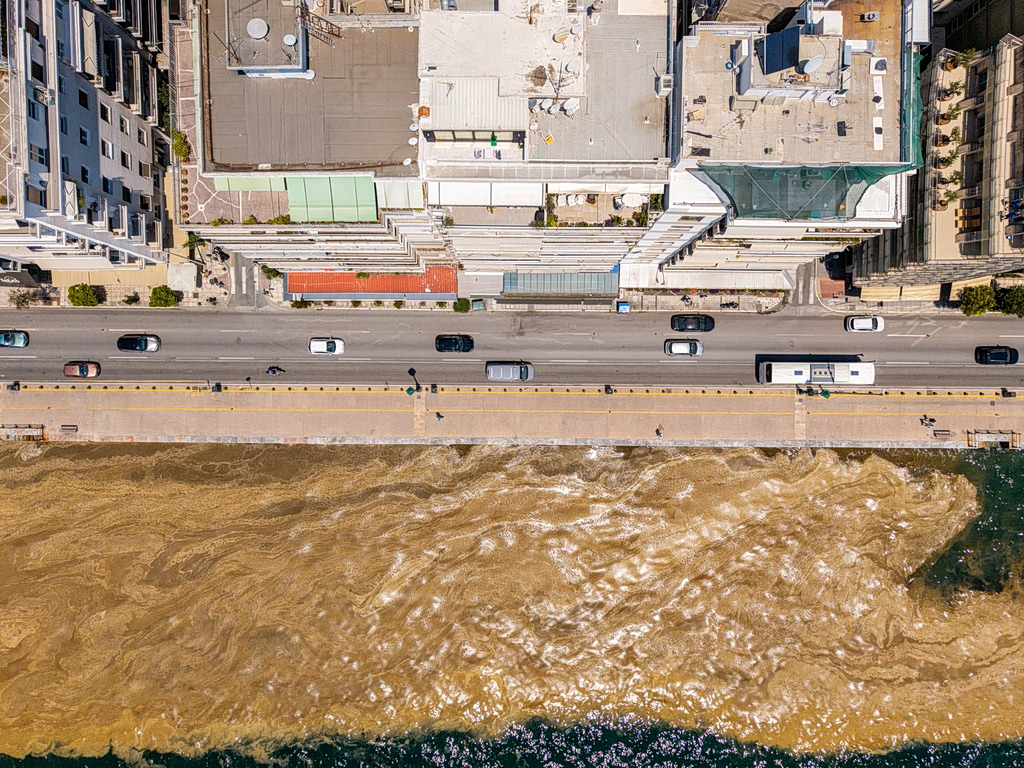
While experts stress that such blooms are generally the result of natural biological processes intensified by human activity, they note that reducing their frequency will require long-term measures to improve water quality, reduce nutrient inflows and strengthen environmental management across the wider Thermaikos basin.