
 Μake us preferred on Google
 SEOUL—A South Korean appeals court ordered billionaire AI tech mogul Chey Tae-won, of the SK conglomerate, to pay his ex-wife roughly $645 million in cash, bringing a potential end to the nation’s so-called “divorce of the century.”
Local divorce attorneys not involved in the case had estimated a settlement could reach as much as $1 billion.
Under question was Chey’s roughly $5 billion fortune, which has doubled in value in recent years from the explosive growth of SK Hynix , a memory-chip maker and key partner to Nvidia . Chey’s wealth is derived from his shares of the SK conglomerate’s holding company.
The decision Friday represents the latest chapter in a decadelong saga that often unfolded like a K-drama —with money, romance, corruption and betrayal.
Chey’s ex-wife, Roh Soh-yeong, is the daughter of South Korea’s first president after the country shed military rule in the late 1980s. She and Chey, both 65 years old, have three adult children. Their 1988 marriage held at the presidential Blue House had been called the country’s “marriage of the century.”
Their fairy tale marriage shattered in 2015, when Chey divulged in a three-page letter published by a South Korean newspaper that he wanted to divorce Roh. The business tycoon also revealed he had fallen in love with another woman and had a child with her.
Chey’s lawyers didn’t rule out an appeal pending a review of the verdict. Roh’s lawyer didn’t have a comment on the ruling.
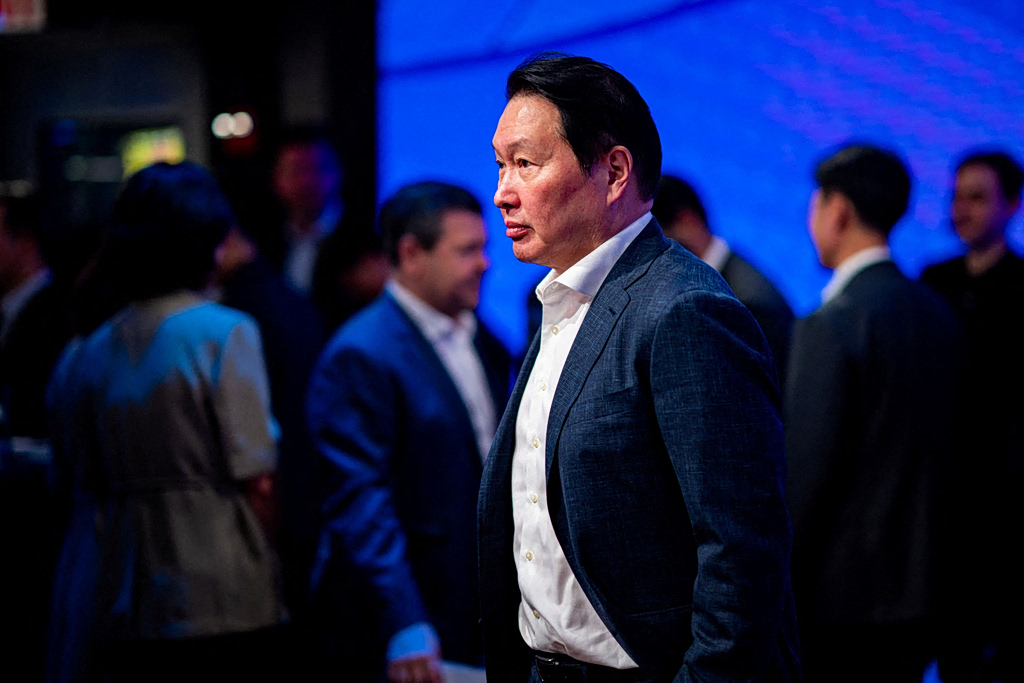
FILE PHOTO: Chey Tae-won, chairman of SK Group, attends semiconductor and memory chip company SK Hynix’ opening bell ceremony at the Nasdaq market on the day of their IPO in New York City, U.S., July 10, 2026. REUTERS/Angelina Katsanis/File Photo
Either side can appeal the decision to South Korea’s Supreme Court. Doing so would mark the fifth trial tied to their divorce proceedings.
Following the publishing of Chey’s letter, Roh had told friends she would defend her household, keep the family together and resist granting a divorce. Roh relented in 2019 and demanded half of Chey’s fortune.
A first ruling granted her around $50 million, a fraction of Chey’s wealth. Roh, who runs a media-art studio in Seoul, called that sum a “denial of women’s commitment to the household.”
Two subsequent trials—including one that entitled her to roughly $1 billion—didn’t resolve their disagreements.
Friday’s settlement doesn’t appear to hand either side a clean victory. The two sides had squabbled over how Chey’s fortune should be split with Roh. That fractured largely along timing and the percentage cut owed to Roh.
Roh had asked for half of Chey’s wealth. But the appeals judges Friday awarded her less than that. Chey’s fortune was calculated from a date before SK’s shares jumped in value. Roh had wanted a more recent valuation to be used. The ruling means Roh was awarded roughly one third of Chey’s wealth, as calculated by the judges.