 Μake us preferred on Google
 Nearly 85% of Greece’s annual freshwater consumption is used for agricultural irrigation. As such, improving irrigation management is the most crucial factor in addressing water scarcity. Experts in hydrology and water resource management emphasize that the issue is primarily political. While exacerbated by the climate crisis and reduced rainfall and snowfall, the key lies in more efficient water use—especially in agriculture.
During a recent meeting chaired by the Prime Minister, the main pillars of the National Water Management Plan were presented. A central concern is the imbalance between water consumption and replenishment. Without major infrastructure upgrades, the national water deficit is projected to reach 20% by 2026 and climb to 45% by 2037. Losses from water distribution networks are striking: 40% in drinking water and 60% in irrigation.
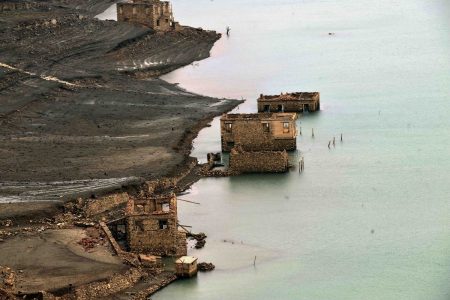
The National Plan also targets the excessive use of irrigation water and illegal wells, which have increased due to the growing difficulty of groundwater extraction amid declining precipitation. “In some areas, drilling must reach depths of 180–200 meters to access aquifers,” explains Christos Karavitis, Dean of the School of Environment and Agricultural Engineering at the Agricultural University of Athens. This deep drilling raises costs significantly, requiring more energy for pumping.
Groundwater makes up 25–30% of Greece’s total water resources, while surface water accounts for the rest. However, under Roman law, groundwater belongs to the landowner, encouraging overexploitation, particularly as half of the country’s farmland depends on it. Karavitis stresses the urgent need for public infrastructure like dams and reservoirs to better utilize surface water.
Beyond infrastructure, immediate steps are needed to reduce wasteful irrigation practices. Many farmers still use flood irrigation, where fields are literally flooded. Though simple and cheap, it’s extremely inefficient, leading to high evaporation and runoff. Sprinkler systems (artificial rain) are similarly wasteful and energy-intensive, especially in windy areas.
Drip irrigation is the most efficient method, delivering water directly to plant roots with minimal losses. Common in high-value crops like tomatoes, cotton, vineyards, and orchards, it significantly reduces evaporation and ensures targeted water use.
Even more efficient is hydroponic cultivation in closed greenhouses, where water is reused through condensation. “In these systems, losses may be under 10 liters per month,” notes Karavitis.
As Greece’s climate becomes drier, some suggest a shift toward crops with lower water demands. But as Ioannis Karastergios, president of the Farmadvisors association, points out, this debate often oversimplifies the issue. Weather variability, soil type, and seasonal temperatures heavily influence water needs. For example, high temperatures like the recent 45°C in Karditsa increase evaporation dramatically.
While crops such as corn, alfalfa, cotton, and industrial tomatoes have high water needs (ranging from 500 to 700 cubic meters per acre annually), they are also economically valuable and aligned with Greece’s agricultural calendar, which sees low rainfall in spring and summer.
Karavitis argues that Greece lacks a broader strategy to improve agricultural efficiency. He cites a 1980s study proposing investment in livestock feed crops and cattle farming to boost vertical production chains. However, the proposal was never implemented, largely due to objections from northern EU countries with dominant cattle industries, such as the Netherlands and Belgium.
Ultimately, solving Greece’s water scarcity problem will require not only infrastructure and smarter irrigation but also political will and a long-term strategic vision—one that begins in the very fields where most of the water flows.