 Μake us preferred on Google
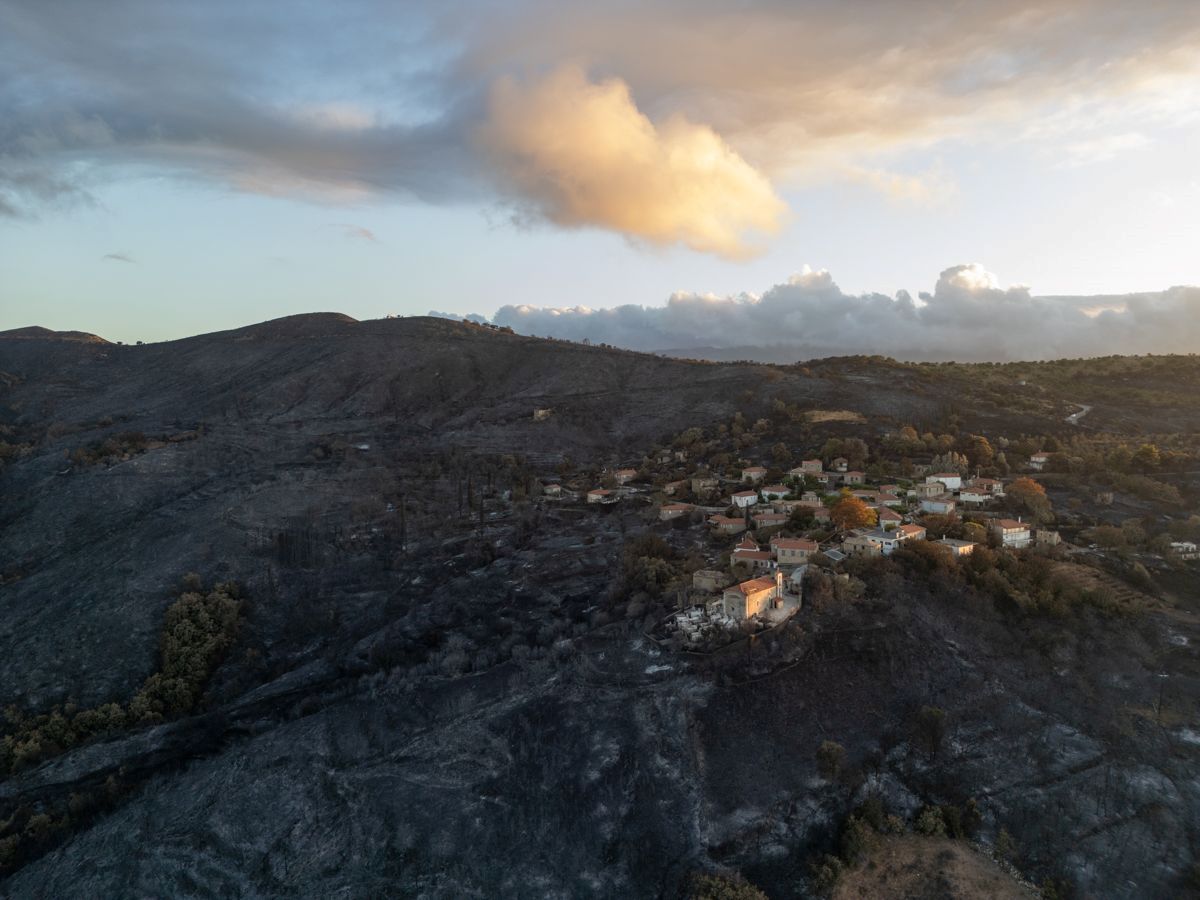
 Survivors in Messinia are piecing their lives back together amid the smoldering ruins of homes and forests. The villagers of Kryoneri, Monastiri, and their surrounding communities stand shell-shocked—surrounded by once-green hills now blackened and barren.
“What do we think today? We don’t think anymore. We only cry…” says Giannis, a 65-year-old resident, standing before a gutted home with shattered windows, charred walls, and collapsed wooden frames. The landscape is transformed—trees that once offered shade now stand skeletal against ashen slopes.
Neighbours, like Panagiotis from Monastiri, praise the fire brigade’s heroic effort while acknowledging the cost:
“They fought fiercely, but the power lines were burned. Only a generator keeps us going. The fire crews risked their lives…”
“If they’d cleared the grass earlier, our houses wouldn’t have burned,” he adds.
Why the Fires Are Getting Worse
Experts say the root causes lie in three interrelated disasters:
- Urbanizing Forest Land
Professor Dimitris Emmanouloudis (Forestry & Hydrology, Democritus University) explains that human development—houses, hotels, roads—has fragmented forests and created constant ignition sources. Combined with drought and extreme heat, forests accumulate dry fuel like pine needles and shrubs, forming a flammable mat. - Climate Change and Heat Waves
According to Serafim Tsiougris, President of the Hellenic Volunteer Firefighters Union, four consecutive days of heat are enough to make any spark uncontrollable. Fires now spread with unprecedented speed and intensity. - Abandonment of Mountain Communities
Isidoros Madis, Mayor of Paiania and President of the Mt. Hymettus Protection Association, notes:
“Once hunting season begins in late August, fires drop significantly. That shows how effective human presence in the forests can be.”
Historically, forest cooperatives and resin collectors kept watch over the land. Today, the mountains mostly lie empty and unmonitored—making fires more likely and severe.
Institutional Challenges—and Solutions
Until 1998, Greek Forestry Services handled wildfires. But under Law 2612, responsibility shifted entirely to the Fire Service. While the shift aimed for better coordination, many experts argue that invaluable local forest knowledge was lost.
A successful model exists in Mt. Hymettus, where collaboration between the Fire Service, municipalities, and volunteer teams supports:
- Drones, thermal cameras, watchtowers, and fire hydrants
- 24/7 surveillance and swift response
- Citizen volunteers acting as the first line of defense
“Drone surveillance is useful—but it can’t replace people. Fires begin in a single bush or tree. If caught early, they can be extinguished instantly by 2 people,” says Emmanouloudis.
A Scarring Season for Greece
According to the BEYOND unit of the National Observatory of Athens:
- 2023 was the worst wildfire season in five years, burning over 527,000 hectares
- In 2025, wildfires have scorched 185,000 hectares across 55 major outbreaks
- The largest fire struck Chios (60,700 hectares), followed by disasters in Kythera and Feneos
Alarmingly, some areas have burned multiple times—up to four, as in Kythera. These repeated blazes damage ecosystems and reduce vegetation resilience.
Ecological Crisis in Feneos
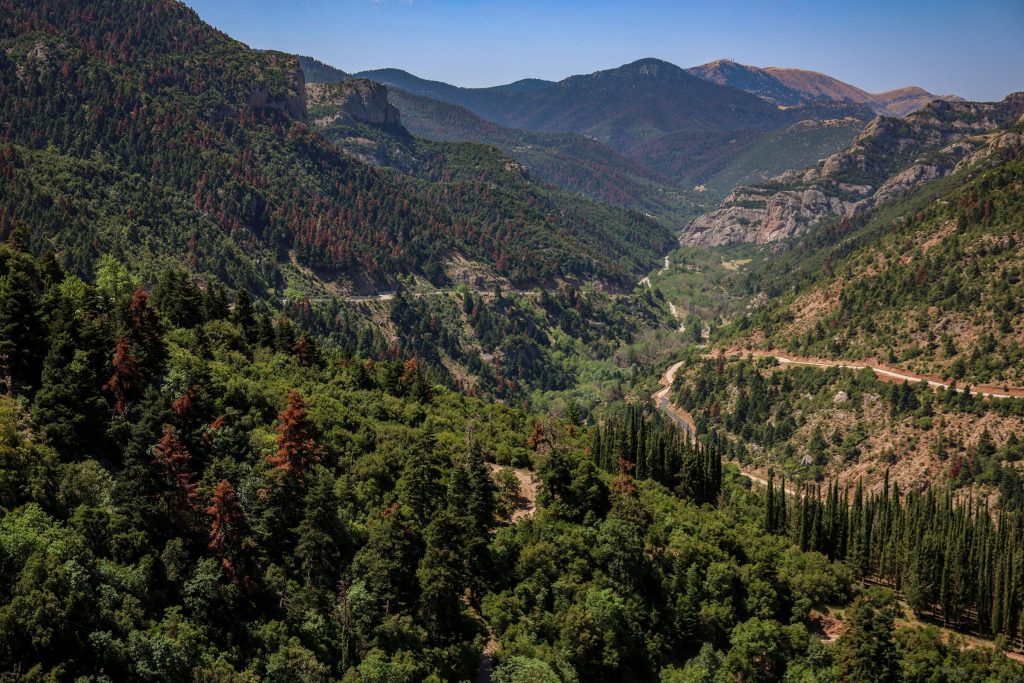
The Feneos fire stands out as this year’s most critical ecological disaster:
- Unlike other areas, it hadn’t burned before
- Over 8,000 hectares (51%) fall within the Natura 2000 protected zone
- More than half of the burned area consists of abies cephalonica (Greek fir), which regenerates extremely slowly
- According to forest ecologist Nikos Georgiadis (WWF), the lower slopes may regenerate, but mountainous zones with firs may take decades or require human intervention.
What Lies Ahead
Prevention remains the greatest weapon:
- Winter forest clearing, when weather allows
- Restricting risky outdoor activities during high-risk days
- Expanding volunteer firefighting infrastructure, especially in remote areas
Tsiougris concludes: “Once the fire escapes us, fighting nature becomes an unequal battle. Preparation is our only chance.”