 Μake us preferred on Google
 Over the past thirty years—and especially since 2015—the Mediterranean has experienced a dramatic shift in its climate. Air and sea surface temperatures are rising, rainfall is decreasing, yet extreme storms continue to strike. Heatwaves are becoming more frequent and prolonged. This is why the Mediterranean is classified by the Intergovernmental Panel on Climate Change (IPCC), the United Nations’ scientific body, as a “climate hotspot”—regions where climate change is advancing faster than the global average.
Professor Konstantinos Kartalis, an expert in Environmental and Climate Physics at the National and Kapodistrian University of Athens (NKUA) and a member of the EU Scientific Committee on Climate Change, explains: “The Mediterranean is a hotspot primarily due to changes in atmospheric circulation that trap stagnant weather systems, extend heatwaves, and transport hot air masses from North Africa. Increasingly, we are seeing days with overlapping phenomena, such as simultaneous heatwaves and droughts.”
A comparison of the periods 1974–2000 and 2001–2023 in the Eastern Mediterranean highlights this trend. Except for Heraklion, where the increase is smaller, all studied cities have seen a surge in days combining heat and drought. In Athens, for example, these days have tripled—from roughly 45 days in 1974–2000 to 150 days in 2001–2023. Extended heat-drought events severely impact water resources and agricultural output, while wildfires become intense and nearly impossible to control despite heroic efforts by firefighters.
The problem is cyclical: for every 100,000 hectares of forest burned in Southern Europe, roughly 300,000 tons of CO2 are released, according to the EU Joint Research Centre, further accelerating climate change.
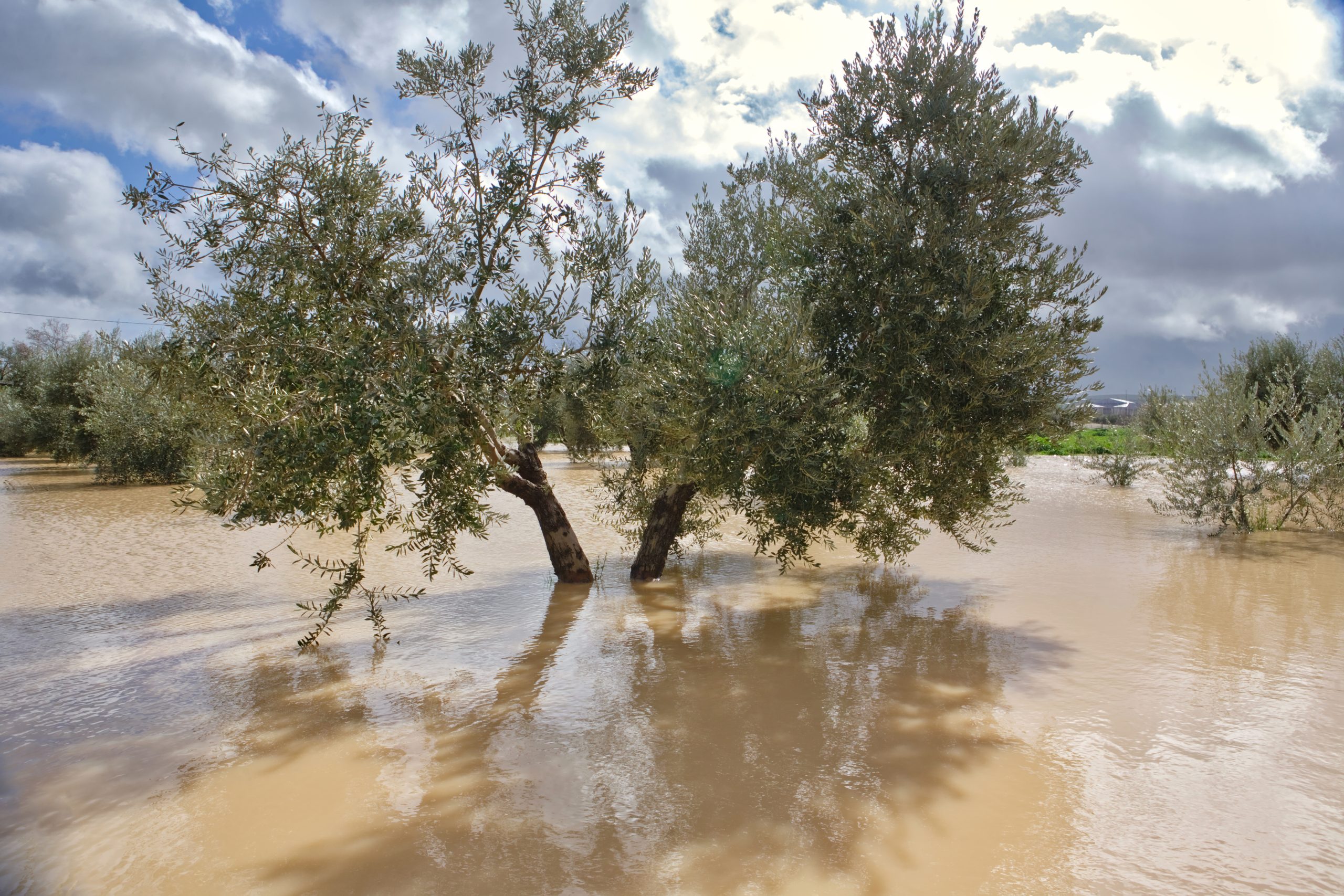
The unfolding climate crisis in the Mediterranean is sounding an alarm, echoed by Greece’s ongoing drought challenges. Despite the recent devastation—wildfires in Dadia and Northern Attica, floods in Thessaly from Storm Daniel—the country remains underprepared. Preventive policies for wildfire management and early warning systems are lagging, while national, regional, and urban planning in tourism, agriculture, and development have yet to adapt to the new climate realities. Updating the national climate adaptation plan and corresponding regional strategies is urgent. Previous plans were based on outdated projections that underestimated the rapid changes over the last decade in Greece and the Eastern Mediterranean. For instance, the Copernicus drought index shows persistently dry conditions since 2015, except for 2018 and 2020.
Looking Ahead
NKUA research indicates that the factors driving heatwaves and drought will intensify, and their simultaneous occurrence remains likely. Dr. Kostas Filippopoulos, a researcher at NKUA, warns: “In a pessimistic climate scenario, by 2030, one in every nine days will exceed 35°C (95°F), and days above 40°C (104°F) will increase significantly. Consecutive dry days will rise from 10 to 20, especially in Western Central Greece, the Peloponnese, and Crete, while heatwaves will intensify across southern regions, including Thessaly.”
Many Mediterranean disasters, such as wildfires and floods, are natural hazards amplified by climate change rather than caused by it. Yet, despite long-standing scientific warnings, preventive measures remain inadequate, and infrastructure resilience does not fully account for climate risks.
Professor Kartalis stresses: “Climate change is not some metaphysical force targeting the Mediterranean—it is driven by human activity, primarily burning fossil fuels. Of the 1.52°C temperature rise projected for 2024 compared to pre-industrial levels, 1.36°C is human-induced. Addressing the problem requires phasing out fossil fuels in favor of renewable energy, a goal already embraced by the EU and UN. The transition has begun over the past 15 years, with countries like Denmark and Portugal sourcing nearly 90% of electricity from renewables in 2024, Austria and Croatia around 75%, Germany 60%, and Greece 53%. However, progress is slow, geopolitically fraught, and the climate is changing faster than our mitigation efforts.”