
During the past ten years, addressing climate change has been systematically at the center of international politics. This was not the case, at least not to the same degree, either before the Paris Agreement (2015) or today. Policies to combat the effects of climate change seem once again to be entering a period where they are not treated as a priority, and in many cases are viewed as something negative.
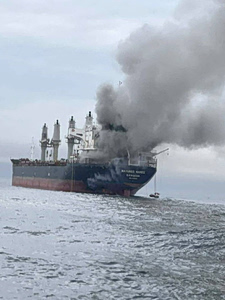
Let me explain: recently, within the International Maritime Organization, a decision was made to “freeze” part of the implementation of measures to reduce emissions from ships, for a series of reasons related both to practical difficulties and to the strong politicization of the issue. The President of the United States directly threatened the Organization’s members that, should they vote in favor of the proposed measures, he would impose a series of harsh countermeasures. This threat created the appropriate atmosphere for the measures not to be passed.
But what would have happened if they had been adopted, regardless of the U.S. reaction? In international climate policy, adopting new measures is the norm at every conference. The major challenge and the main problem, however, lies in their implementation, which remains insufficient while the phenomenon continues to worsen.
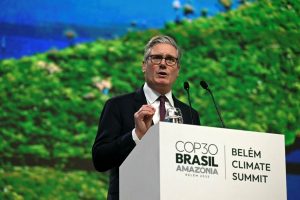
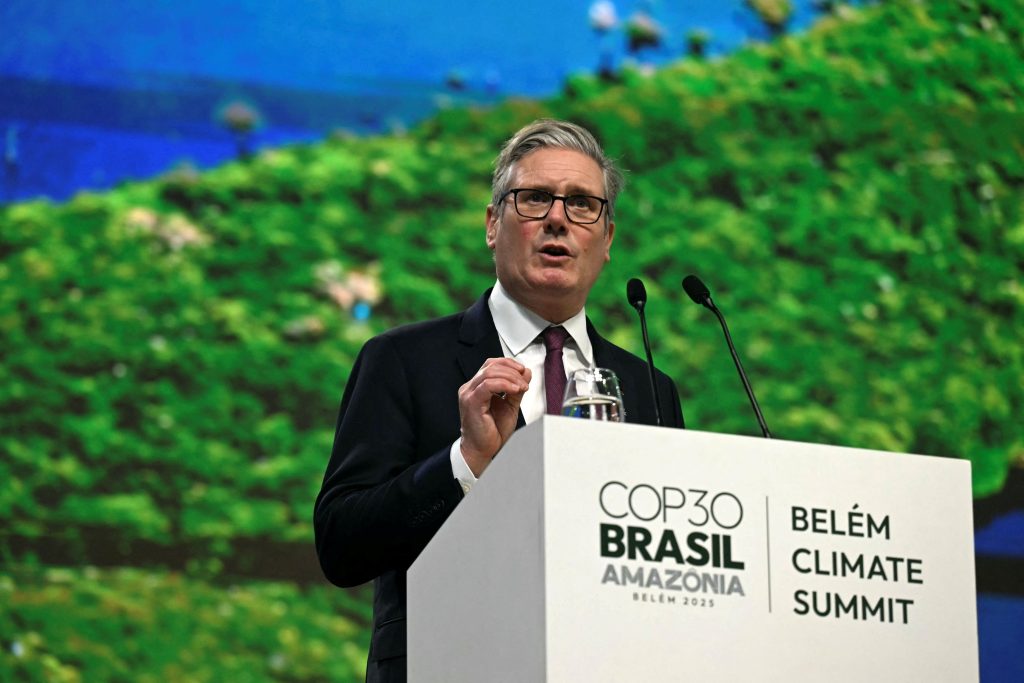
The 30th Conference of the Parties to the United Nations Framework Convention on Climate Change (COP30) [has begun] in Belém, Brazil. Once again, all the countries of the world (?), as well as thousands of other participants, will discuss what must be done to combat climate change and how our societies can adapt to it. Once again, similar things will be said as in previous years, and they will reconvene at COP31 to discuss the same topics, without any significant progress having been made.
At COP30, it is expected that (a) the goal of keeping the rise in average global temperature within 1.5 degrees will be reaffirmed, (b) actions will be crystallized to reduce emissions from sectors such as transportation, and (c) long-term strategies will be developed to help states achieve the goal of net-zero emissions.
And what is the paradox in all this? The 1.5-degree goal has existed since 2015, but sufficient efforts to achieve it have not been made. Actions in the transport sector seem to face strong resistance and move in the opposite direction, and since short- and medium-term policies have failed, emphasis will now be placed on long-term ones.
Even symbolically, COP30 fails before it begins. The choice of Belém demonstrates disregard for the natural environment, since to create the infrastructure needed to host thousands of participants, part of the Amazon rainforest was destroyed. Moreover, the cost of attending the conference is prohibitive for some delegations, creating an elitist exclusion: those who cause the problem (and can afford it) will certainly participate, while those most affected and unable to act will not. The United States will not participate, and China, the largest polluter today, will not be represented by its president.
Unfortunately, expectations are low for this year’s outcome, underscoring that climate change has once again become a secondary issue on the global political stage.
Giorgos Dikaios is a Marie Curie Fellow at Leiden University, Principal Researcher at the UNESCO Chair on Climate Diplomacy (National and Kapodistrian University of Athens), and at ELIAMEP (Hellenic Foundation for European and Foreign Policy).
Source: TA NEA