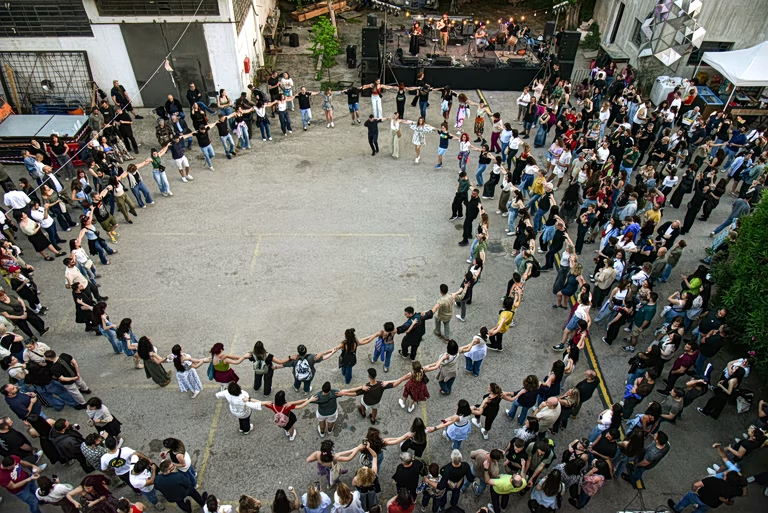
Shortly after the first notes from Kinderia rang out, the first dance circles formed almost instinctively. They never stopped for the rest of the night. The first AXOS Festival, held on May 17 in Athens, set out to do something that has been attempted before in the city: revive the traditional Greek village fair, known as a panegyri. What made it different was the way it was done — not as spectacle, but on terms that honor tradition, ritual, and the codes that come with it.
Kostas Fourikos, a member of the team that put AXOS Fest together (and the restless creative force behind ILION Plus), spoke about this city-born gathering, where the need for dance, reconnection, and community met political anxieties, new identities, and old codes. He reflected on the moments that stood out, what tradition means today, and a new generation that is finding its own way back to the feast.
The first AXOS Fest has come and gone. What moments do you carry with you?
Two moments. The first is about how it all began. We expected a big crowd to show up ready to dance. But when, around 6:45 p.m., with the sun still very much present, Kinderia struck their first notes and a dance circle formed almost instantly — that was striking. We were a little worried there would be an awkward warm-up period in the first half hour. But there wasn’t. Needless to say, from that moment on, the circles never stopped for the rest of the evening.
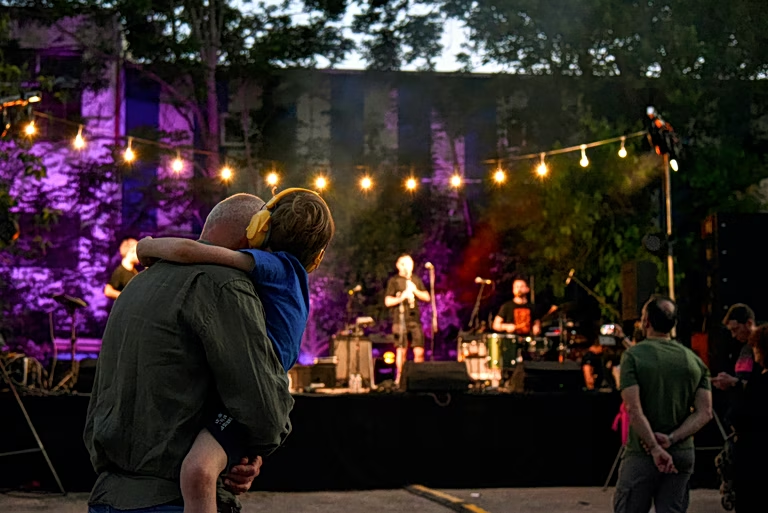
The second moment was when Sourloulou made a reference to Palestine. Instinctively, and fully sharing their stance of solidarity with the Palestinian people, I found myself wondering whether such a reference fits within a celebration-style music event like the one we had that Sunday. Whether it is possible to acknowledge such unbearable pain and suffering in the middle of a carefree occasion. Rather than reaching a clear answer, I noticed with real satisfaction how the festival crowd responded — they applauded and chanted. I was reminded of that moment the following day when I saw in the news that the Global Sumud Flotilla had been attacked by the Israeli military south of Crete.
What exceeded even your own expectations?
The turnout definitely did, especially given how packed the calendar was with events all over Athens at the same time. But what surprised us just as much was how the energy we had hoped for actually materialized through the crowd that showed up. The first AXOS was truly a dance gathering, and we are already thinking about how that will remain the core identity in future editions. So — see you again!
When we hear the word “achos” (echo/resounding noise), the mind goes to the old folk verse “a heavy echo is heard, many rifles are falling.” When we hear AXOS FEST, where do you want our minds to go?
The verse continues: “Is it a wedding they fire for, or a celebration? Neither for a wedding nor a celebration — Despo is waging war, waging war with brides and grandchildren.” The folk song speaks directly to the meaning you can find in the word itself: “achos” refers to a diffuse, prolonged, or muffled sound. It can describe the noise of battle, of a feast, of the sea, or of a storm.
We wanted to play with that ambiguity. We even thought about the anagram of the word, which can be rearranged to spell “chaos” in Greek. We live in a time when it is neither easy nor particularly useful to draw a hard line between social expressions of joy and celebration and those moments that demand we take a fighting stance against many things happening around us.
What does tradition mean to you?
Tradition and traditional music are cultural, artistic, and biopolitical categories that don’t carry a single fixed meaning or interpretation. They are a field where different — and sometimes competing — understandings play out. One of the bands that performed at the festival, Banda Entopica, was recently targeted because they performed the songs “Sofka” and “Ela Kerko” at a live show. Those songs were deemed dangerous to Greek national interests and the Greek character of Macedonia by Greek nationalist and far-right circles. So the question arises: when someone listens to the traditional music of Balkan peoples and finds common ground, how do they position themselves? Do they recognize the elements that connect peoples, or those that set them in competition for exclusivity? We are drawn to the understanding that sees tradition as shared cultural ground, where the stories and memories, the hardships and joys of the peoples of the region meet and speak to one another.
The revival of tradition: a seasonal TikTok trend or something deeper and more meaningful?
Following from the previous answer, this one flows naturally. In the past, traditional music was probably quite far from the preferences of young people, for example. For many it may have been associated with conservatism or simply left them indifferent. On the whole, we consider the trend of reclaiming traditional music a positive one — the way younger urban audiences are connecting it to a process of reconnecting with their roots, with the countryside, with the environment and nature, with a way of life that feels perhaps simpler and less driven by anxiety, productivity, and performance. Returning to traditional music might also reflect a need to rediscover certain things that modern life has no room for and tends to push out — from mourning to celebration. Then again, maybe that’s just how we want to see it.
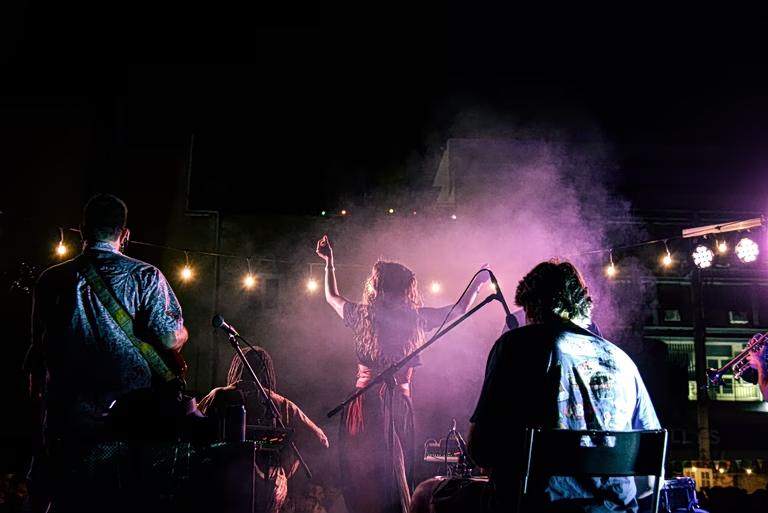
Let’s stay with that idea of reconnection. The central vision of AXOS Fest is the feast, the panegyri. Can a village fair exist without ritual, and how do you approach those centuries-old codes so they don’t get lost in the fragmented rhythm of contemporary life?
Modern life does, to a large degree, favor fragmentation and distance from cohesive meanings and shared visions. It largely disapproves of anything that might interrupt the normal flow. Village fairs, celebrations, concerts, parties — grief and the honoring of life — are all struggling to reclaim their lost meaning, and perhaps to reinvent their own new rituals.
Are we perhaps producing more “achos” than we can handle?
Ha! Sure, every trend has its excesses.