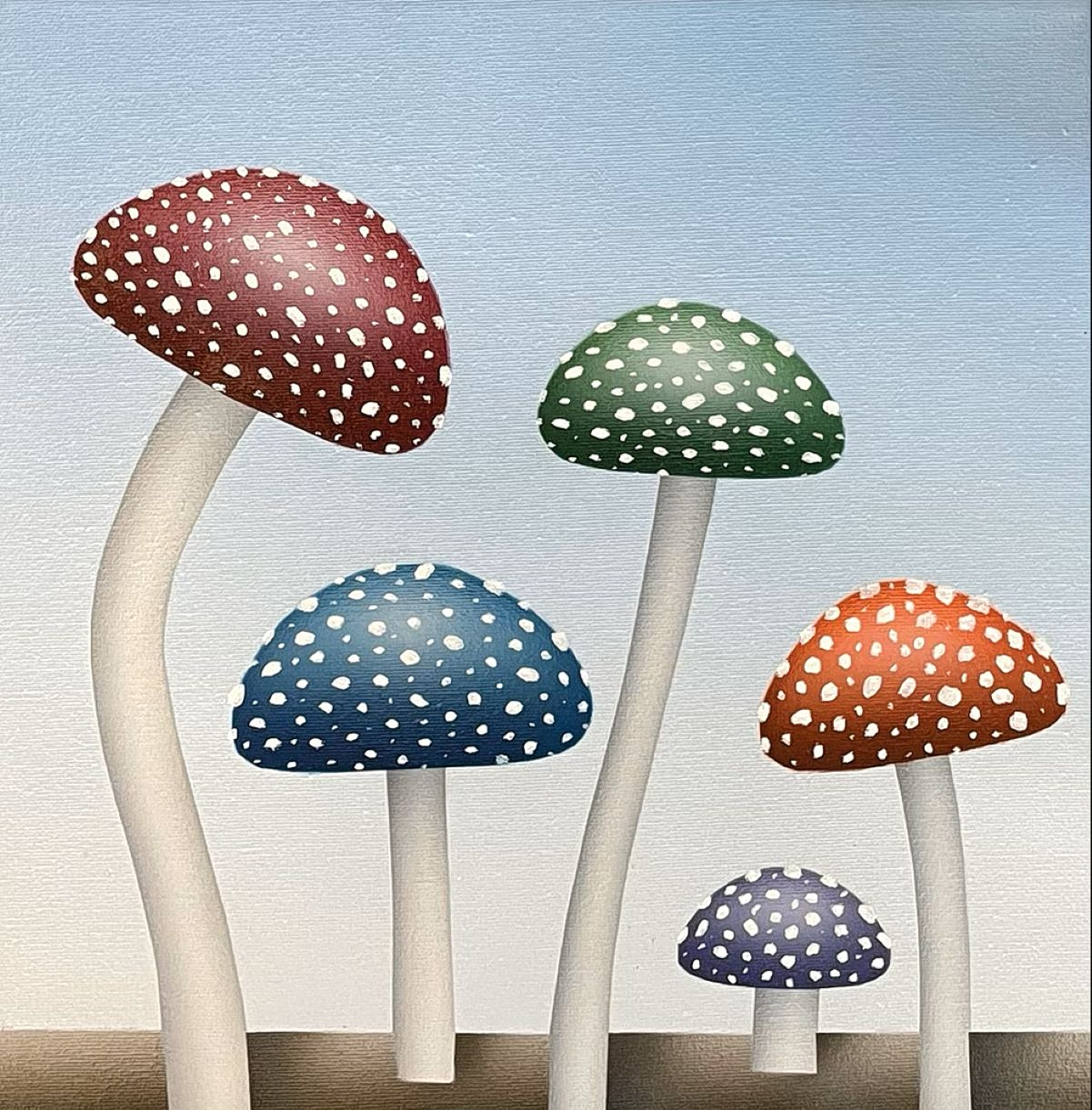
Standing before Alex Chien’s Tree of Life, one initially senses a quiet, almost reassuring stillness. A tree rises at the center, water recedes gently into the background, and flowers bloom with a disarming, almost childlike clarity. The scene appears familiar, as though recalling a landscape half-remembered—or perhaps imagined. Yet, on closer inspection, subtle disruptions begin to surface.
Wrapped around the tree trunk is a strip of yellow-and-black tape. It is not aggressive or overtly dramatic, but present enough to resist being overlooked. The tree stands intact, self-contained, and yet it bears the mark of having been touched—altered—by something human. A ladder leans against it, leading nowhere visible, or perhaps toward a destination deliberately concealed.
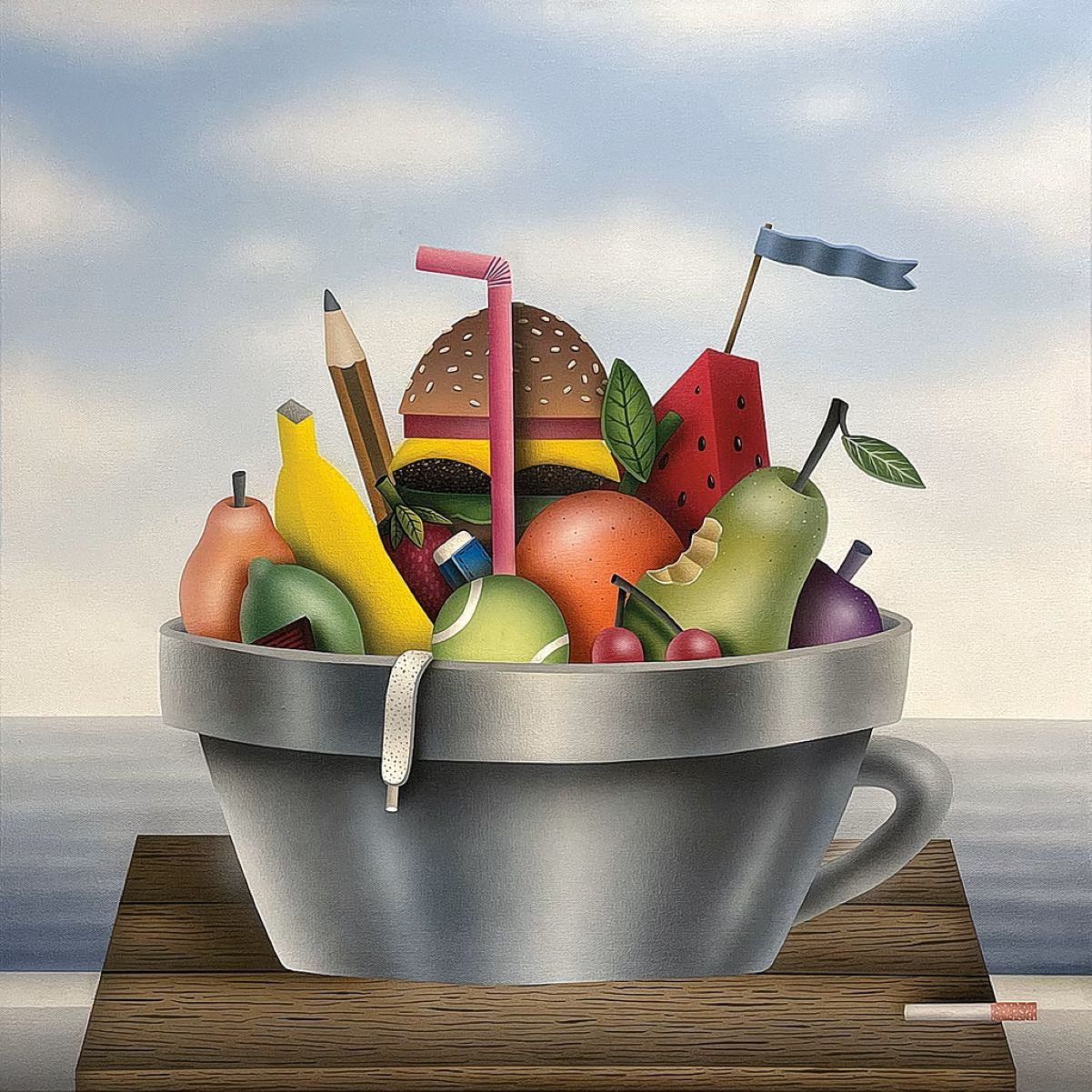
Elsewhere in this otherwise idyllic setting lies a single shoe, abandoned. It suggests someone who may have left in haste or never returned. From within it, a flower has taken root. There is no overt conflict, no visible destruction. Instead, there is something quieter: a coexistence that has yet to resolve whether it is harmonious or intrusive.
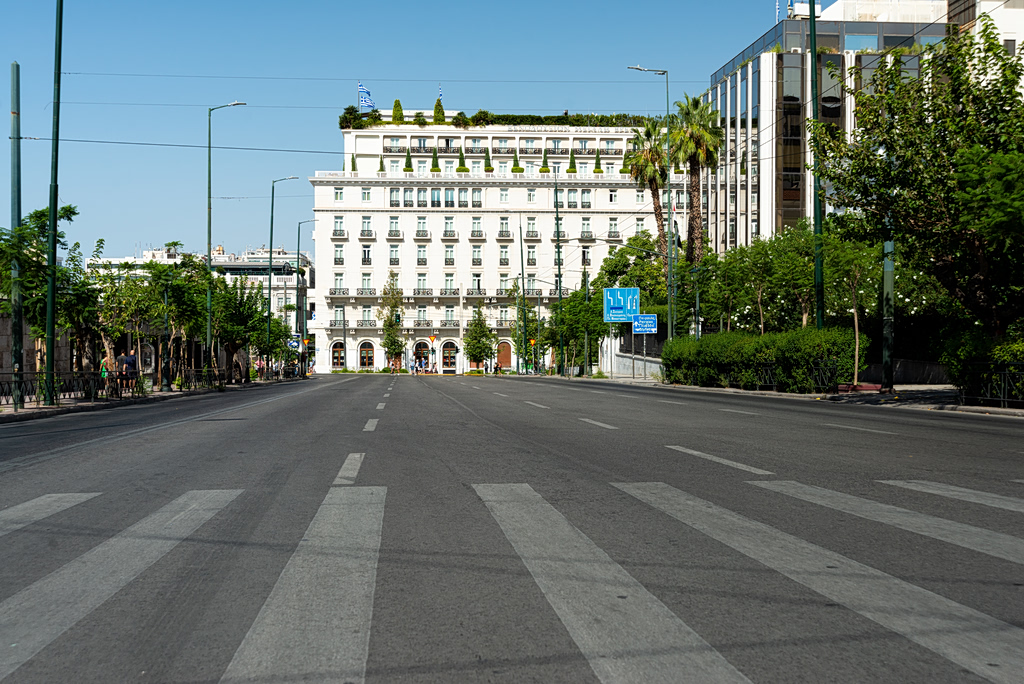
Chien’s exhibition Artificial Eden, currently presented at the George Benias Gallery in central Athens, reflects on the subtle and often imperceptible ways in which environments are shaped by human presence. A restrained tension unfolds between the natural and the constructed, where intervention is neither fully visible nor entirely concealed. It is precisely this ambiguity that invites a reconsideration of what is perceived as “natural.”
The artist, whose work has been exhibited across Europe and the United States and is held in private collections worldwide, is described as having emerged from the world of graffiti. Early explorations of lettering and character forms are said to have informed his later development of a distinct visual language—one that favors airbrush and acrylic techniques to produce seamless, three-dimensional images without visible outlines.
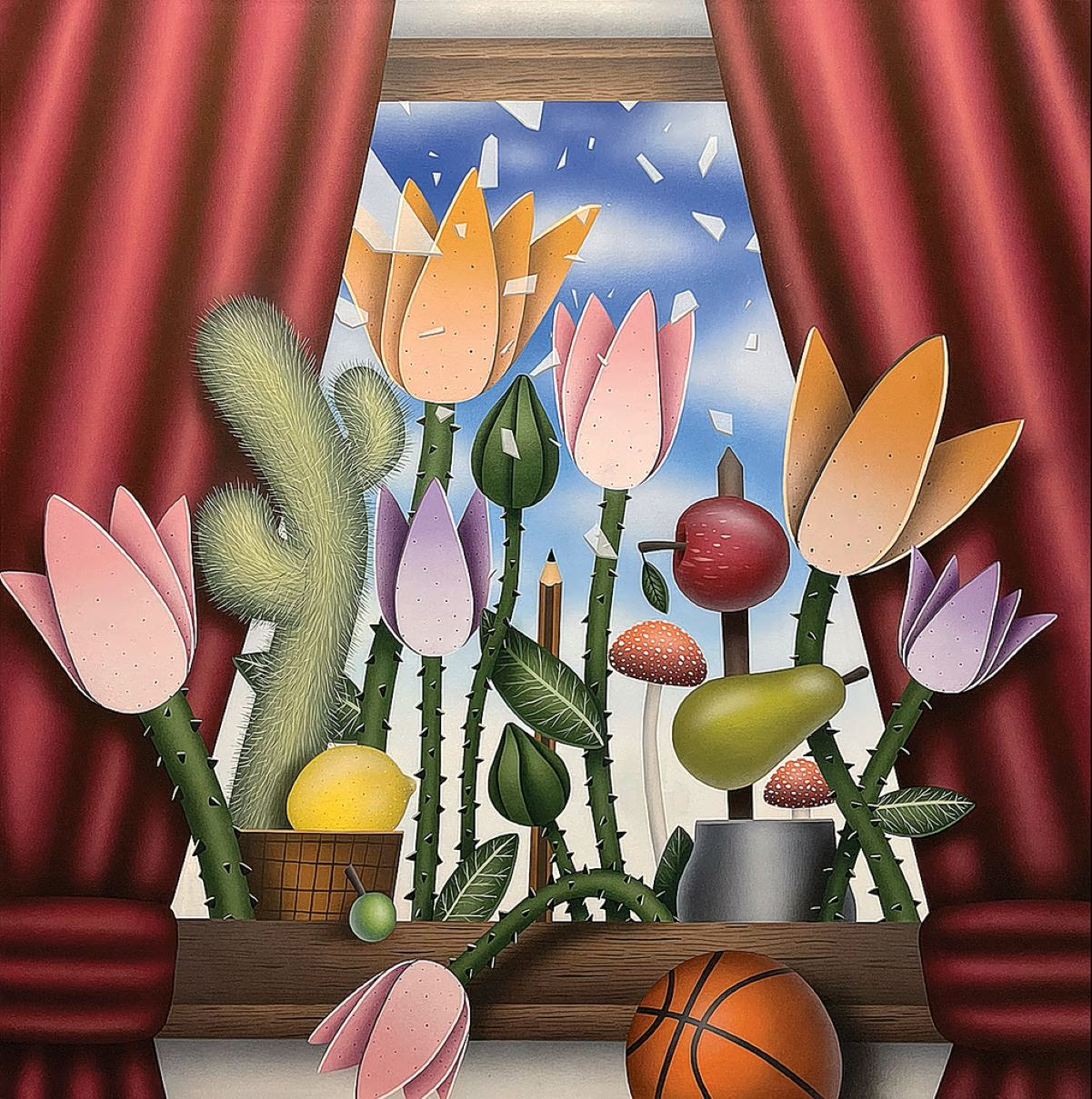
The narratives behind his paintings are presented as personal interpretations of reality, often reflecting everyday emotions and situations through a lens that blends humor with a pop-surrealist sensibility. His imagined worlds, populated in the past by cartoon-like figures in vivid colors, have been noted for their strong sense of storytelling and their ability to foster an immediate and engaging connection with the viewer.
In Artificial Eden, however, a notable shift is observed. The exhibition focuses on still lifes and landscapes, marking a departure from the anthropomorphic characters that had long defined his work. Nature is depicted as bearing the imprint of human presence—subtle, but undeniable. These landscapes do not shout or accuse; they suggest. And in doing so, they evoke a more complex emotional response: a beauty that is never entirely carefree.
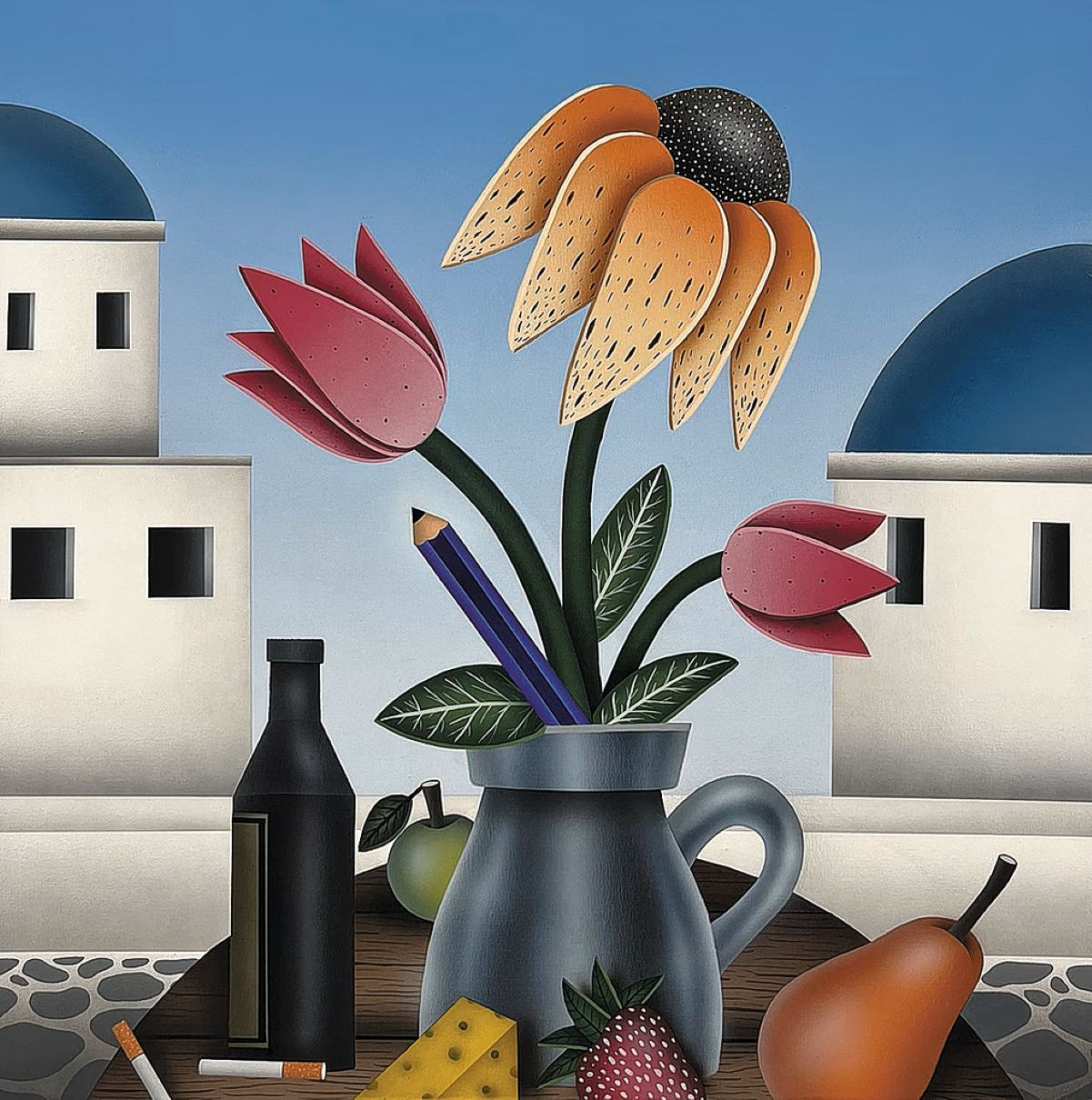
Reflecting on this transition, the artist reportedly noted that these works were his first after years of creating anthropomorphic figures, adding that he had sought to explore something different while maintaining continuity with his established style. He is said to have described the removal of characters from his compositions as a significant personal challenge.
Regarding the title Artificial Eden, he explained that he aimed to capture the interplay between human intervention and nature, which he perceived as possessing a beauty akin to an imagined paradise. He also acknowledged that his background in graffiti—particularly the forms and shapes developed while writing his name and that of his crew—had profoundly influenced both his later artistic practice and his handling of spray techniques.