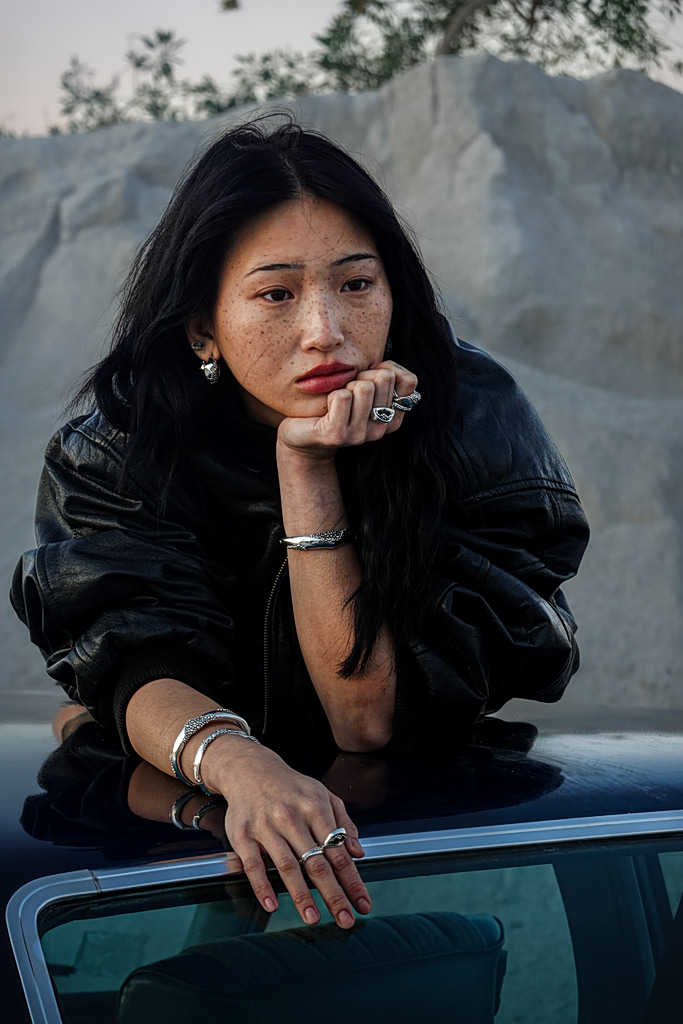
Greek jeweler Elina Kakuru created her namesake brand and store KAKURU Jewels in 2017, in collaboration with a few artisan fellows. From the start, her jewelry collections have reflected a sense of hope and positivity—all inspired by Greek words or expressions like ‘niotho’ (I feel) or the well-known ‘agape’ (love). Her designs seek to reimagine these words fully into organic shapes, that are then transformed into everyday wearable pieces as well as occasion wear. KAKURU Jewels has long established itself as a prominent yet small Greek business, amassing around 18 thousand followers on Instagram alone.
This year’s collection titled ‘Fovos’ (fear) marks a significant shift into treacherous, vulnerable waters for Elina and the team.
The new collection approaches fear not as an abstract idea, but as a sensation lived in the body and translated into jewelry.
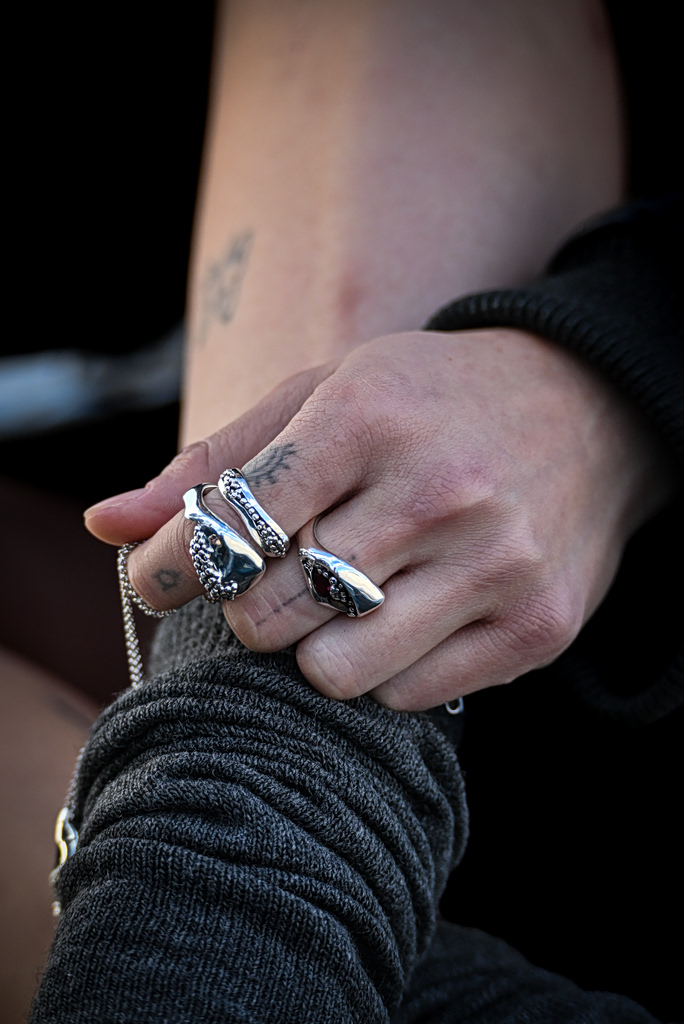
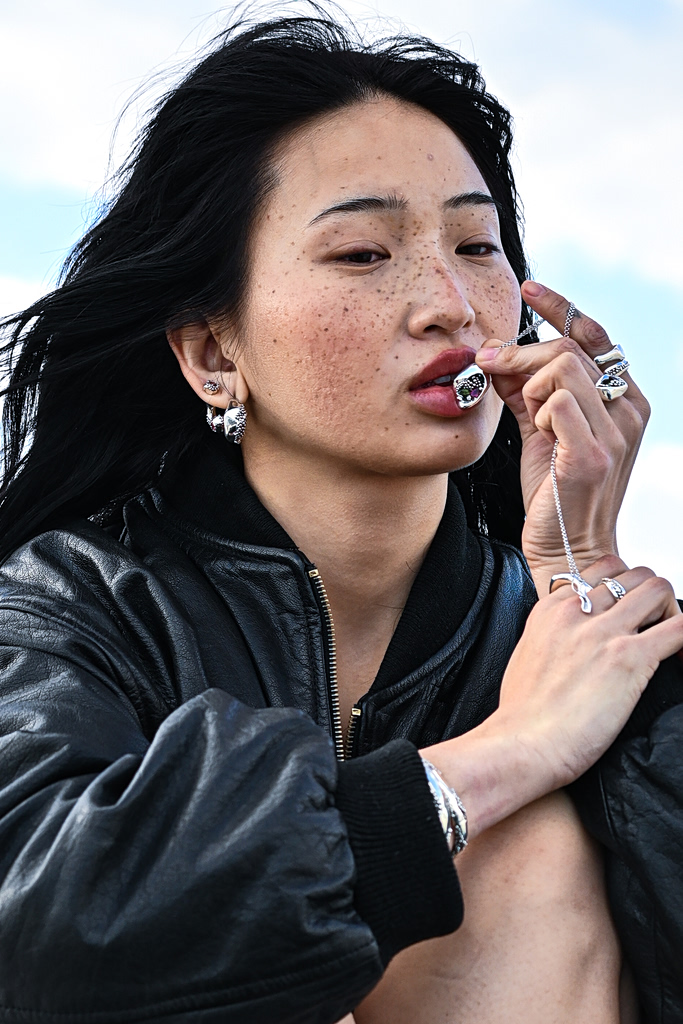
“I was interested in capturing fear not as something we avoid, but as something we carry, something that shapes us.” Kakuru notes. In ‘Fovos’, she employs the ancient and highly intricate technique of granulation. Tiny spherical units accumulate—grain by grain—forming surfaces that resemble nests, echoing the way fear settles and builds within us.
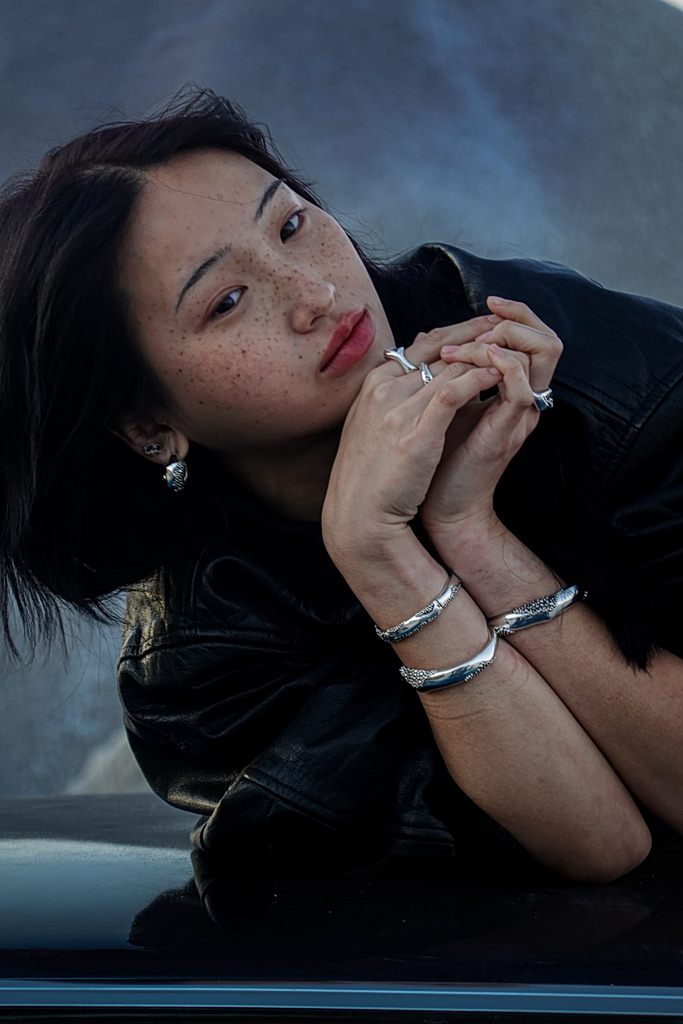
Photography by Panagiotis Papathanassis
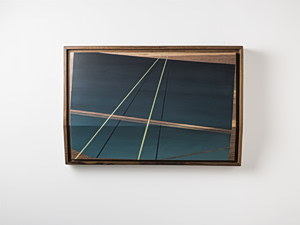
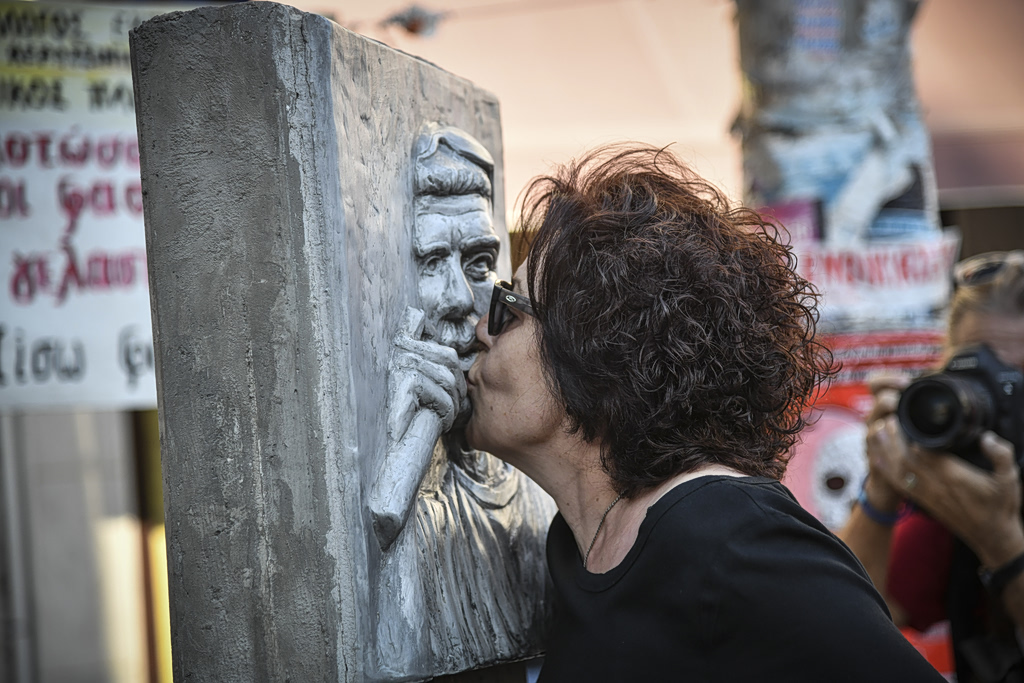
For the first time, precious and semi-precious stones—tourmalines, emeralds and rubies—are embedded into her designs. Silver 925 and 18K yellow gold coexist in a tension between light and darkness, while oxidation enhances this duality, bringing the surface forward as a trace. Through collaborations with creators working across image and narrative, the collection extends beyond jewelry as an object. For ‘Fovos’, Kakuru collaborated with filmmaker and visual artist Efi Gousi, who translated emotion into a cinematic, dreamlike visual language. Additionally, installations in the physical space of the store by Timothy Laskaratos expand the narrative. Columns with exposed rebar, metallic structures, and blue and white flags compose an environment that evokes an urban landscape in progress.
The collection embraces fear—as form, as surface, as something that persists. And perhaps, through this transformation, fear can be seen differently—not as something to be avoided, but as something that may, unexpectedly, hold a certain beauty.