 Μake us preferred on Google
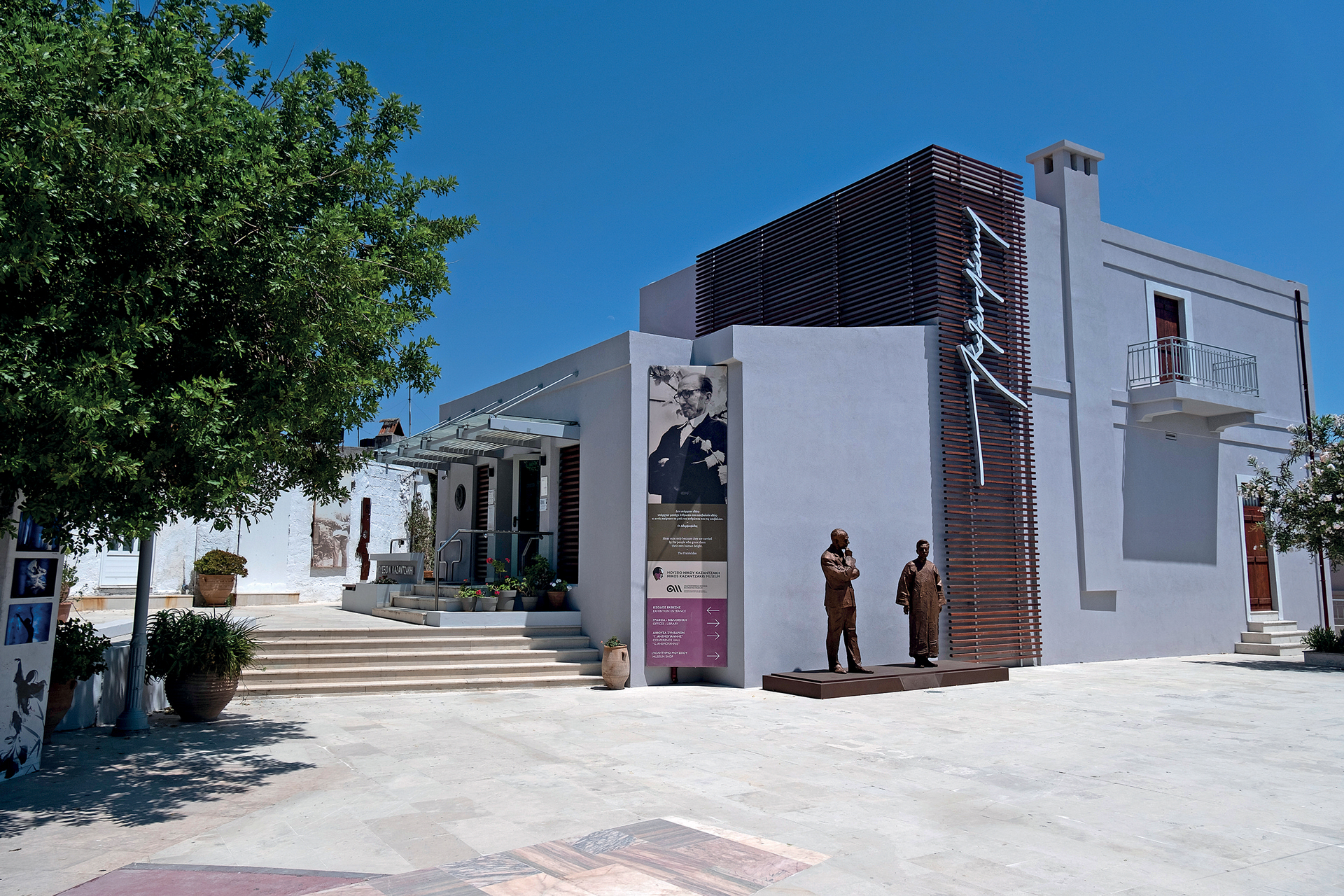
 It was June 27, 1983, when a crowd gathered in the quiet village of Myrtia, just 15 kilometers from Heraklion, Crete. Under the warm Cretan sun, the then Minister of Culture, Melina Mercouri, inaugurated a unique cultural space: the Kazantzakis Museum, dedicated to Greece’s most internationally acclaimed author and thinker, Nikos Kazantzakis (1883–1957).

A snapshot from the opening of the Kazantzakis Museum in 1983. In the front row, from left to right, we see the museum’s founder Giorgos Anemoyannis, Kazantzakis’s second wife Eleni, and then-Minister of Culture Melina Mercouri.
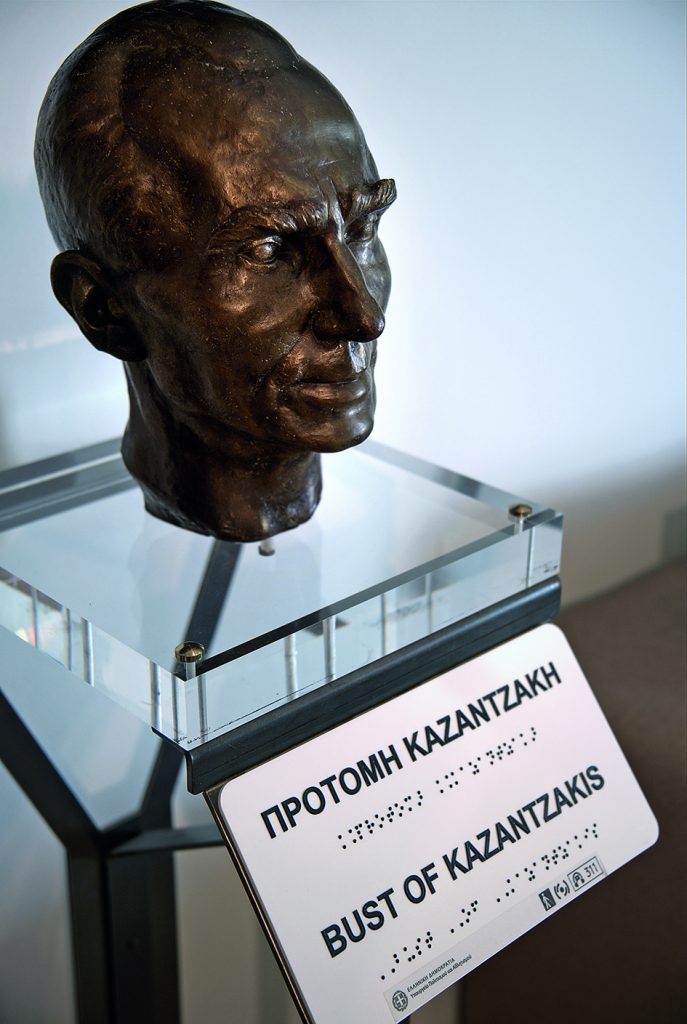
Kazantzakis—author of Zorba the Greek and The Last Temptation of Christ—was a literary force whose voice transcended borders. His works have been translated into over 50 languages, admired in China, India, and the United States. And yet, at home, he was misunderstood and even opposed. Despite nine Nobel Prize nominations, he never won, partially due to the resistance of conservative circles in Greece.
But one man’s vision helped ensure Kazantzakis would not be forgotten.
One Man’s Odyssey
The museum was the brainchild of Giorgos Anemoyiannis (1916–2005), a celebrated Greek scenographer and costume designer. A distant relative of Captain Michalis, Kazantzakis’ father, Anemoyiannis restored the family home in Myrtia and turned it into a museum—an homage built from passion, not formal museology training.

“The Life and Times of Alexis Zorbas.” Kazantzakis’s famous novel has been published in more than 50 languages, dialects, and idioms.
He painstakingly tracked down rare letters, manuscripts, first editions, newspaper articles, travel diaries, and personal items like the author’s watch, glasses, and the wooden desk from Antibes where Kazantzakis penned his major works.
Creating this collection, Anemoyiannis once said, was an “odyssey” in itself. He had help—most notably from Kazantzakis’ widow, Eleni, who donated archives and facilitated contacts around the world. Today, the museum holds over 50,000 items, many of which are on display in a permanent exhibition spread across themed rooms.
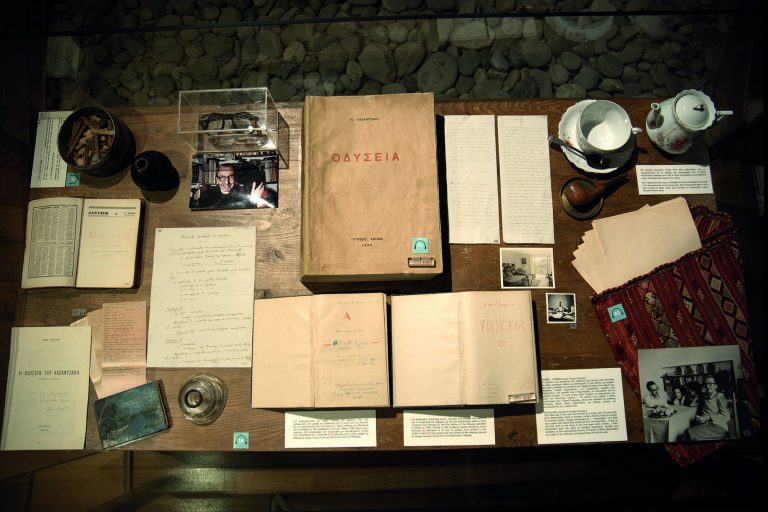
Material from Kazantzakis’s great epic “The Odyssey” (spelled “Odyseia” in the 1938 first edition) displayed on the desk where he wrote most of his novels.
A Cultural Lighthouse in the Cretan Hills
According to director Marilena Milathianaki, the museum is more than a memorial—it’s a “sanctuary of memory and pilgrimage.” And yet, despite its global significance, it remains something of a hidden treasure, tucked amid Crete’s vineyards and olive groves.
Kazantzakis once said, “I am a son of Crete, and Crete is my daughter.” In return, the island honors him—his body rests in Heraklion’s Martinengo Bastion, and his legacy lives on in Myrtia’s museum, which has been in continuous operation for 41 years.
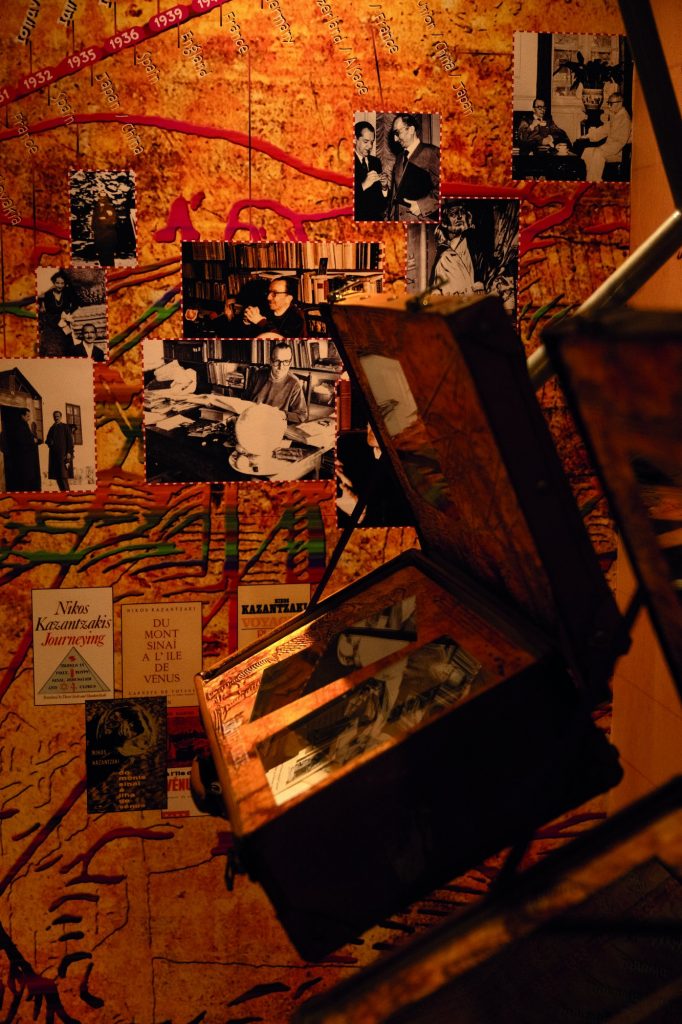
The “Travel” section of the Kazantzakis Museum’s permanent exhibition hosts photographs, souvenirs, documents, books, and items from the author’s journeys around the world.
Its programs—ranging from literary festivals and traveling exhibitions to academic seminars and educational outreach—reflect the author’s own restless, borderless intellect. The museum’s commitment to global dialogue is embodied in its partnerships with institutions like the Shakespeare Birthplace Trust, Lu Xun Museum in China, and the Paul Valéry Museum in France.
When the Museum Almost Fell Silent
But this legacy nearly came to an abrupt end. In 2013, despite a major renovation funded by the EU, the museum faced financial collapse. With no state funding for salaries and limited income from tickets, its very survival was at stake.

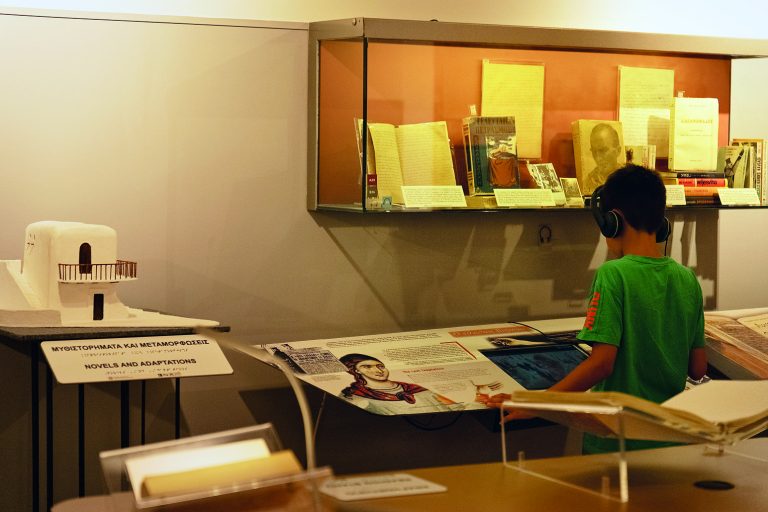
Personal belongings, photographs, and manuscripts of Nikos Kazantzakis are displayed in the museum’s showcases.
Evangelos Marinakis, Greek businessman and philanthropist, responded without hesitation. As the museum puts it: “Evangelos Marinakis responded immediately to this effort, offering a generous and permanent sponsorship to the museum. This sponsorship, which continues uninterrupted to this day—ten years on—has allowed the museum to cover its operating costs, hire an excellent team, and expand its outreach activities in order to implement its vision and give an ever-growing audience the opportunity to engage with the universe of Nikos Kazantzakis. With Evangelos Marinakis’ support, the museum can look to the future with optimism.”
His ongoing contribution not only stabilized the institution but enabled it to grow in ambition—digitizing archives, enriching educational programs, and reaching international audiences. A central exhibition hall now bears his father’s name in honor of this life-saving gesture.
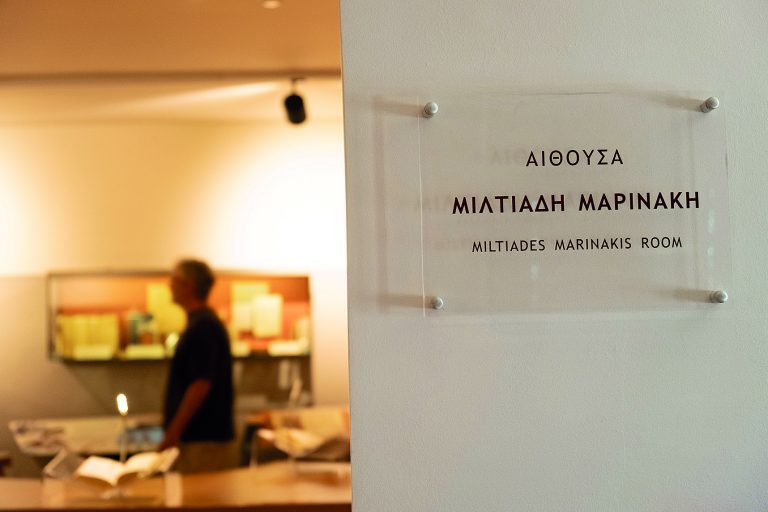
The “Novels” and “Travels” room is honorarily named after the father of the museum’s Grand Benefactor, Evangelos Marinakis.
Embracing the Future, Preserving the Past
In recent years, the museum has undergone a green transformation, installing solar panels and using recycled materials in its renovation. It also leads environmental campaigns and promotes sustainable education.
Accessibility is another pillar: tactile tours for visually impaired visitors, audio guides, subtitled videos, and sign language programs are part of the museum’s commitment to universal access.
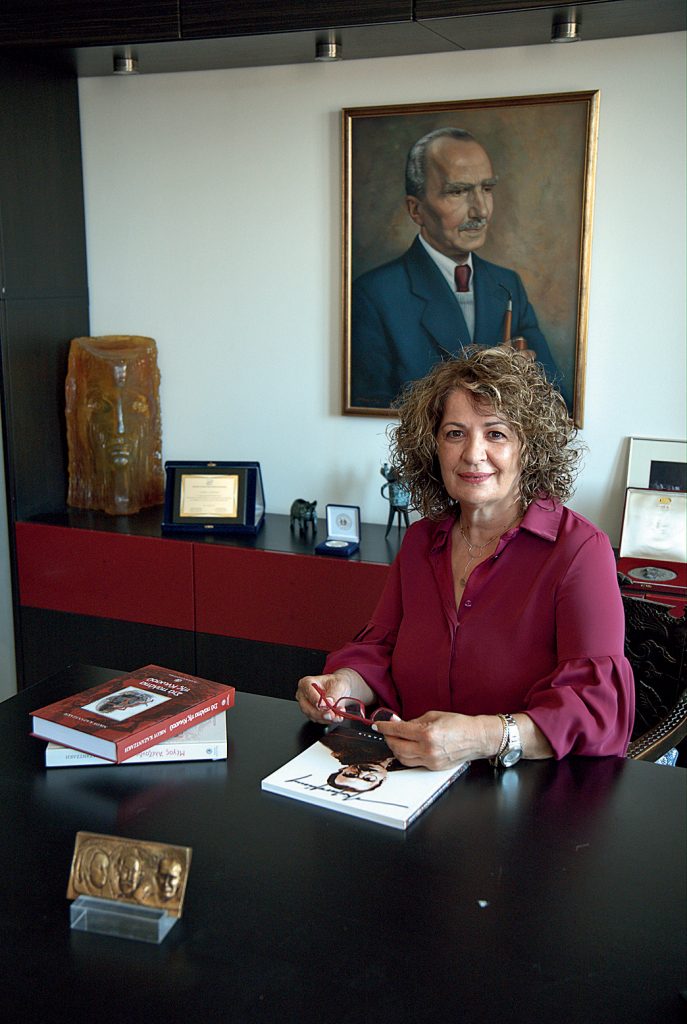
The director of the Kazantzakis Museum, Marilena Milathianaki.
A mobile app, developed through an EU-funded initiative, offers immersive digital experiences. Meanwhile, digitization efforts continue, with thousands of Kazantzakis’ and Anemoyiannis’ archival materials being made publicly available online.
Kazantzakis Across Continents and Generations
The museum’s outreach isn’t limited to Crete. Through its “Traveling…” festival series—based on Kazantzakis’ travel writings—it has celebrated cultural ties with countries like Spain, England, Russia, and China. The most acclaimed was “Traveling… China,” which strengthened Greek-Chinese cultural diplomacy and led to a monumental bronze sculpture depicting Kazantzakis and Chinese writer Lu Xun in conversation. One stands proudly at the museum’s entrance; the other at Lu Xun’s museum in Shaoxing, China.
In 2024, the Nikos Kazantzakis Museum completed extensive energy upgrade works and is now a modern and “green” museum.
Education and the Next Generation
The museum also plays an active role in education. Its programs cater to children, adults, and people with disabilities. A mobile museum kit—called the mousiothiki—is currently being distributed to Greek and diaspora schools to bring Kazantzakis’ world to life beyond the walls of Myrtia.
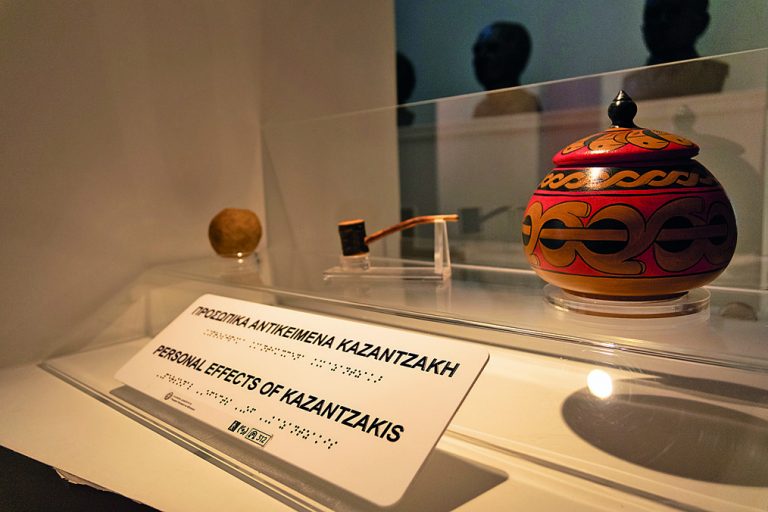
The Nikos Kazantzakis Museum is fully accessible to people with mobility and visual disabilities.
Workshops, lectures, and school collaborations allow students to explore philosophical and literary questions through Kazantzakis’ lens. An upcoming series of theme-based festivals and theatrical productions will further expand the museum’s reach and mission.
Why Kazantzakis Still Matters
What makes Kazantzakis so enduring? According to Museum Board President Michalis Taroudakis, “His writing addresses the eternal human quest for meaning, peace, and unity.” Whether through his philosophical texts or fiction, Kazantzakis challenges readers to confront life’s most pressing questions with courage and authenticity.
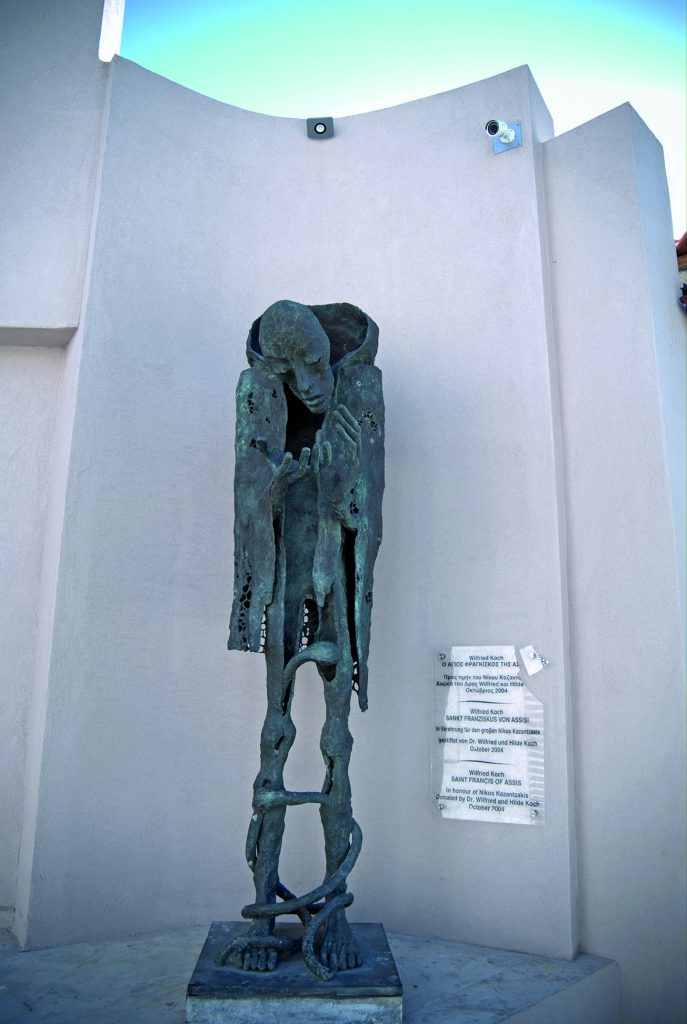
Bronze sculpture by sculptor Wilfried Koch depicting Saint Francis of Assisi. The Saint was the inspiration for Nikos Kazantzakis’s work “God’s Pauper.”
As Peter Bien, one of Kazantzakis’ foremost scholars, once wrote, “Kazantzakis will remain essential—not just in the 21st century, but well into the 22nd.”