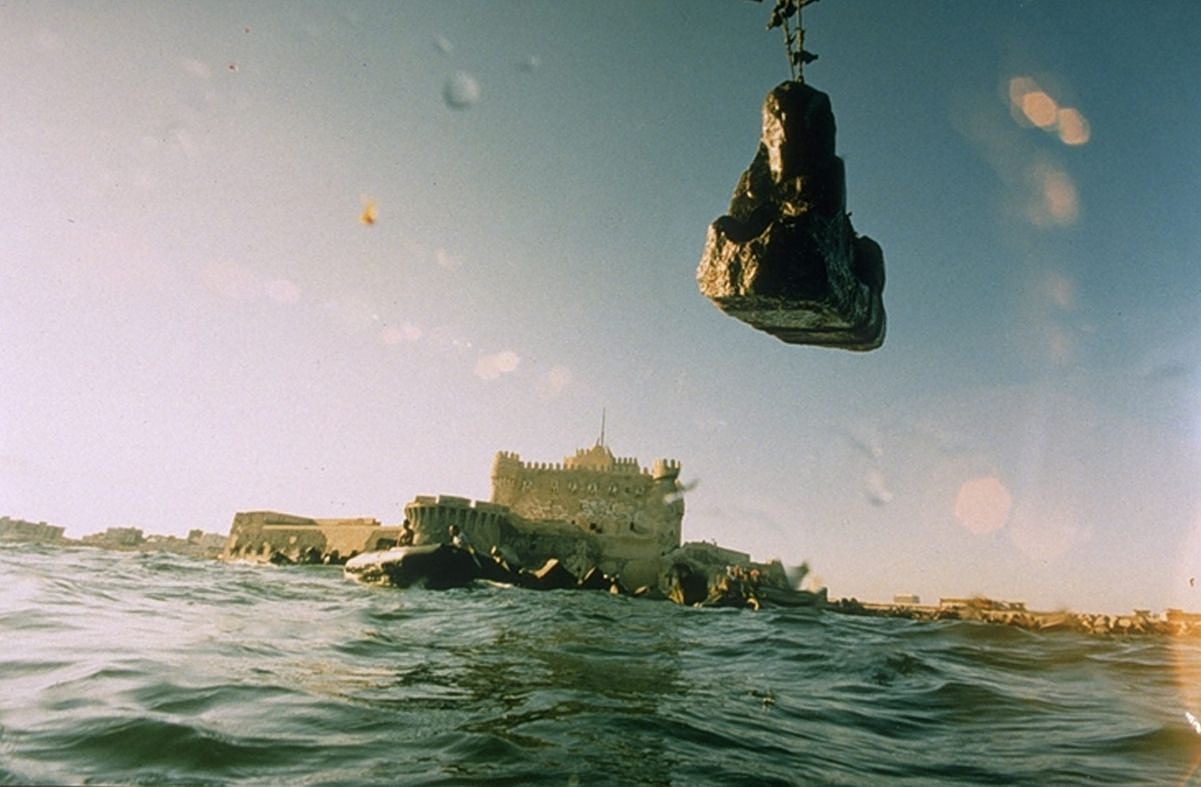
The Lighthouse of Alexandria, a Seven Wonder of the Ancient World, stood for nearly 1,600 years before a 1303 earthquake and tsunami left it in ruins, with a later quake completing its collapse. In the 15th century, Sultan Qaitbay used the remains to build the fortress that still stands, allowing the ancient wonder to endure in a new form.
Modern underwater archaeology has radically transformed our understanding of the lighthouse. Since the 1990s, enormous stones, statues, sphinxes, and architectural fragments linked to the Pharos have been discovered on the seabed.
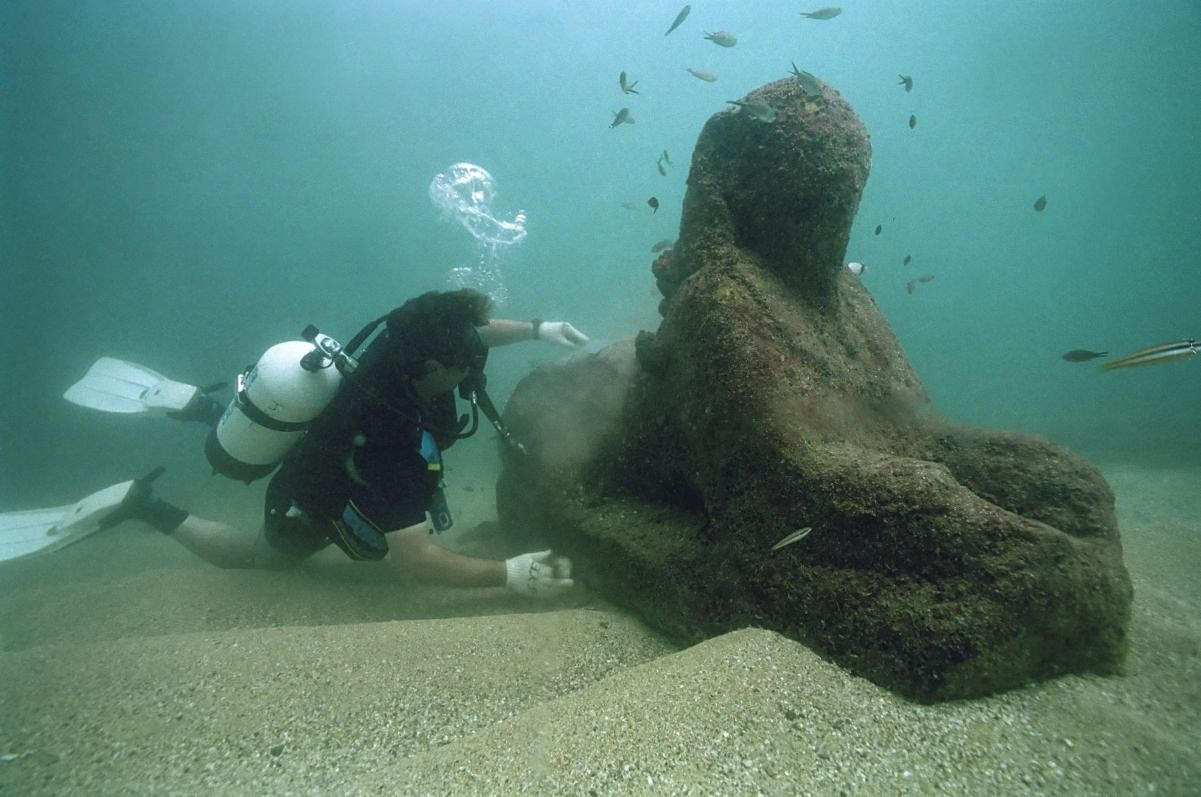
Archaeologists in Egypt have even raised stones weighing up to 80 tons, revealing the scale and sophistication of the original structure. In recent years, the Pharos Project, led by archaeologist Isabelle Erie, has sought to create a complete digital “twin” of the lighthouse.
Using photogrammetry and 3D modeling, thousands of fragments are meticulously recorded and digitally reassembled, allowing researchers to reconstruct the lighthouse’s form without altering the original materials.
The data reveal that the lighthouse was built using advanced stone-joining techniques, explaining both the speed of its construction and its longevity. The research also shows that sea levels in the region have risen significantly since the Hellenistic period, submerging much of the ancient city.
While the project is still ongoing, one conclusion is clear: the Lighthouse of Alexandria was not merely a myth inflated over time, but a genuine technological and ideological achievement—worthy of its status as an ancient wonder.
After more than two decades of study, scientists are now able to propose historical interpretations of the site and even initiate partial reconstructions of the monuments that once stood there. This progress is considered crucial for understanding both the architecture and cultural significance of the Pharos.
The project is supported by the French National Center for Scientific Research and the Egyptian Ministry of Tourism and Antiquities, exemplifying international collaboration to illuminate one of antiquity’s most iconic monuments.