Today, put on your long pants, slip into closed shoes, grab a cozy jacket, and make your way to Athens’ iconic Cine Paris. Nestled on a terrace with breathtaking views of the illuminated Parthenon, this cinema invites you to experience one of the masterpieces of early cinema as it was meant to be seen—on the big screen. On this crisp, autumn-like Sunday, the city sets the perfect backdrop for an unforgettable cinematic event: two special screenings of the world-renowned silent horror classic, The Cabinet of Dr. Caligari (Das Cabinet des Dr. Caligari), accompanied by live music from the talented pianist and composer Stathis Anninos.
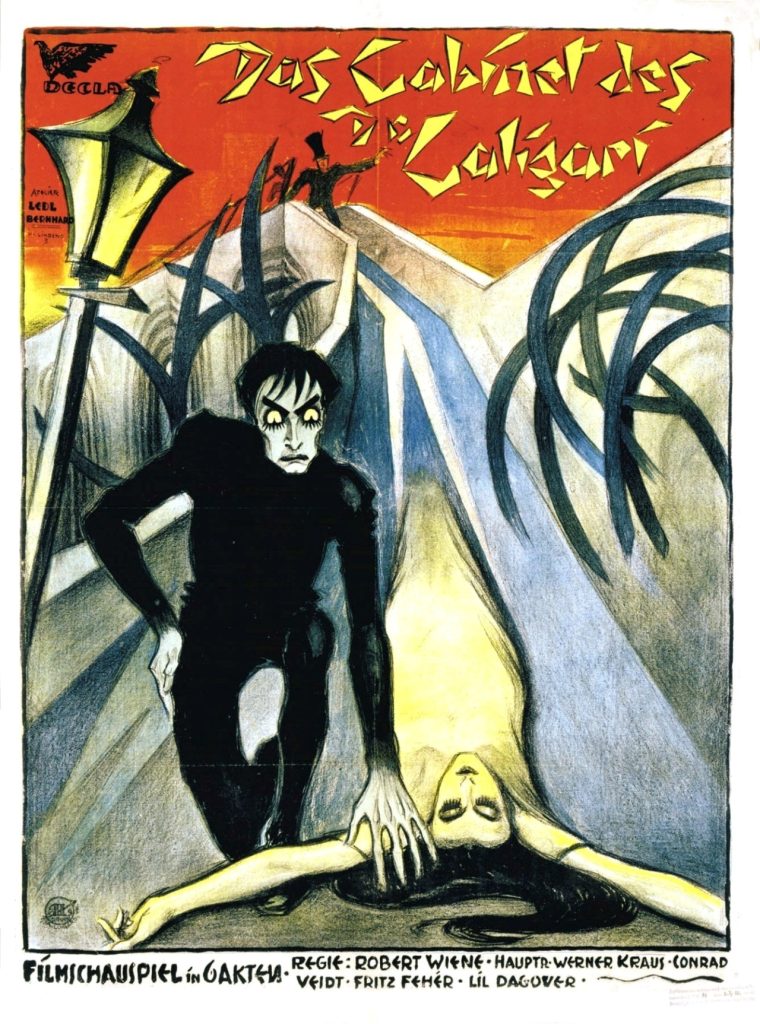
Theatrical release poster/ Wikimedia Commons
The First Psychological Horror Film
Directed by Robert Wiene in 1920 and written by Hans Janowitz and Carl Mayer, The Cabinet of Dr. Caligari is widely considered the first true psychological horror film. Critics and historians celebrate it for its revolutionary use of German Expressionist aesthetics, crafting a subjective, dreamlike, and anxiety-filled atmosphere that still captivates audiences a century later.
Set in a shadowy carnival, the story follows Francis and his friend Alan as they encounter the somnambulist Cesare (Conrad Veidt), a sleepwalker who can predict the future and is hypnotically controlled by the enigmatic Dr. Caligari (Werner Krauss).
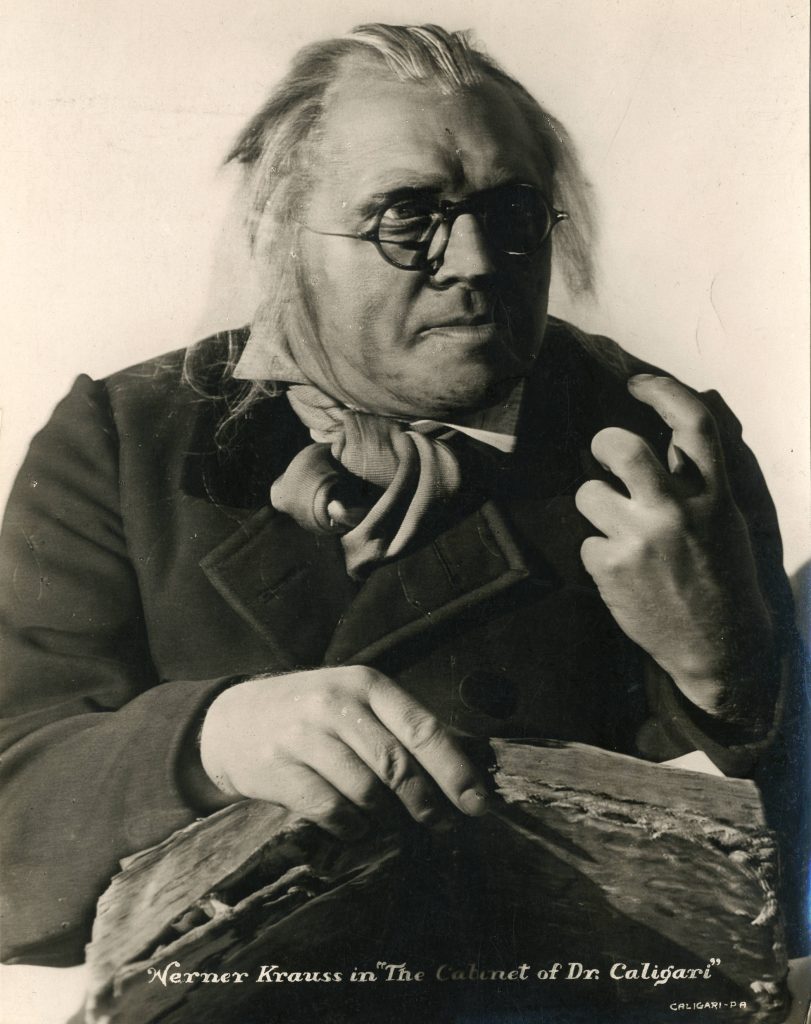
Werner Krauss as Caligari, 1920. /University of Washington , Public domain, via Wikimedia Commons
A Visual Landmark of German Expressionism
The film’s dark, twisted visual style—marked by sharp, leaning structures, curving lines, painted shadows, and claustrophobic, anti-realistic sets—reflects the inner turmoil and feverish anxieties of post-World War I Germany, making it a quintessential work of the German Expressionist movement.
German Expressionism, an early 20th-century artistic movement, emphasized the expression of inner emotions rather than literal realism. Caligari, alongside other early expressionist films such as The Student of Prague (1913), The Golem (1920), and Nosferatu (1922), helped establish the visual language of psychological horror and elevated cinema to a recognized art form internationally.
Film scholars often cite it as the most widely discussed film of its era, and it remains a staple in film studies and retrospectives around the world. Akira Kurosawa even included it among his 100 favorite films, highlighting its enduring influence across generations and continents.
Practical info
This Sunday, Cine Paris celebrates the 105th anniversary of The Cabinet of Dr. Caligari with two screenings at 19:30 and 21:30. Accompanied by live, original compositions and improvisations from Stathis Anninos, this presentation transforms the silent film experience into a vibrant, modern audiovisual journey—redefining its haunting atmosphere while honoring its historical significance.
For online tickets please go here.
Cine Paris, 22 Kydathineon Street, Plaka, Athens