At least 16 commercial vessels have been attacked near the Strait of Hormuz since the start of the U.S.-Israeli war with Iran, according to Reuters. Among them are two Greek-owned ships — the tanker Zefyros and the bulk carrier Star Gwyneth — highlighting the exposure of Greece’s merchant fleet to the escalating tensions in the Gulf.
Iran’s Revolutionary Guards have repeatedly warned that vessels passing through the narrow waterway will be targeted. The Strait of Hormuz is one of the world’s most important energy chokepoints, carrying roughly one-fifth of global oil and liquefied natural gas (LNG) flows.
Despite the growing threat, the U.S. Navy is not currently escorting commercial vessels through the strait. U.S. Energy Secretary Chris Wright said Thursday that escorts could begin later this month but that the military is currently focused on weakening Iran’s offensive capabilities. “It’ll happen relatively soon but it can’t happen now,” Wright told CNBC. “We’re simply not ready.”
The Wall Street Journal also reported that the U.S. military has turned down requests to escort civilian ships through the strait until the immediate threat from Iranian attacks subsides.
Greek-Owned Ships Caught in the Attacks
Two ships linked to Greek shipping interests were struck in separate incidents on March 11.
The Zefyros, a Maltese-flagged fuel tanker linked to Greek shipowner Vasilis Michael and managed by Benetech Shipping SA, was struck by a projectile while conducting a ship-to-ship oil transfer with the tanker Safesea Vishnu near Umm Qasar anchorage in Iraq, according to the company and Reuters.
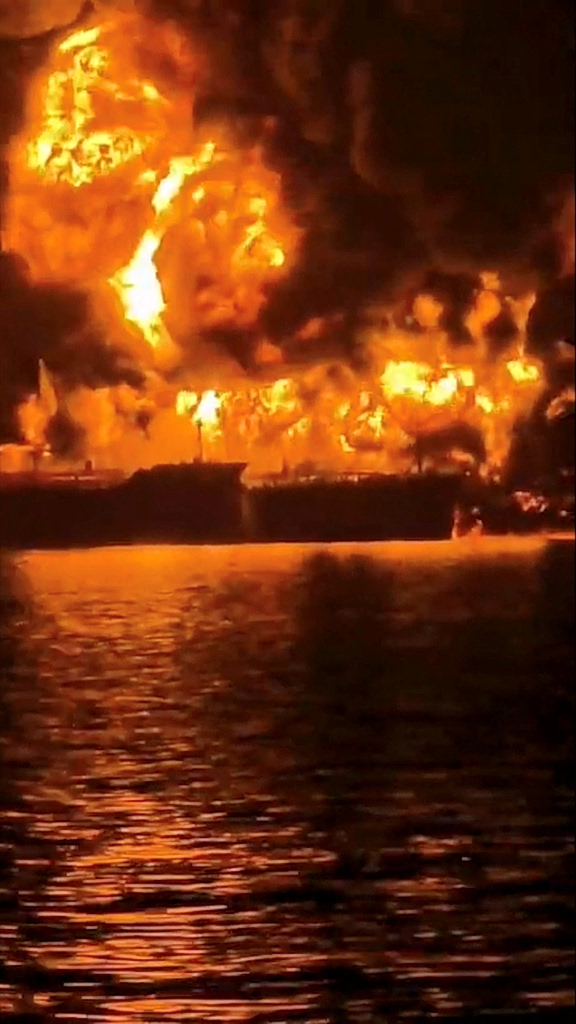
A ship burns, after Iranian explosive-laden boats appear to have attacked two fuel tankers in Iraqi waters setting them ablaze, according to port, maritime security and risk firms, amid the U.S.-Israeli conflict with Iran, in this screengrab taken from a handout video released March 12, 2026. Media Office of Iraqi Ports/Handout via REUTERS THIS IMAGE HAS BEEN SUPPLIED BY A THIRD PARTY. TPX IMAGES OF THE DAY. VERIFICATION: – Identity of one tanker confirmed as Zefyros by shape which matched file imagery of the ship – Exact date not verified but no older version of the footage was found posted online before March 12
The strike occurred at 23:41 local time. “All 23 crew members are safe and accounted for. They have been evacuated and brought to shore,” Benetech Shipping said in a statement, adding that the vessel’s condition was being assessed.
Earlier the same day, the Star Gwyneth, a Marshall Islands–flagged dry bulk carrier operated by Star Bulk Carriers, the company controlled by Greek shipowner Petros Pappas, was hit by a projectile about 50 nautical miles northwest of Dubai, maritime risk management firm Vanguard said.
The attack damaged the vessel’s hull, though the crew was safe and no environmental impact was reported, according to maritime authorities.
A Wave of Attacks Across the Gulf
According to Reuters, the attacks began March 1, and have affected tankers, bulk carriers, container ships and support vessels across the region.
On March 1, a crew member was killed when the Marshall Islands–flagged crude tanker MKD Vyom was struck by a projectile off the Omani coast near Muscat.
That same day, the Gibraltar-flagged bunkering tanker Hercules Star was hit northwest of Mina Saqr in the United Arab Emirates, causing a fire that was later extinguished, according to the United Kingdom Maritime Trade Operations (UKMTO).
Also on March 1, the Palau-flagged tanker Skylight was attacked near Oman’s Kumzar in the Strait of Hormuz and its crew evacuated.
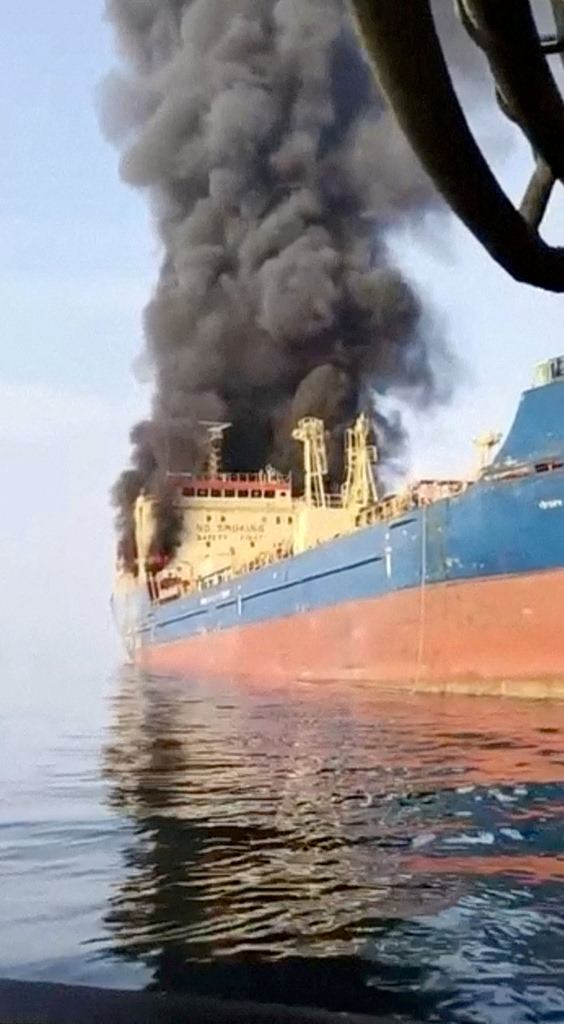
Smoke billows from an oil tanker under U.S. sanctions, that was hit off Oman’s Musandam peninsula, in this screen grab from a video obtained by REUTERS on March 1, 2026.
On March 2, the U.S.-flagged products tanker Stena Imperative was struck by two projectiles while docked in Bahrain, sparking a fire and forcing the crew to abandon the vessel.
Two more ships — the Marshall Islands crude tanker Libra Trader and the Panama-flagged bulker Gold Oak — sustained minor damage near the UAE port of Fujairah on March 3.
The Maltese-flagged container ship Safeen Prestige was hit on March 4 near the northern entrance to the Strait of Hormuz, causing an engine-room fire that forced its crew to abandon ship. A tugboat assisting Safeen Prestige was struck on March 6 north of Oman.
On March 5, the crude tanker Sonangol Namibe was damaged by an explosion near Iraq’s Khor al Zubair port, reportedly involving an explosive-laden remote-controlled boat.
The most recent incidents occurred on March 11, when several vessels were struck in or near the Strait of Hormuz.
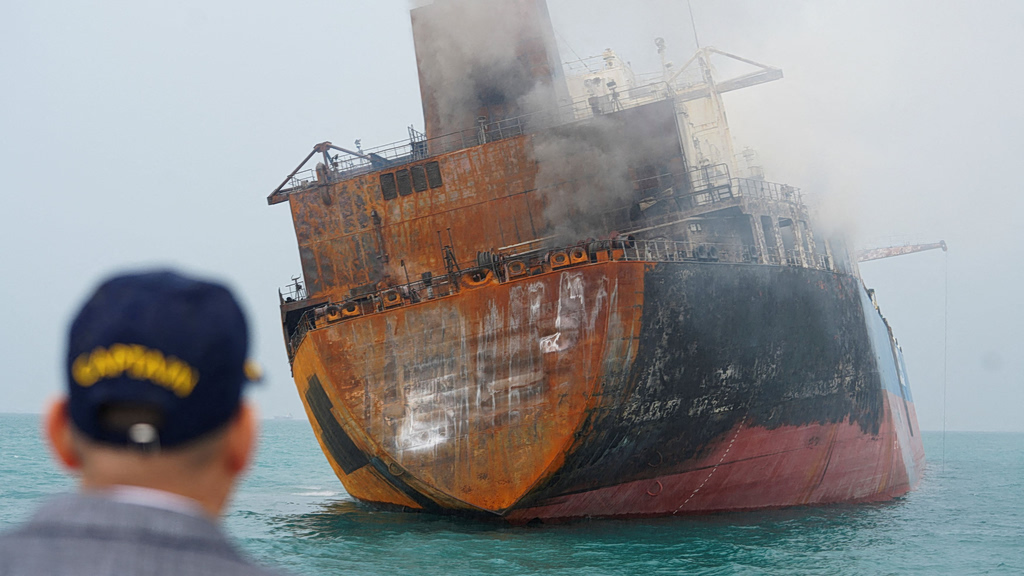
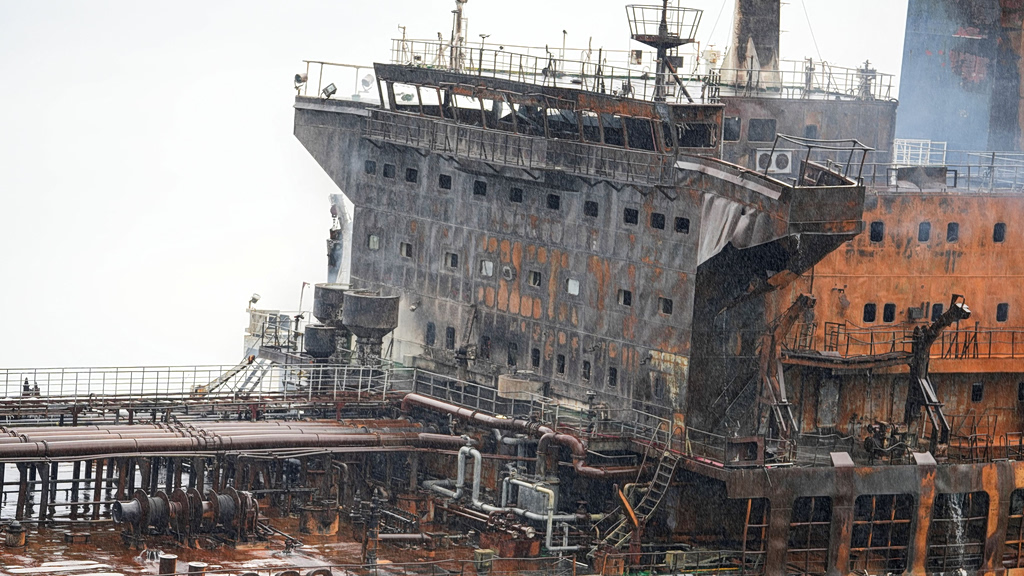
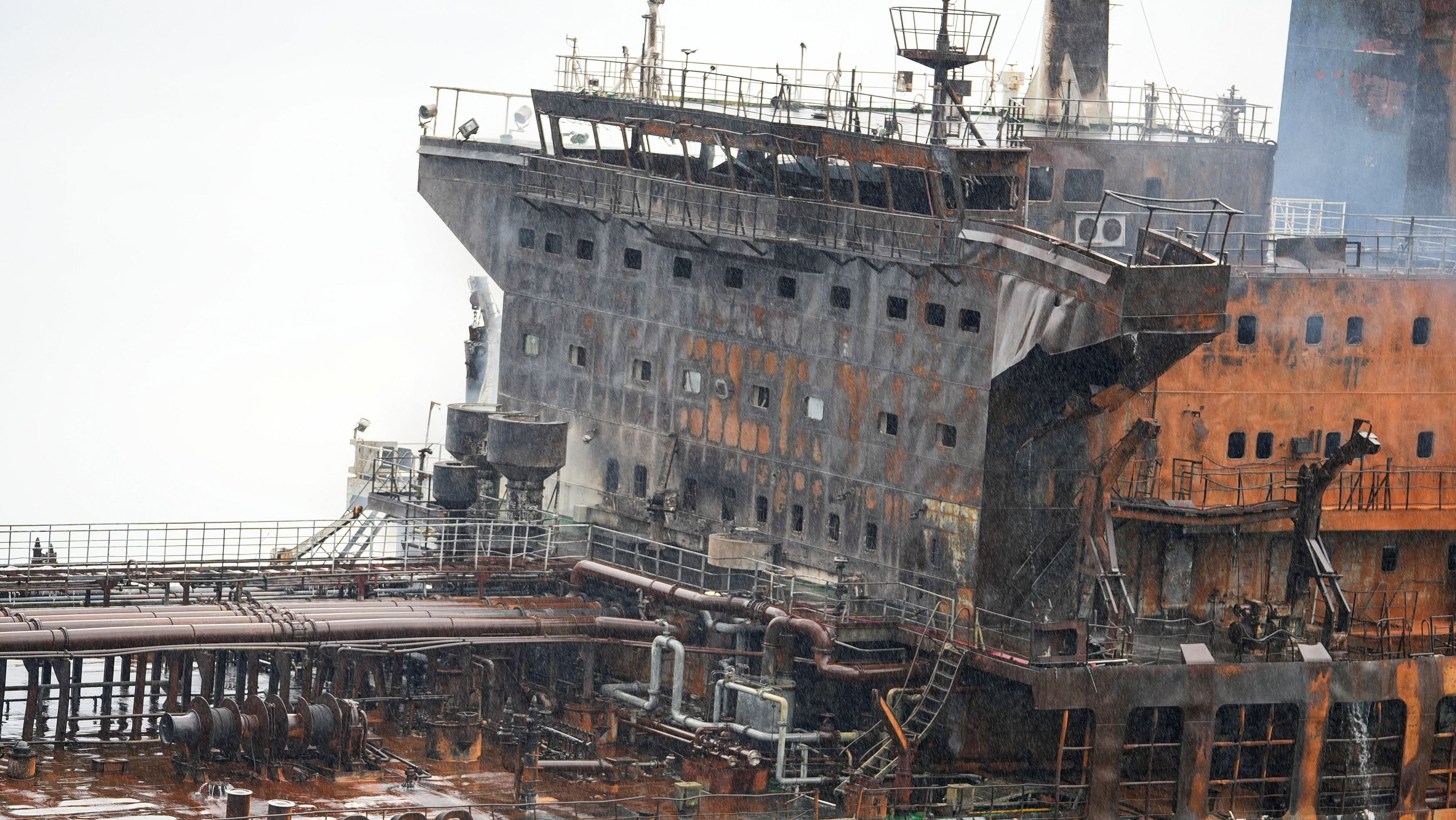
A foreign tanker carrying Iraqi fuel oil damaged after catching fire in Iraq’s territorial waters, following unidentified attacks that targeted two foreign tankers, according to Iraqi port officials, near Basra, Iraq, March 12, 2026. REUTERS/Mohammed Aty
The Thai-flagged bulk carrier Mayuree Naree was hit by projectiles that caused a fire and severe damage to the engine room, according to its operator Precious Shipping. Three crew members were reported missing and believed to be trapped in the engine room.
Thailand’s foreign ministry has demanded an apology from Iran and summoned the Iranian ambassador for clarification. Iran’s Revolutionary Guards later said the vessel had been “fired upon by Iranian fighters,” according to the Tasnim news agency.
The same day, the Japan-flagged container ship One Majesty was also struck northwest of Ras Al Khaimah, sustaining minor damage but continuing to a safe anchorage.
Confusion Over Safe Passage
The escalating attacks have fueled dismay and confusion among governments and energy importers.
India illustrates the uncertainty. Reuters reported conflicting accounts over whether Tehran has agreed to allow Indian-flagged tankers to transit the strait, a route that handles about 40% of India’s crude imports. An Indian source said passage would be allowed, while an Iranian source outside the country denied any such agreement.
India has urged consumers not to panic and to conserve energy as cooking gas shortages begin to spread; a sign of how quickly the conflict is wreaking havoc on global economies.
Sources: Reuters, WSJ